

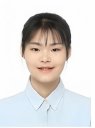
 Sujia Huang
· 3 previous affiliations
- PhD student · Since 2024
- Fuzhou University2021–2024
- MS student · 2021–2024
- Jiangxi Normal University2017–2021
- Undergrad student · 2017–2021
Research Overview
Sujia Huang focuses on graph neural networks, multi-view learning, and generative models for anomaly detection. Initial research addressed structural refinement and heterophily in graph representation learning, progressively extending these methods to federated environments. Most recently, this work has expanded to explore flow matching and diffusion techniques for open-set anomaly detection in industrial applications.
Research Trajectory
The trajectory begins with foundational contributions to multi-view learning. In 2021, Huang contributed to Multi-View Learning Via Low-Rank Tensor Optimization, which addressed the high computational complexity of self-representation-based subspace clustering. By constructing a target tensor from multiple normalized similarity matrices and constraining it with a t-SVD-based tensor nuclear norm, this work enabled the simultaneous learning of an affinity matrix and the optimization of the low-rank tensor, improving upon methods that treat these components separately.
Building on this interest in complex data structures, Huang's focus shifted toward Graph Neural Networks (GNNs), particularly the challenges of message passing in heterophilous graphs—where connected nodes frequently possess different labels. Huang introduced Unified structure-aware feature learning for Graph Convolutional Network, a framework that jointly learns GCNs and Label Propagation Algorithms (LPA). This approach captures precise node connections and mitigates heterophilous relationships through the mutual supervision of feature and label spaces, while also exploiting high-order structural information.
Continuing in the domain of multi-view data, Huang collaborated on Heterogeneous graph convolutional network for multi-view semi-supervised classification, which proposed a unified framework to connect multi-view data using heterogeneous graphs, moving beyond traditional methods that treat each view as an independent graph. This was closely followed by contributions to Enhancing Multi-view Graph Neural Network with Cross-view Confluent Message Passing, which re-examined the message passing mechanism from a graph smoothing perspective to better handle the intrinsic challenges of multi-view scenarios. To further address the limitations of GNNs on heterophilous graphs, Huang developed Boosting Graph Convolution with Disparity-induced Structural Refinement. This research proposed an adaptive method to selectively aggregate messages, preventing the accumulation of interference information during propagation and refining the estimation of high-order relationships between nodes.
In recent work, Huang has extended these graph-based methodologies into distributed environments, contributing to the research area of Managing Topological Heterogeneity in Federated Graph Learning. Huang proposed Homophily-Heterogeneity Gradient Surgery for Federated Graph Learning, introducing the FedGCM framework. This system resolves optimization conflicts—often described as "tug-of-wars"—between federated clients with differing graph properties. By grouping clients based on graph homophily and applying a server-side gradient surgery technique called RPGrad, the method improves performance across diverse datasets without increasing the computational burden on edge devices. This work also intersects with the broader field of Federated Self-Supervised Learning for Unlabeled Edge Data.
Concurrently, Huang has expanded into generative modeling for industrial applications, specifically addressing data scarcity in defect detection. Huang participated in the development of Anomaly-Preference Image Generation, which tackles the difficulty of training robust detectors for rare anomalies. This research aligns with advancements in the area of Accelerating Diffusion Sampling via Distillation and Trajectory Rectification. Building on these generative approaches, Huang also contributed to Mixture Prototype Flow Matching for Open-Set Supervised Anomaly Detection. This framework utilizes a multi-modal Gaussian Mixture prior and flow matching to map complex data into a structured latent space, ensuring that normal patterns cluster tightly while unseen anomalies remain distinct. This contribution advances several domains, including the direction of Few-Shot Anomaly Detection for Industrial Inspection, the area of Efficient Generative Modeling via Flow Matching, and the field of Anomaly Detection Under Multi-Modal Normal Distributions.
Current Directions
The most recent papers in the evidence highlight two primary research directions. First, Huang is investigating federated graph learning, focusing on how to optimize distributed models across clients that exhibit varying degrees of graph homophily and heterogeneity. This involves developing server-side interventions, such as gradient surgery, to harmonize conflicting optimization trajectories without overburdening edge devices.
Second, Huang is exploring advanced generative models—specifically flow matching and diffusion techniques—for open-set anomaly detection. This work addresses the critical challenge of data scarcity in industrial inspection, utilizing structured latent spaces and multi-modal priors to reliably identify rare or previously unseen defects against a baseline of normal multi-modal data.
Profile updated
| Title | Venue | Year |
|---|---|---|
| MOKAN: A Multi-Omics Data Analysis Framework Using Kolmogorov-Arnold Networks | IEEE JBHI | 2026 |
| Mixture Prototype Flow Matching for Open-Set Supervised Anomaly Detection | ICML | 2026 |
| Homophily-Heterogeneity Gradient Surgery for Federated Graph Learning | ICML | 2026 |
| Immunizing over-smoothing: Dual-channel graph convolutional network | Expert Systems with Applications | 2026 |
| Anomaly-Preference Image Generation | ICML | 2026 |
| GraphTorque: Torque-Driven Rewiring Graph Neural Network | arXiv | 2025 |
| Boosting Graph Convolution with Disparity-induced Structural Refinement | WWW | 2025 |
| Unified structure-aware feature learning for Graph Convolutional Network | Expert Systems with Applications | 2024 |
| Graph Convolutional Network with elastic topology | Pattern Recognition | 2024 |
| Heterogeneous graph convolutional network for multi-view semi-supervised classification | Neural Networks | 2024 |
Loading new papers…
Other researchers whose papers cluster into the same research directions — a proxy for overlapping technical interests and shared intellectual neighborhoods.
See something wrong? Report a mistake