

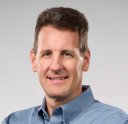
 Stephen W. Keckler
· 3 previous affiliations
- Nvidia (United States)Current
- Current
- Principal Researcher · 2010–2022
- The University of Texas at Austin1998–2012
- Full Professor · 2008–2012
- Associate Professor · 2004–2008
- Assistant Professor · 1998–2004
- PhD student · 1990–1998
Research Overview
Stephen W. Keckler focuses on computer architecture, with specific emphasis on GPU memory systems, on-chip interconnects, and the hardware reliability of machine learning models. His trajectory spans early work in network-on-chip simulation to extensive research in near-data processing and data compression for heterogeneous processors. Recently, his research addresses the safety of autonomous vehicle perception systems and the acceleration of sparse deep neural networks.
Research Trajectory
In the late 2000s and early 2010s, Keckler’s research addressed the scalability challenges of chip multiprocessors (CMPs) and systems-on-a-chip. As core counts grew from dozens to hundreds, efficient on-chip communication became a primary performance bottleneck. During this period, he contributed to the design of high-connectivity express cube topologies and, as senior author, led the development of Netrace: dependency-driven trace-based network-on-chip simulation (2010). This work provided the architecture community with a high-fidelity, low-overhead evaluation methodology to better model network-on-chip (NOC) behavior as system complexity increased, addressing the limitations of existing analytical and full-system simulation methods.
By the mid-2010s, his focus expanded to heterogeneous architectures, particularly the memory system bottlenecks inherent in coupling CPUs and GPUs on the same die. He co-authored a detailed comparative analysis of microarchitecture effects on CPU and GPU memory system behavior (2014), which explored the application-level demands of unified virtual address spaces and cache coherence. To alleviate main memory bandwidth constraints, Keckler led multiple investigations into data compression and 3D-stacked memory architectures. As principal investigator, he directed research on toggle-aware compression for GPUs, identifying that while compression reduces data transfer volume, it can inadvertently increase energy-consuming bit toggles on communication channels.
This line of inquiry into memory bandwidth culminated in architectural solutions for near-data processing. Keckler served as senior author on Transparent Offloading and Mapping (TOM): Enabling Programmer-Transparent Near-Data Processing in GPU Systems (2016). This research demonstrated how to map bandwidth-intensive computations directly to logic layers in 3D-stacked memory, significantly alleviating off-chip pin bandwidth limitations without burdening software developers with manual data mapping.
In the 2020s, Keckler’s trajectory shifted toward the intersection of hardware architecture and machine learning reliability, driven by the deployment of Convolutional Neural Networks (CNNs) in safety-critical domains. He led the development of HarDNN: Feature Map Vulnerability Evaluation in CNNs (2020), a software-directed approach to identify and selectively protect vulnerable computations from transient hardware errors. By estimating the propensity of specific feature maps to corrupt inference outputs, this work provided a low-cost alternative to traditional, resource-heavy full-redundancy solutions.
Concurrently, he applied these safety and reliability principles to autonomous vehicles (AVs). After contributing to frameworks for analyzing the system-level safety consequences of AV perception design choices, he served as senior author on Zhuyi: perception processing rate estimation for safety in autonomous vehicles (2022). This research introduced a model to dynamically quantify the minimum safe sensor frame processing rate in complex driving scenarios, ensuring AV safety while managing constrained in-vehicle computing resources.
Current Directions
The most recent work in the evidence investigates the hardware acceleration of deep neural networks (DNNs) by exploiting sparsity. Specifically, recent research addresses the limitations of structured sparsity support in hardware accelerators, which traditionally require extensive model fine-tuning and lack flexibility across different hardware designs. Keckler has recently contributed to Enabling Unstructured Sparse Acceleration on Structured Sparse Accelerators (2025), which proposes approximation methods that leverage linear algebra properties to map unstructured sparse tensors onto structured sparse hardware. This direction aims to minimize the overhead of sparse acceleration while allowing models to maintain the flexibility of unstructured sparsity.
Profile updated
Loading new papers…
Other researchers whose papers cluster into the same research directions — a proxy for overlapping technical interests and shared intellectual neighborhoods.
See something wrong? Report a mistake