

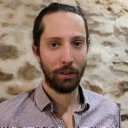
 Stéphane Lathuilière
· 3 previous affiliations
- Researcher · Since 2025
- PhD student · 2016–2018
- Télécom Paris2019–2024
- Associate Professor · 2019–2024
- University of Trento2018–2019
- Postdoc · 2018–2019
Research Overview
Stéphane Lathuilière focuses on generative models for image and video synthesis, continual learning, and domain adaptation in computer vision. His earlier work explored deep motion transfer and memory-constrained online learning, establishing foundations for animating arbitrary objects and mitigating catastrophic forgetting. Currently, his research investigates the adaptation and distillation of diffusion models to achieve high-fidelity image generation and editing under extreme computational constraints.
Research Trajectory
Lathuilière's early research investigated regression techniques within convolutional neural networks. He introduced a method coupling a Gaussian mixture of linear inverse regressions with a deep network in Deep Mixture of Linear Inverse Regressions Applied to Head-Pose Estimation. This work demonstrated that jointly training the network and the regression function outperformed standard Euclidean distance approaches for head-pose estimation.
Moving into generative models and motion transfer, he contributed to frameworks for image animation. Working with collaborators, he helped develop Animating Arbitrary Objects via Deep Motion Transfer, which decoupled appearance and motion to animate target objects using driving video sequences. This collaborative effort was expanded in First Order Motion Model for Image Animation. By utilizing a self-supervised formulation with learned keypoints and local affine transformations, the method allowed complex motions to be transferred across objects of the same category without requiring object-specific annotations.
In the area of sequential learning, further collaborative work explored memory constraints. Online Continual Learning Under Extreme Memory Constraints introduced Batch-level Distillation, a regularization-based approach designed to balance stability and plasticity, thereby preventing catastrophic forgetting when learning from data streams with strict memory limits.
He was later part of a team that returned to video manipulation with Playable Environments: Video Manipulation in Space and Time. This framework allowed users to move objects in 3D and generate video from a single image by providing a sequence of unsupervised actions, extending neural radiance fields with style-based modulation. This research intersects with the broader research direction of Mitigating Temporal Drift in Autoregressive Video Generation.
A major theme in his subsequent work is adapting models across domains with limited data. He guided research leveraging text-to-image diffusion models to generate synthetic target datasets in One-shot Unsupervised Domain Adaptation with Personalized Diffusion Models, moving beyond simple texture transfer to adapt segmentation models using only a single unlabeled target image. To bridge the domain gap between synthetic and real-world datasets, his group presented Contrast, Stylize and Adapt: Unsupervised Contrastive Learning Framework for Domain Adaptive Semantic Segmentation, which aligned features and pixels using a contrastive formulation. Additionally, Cooperative Self-Training for Multi-Target Adaptive Semantic Segmentation addressed multi-target domain adaptation by using pseudo-labels and feature stylization to induce cooperation among domain-specific classifiers. In parallel, Few-shot Semantic Image Synthesis with Class Affinity Transfer reduced annotation costs by transferring knowledge from a large source dataset to a small target dataset via estimated pairwise relations between classes.
Continuing his focus on catastrophic forgetting, his research group proposed Continual Model Averaging (CoMA) in Weighted Ensemble Models Are Strong Continual Learners. This method balanced plasticity and stability by weight-ensembling parameters of previous and current tasks. He also explored extreme image compression in Towards image compression with perfect realism at ultra-low bitrates, utilizing an iterative diffusion model conditioned on spatial latents and global text descriptions to achieve sharp reconstructions at bitrates as low as 0.003 bits per pixel.
Most recently, his work has heavily emphasized the efficiency and control of diffusion models. In collaborative research, he helped develop Di[M]O: Distilling Masked Diffusion Models into One-step Generator, which introduced a token-level distribution matching strategy to distill masked diffusion models into one-step generators, drastically reducing inference time. Subsequent joint research improved upon this with Soft-Di[M]O: Improving One-Step Discrete Image Generation with Soft Embeddings, introducing differentiable "soft embeddings" to enable adversarial training and reward-based fine-tuning for single-step models. Alongside efficiency improvements, his group presented SAGE in Don't Forget Your Inverse DDIM for Image Editing, a training-free framework that leverages structural information in the self-attention maps of the inverse DDIM process for high-fidelity text-based image editing.
Current Directions
The most recent papers in the evidence address the efficiency and controllability of diffusion models. Recent work investigates the distillation of masked diffusion models into one-step generators, aiming to drastically reduce inference time while maintaining image quality. This includes exploring differentiable relaxations of discrete tokens to enable adversarial training and reward-based fine-tuning for single-step models. Additionally, current research focuses on training-free frameworks for text-based image editing, leveraging the structural information embedded within the self-attention maps of inverse diffusion processes to balance precise modifications with the preservation of original image details.
Profile updated
Loading new papers…
Other researchers whose papers cluster into the same research directions — a proxy for overlapping technical interests and shared intellectual neighborhoods.
See something wrong? Report a mistake