

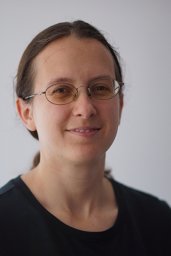
 Stefanie Tellex
· 7 previous affiliations
- Brown UniversitySince 2013
- Professor · Since 2019
- Associate Professor · 2020–2025
- Joukowsky Family Assistant Professor Of Computer Science · 2017–2019
- Assistant Professor · 2013–2017
- Robotics and AI Institute2024–2026
- Roboticist · 2024–2026
- Realtime Robotics, Inc.2018–2026
- Senior Advisor, Perception · 2018–2026
- The AI Institute2023–2025
- Roboticist · 2023–2025
- Research Scientist · 2011–2013
- Postdoctoral Research Associate · 2010–2011
- MIT Media Lab2004–2010
- Research Assistent · 2004–2010
- Ph.D., Media Arts and Science · 2004–2010
Research Overview
Stefanie Tellex focuses on human-robot interaction, natural language understanding for embodied agents, and robotic planning under uncertainty. Her early work established probabilistic frameworks for grounding complex language commands into physical environments and robot actions. More recently, she investigates how large language models and formal logic can be combined to enable safe, generalizable, and constraint-aware robotic manipulation and navigation.
Research Trajectory
Tellex's early research explored information retrieval, including a quantitative evaluation of passage retrieval algorithms for question-answering systems in Quantitative evaluation of passage retrieval algorithms for question answering.
She subsequently transitioned to the intersection of natural language processing and robotics, focusing on the research direction of Mapping Continuous Perception to Discrete Symbolic Logic. A central contribution during this period was the development of Generalized Grounding Graphs ($G^3$). This framework dynamically instantiates probabilistic graphical models based on the compositional structure of natural language, allowing robots to map linguistic constituents to physical objects, paths, and events. This approach was detailed in Approaching the Symbol Grounding Problem with Probabilistic Graphical Models and applied to mobile manipulation in semi-structured environments in Understanding Natural Language Commands for Robotic Navigation and Mobile Manipulation.
Building on this foundation, her research expanded to address how robots plan and interpret goals. In Grounding English Commands to Reward Functions, she and her collaborators proposed mapping natural language instructions to reward functions rather than specific action sequences, enabling autonomous path planning in novel environments. To manage the computational complexity of real-world environments, she contributed to hierarchical planning frameworks, such as those utilizing abstract Markov Decision Processes in Planning with Abstract Markov Decision Processes.
Her work increasingly addressed complex, temporally extended tasks, contributing to the broader area of Reinforcement Learning with History Dependent Reward Structures. This included research on Grounding Language to Non-Markovian Tasks with No Supervision of Task Specifications, which also touched upon the area of Enforcing Structural Constraints on Language Model Outputs. Concurrently, she directed work on learning symbolic abstractions directly from perceptual data. The framework presented in Simultaneously Learning Transferable Symbols and Language Groundings from Perceptual Data for Instruction Following demonstrated how robots could learn the termination conditions of motor skills from a small set of demonstrations, allowing them to follow complex instructions using traditional planners with significantly less data than end-to-end deep learning methods.
With the advent of large language models (LLMs), Tellex's lab focused on integrating these models into robotic planning while maintaining formal safety and logical correctness, advancing the research direction of Resolving Ambiguity in Natural Language Instructions for Robotic Agents. To address the brittleness of LLM planners when actions fail, her team developed CAPE, an approach that leverages few-shot reasoning to propose corrective actions from precondition errors, as described in CAPE: Corrective Actions from Precondition Errors using Large Language Models. Recognizing the critical need for safe operation, she also led research on enforcing explicit negative constraints for LLM-driven agents in Plug in the Safety Chip: Enforcing Constraints for LLM-driven Robot Agents. To handle time-sensitive instructions, her group introduced a modular framework in Lang2LTL: Translating Natural Language Commands to Temporal Robot Task Specification, which translates complex commands into Linear Temporal Logic (LTL) to enable zero-shot execution in unseen environments. Alongside these planning advances, she contributed to long-term environmental representation with Building Long-term Spatial Temporal Semantic Map, a system designed to handle days or weeks of diverse robotic sensor data to ground natural language queries.
Her recent trajectory emphasizes generalization and evaluation in mobile manipulation. In Equivariant Open-vocabulary Pick and Place via Language Kernels and Patch-level Semantic Maps, her team introduced Grounded Equivariant Manipulation (GEM), leveraging pre-trained vision-language models and geometric symmetries for few-shot and zero-shot learning. To better evaluate these complex systems, she oversaw the development of a multifaceted benchmark dataset in LaNMP: A Multifaceted Mobile Manipulation Benchmark for Robots. Furthermore, her work in the area of Zero-Shot Composition of Modular Skill Abstractions produced LTL-Transfer: Skill Transfer for Temporal Task Specification, an algorithm that decomposes LTL specifications into portable options to solve new tasks without retraining.
Most recently, Tellex has investigated the limitations of foundation models in constrained environments and the autonomous generation of planning abstractions, contributing to the area of Beyond the Deterministic Transition Assumption in Reinforcement Learning. She participated in the development of the CoPE benchmark in Language Model as Planner and Formalizer under Constraints, which demonstrated how state-of-the-art reasoning models struggle when fine-grained natural language constraints are introduced. She also collaborated on SkillWrapper: Generative Predicate Invention for Skill Abstraction, a framework enabling robots to autonomously invent symbolic predicates for long-horizon planning using raw images and foundation models. Her ongoing research also addresses learning efficiency, as seen in Accelerating Residual Reinforcement Learning With Uncertainty Estimation. In DUO Policy: Bridging Human Video Coverage and Robot Precision for Fine-Grained Manipulation, Tellex's group introduced a dual-actor framework that decouples manipulation into a hand policy pretrained on human videos for global free-space motion and an intervention-gated robot policy trained on sparse in-hand data for fine precision corrections.
Current Directions
The most recent papers in the evidence address the integration of foundation models with formal robotic planning and the evaluation of these systems under strict constraints. Recent work investigates how large language models can be used to autonomously invent symbolic predicates for long-horizon tasks, bridging the gap between raw perceptual data and mathematically sound task-level planning. Additionally, her current research focuses on benchmarking the reasoning capabilities of LLMs when subjected to fine-grained, real-world constraints, revealing the limitations of current models in adhering to explicit "rules of the road." She also continues to explore methods for accelerating residual reinforcement learning and leveraging human video data alongside sparse robot demonstrations for precise manipulation skills.
Profile updated
Loading new papers…
Other researchers whose papers cluster into the same research directions — a proxy for overlapping technical interests and shared intellectual neighborhoods.
See something wrong? Report a mistake