

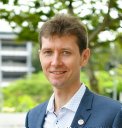
 Stefan Winkler
· 7 previous affiliations
- Opsis Pte LtdSince 2017
- Co-Founder · Since 2017
- Singapore Institute of TechnologySince 2025
- Inaugural Applied Materials Inc. Professor · Since 2026
- Professor · Since 2025
- AICS2021–2025
- Research Director · 2021–2025
- Acting General Manager · 2022–2023
- National University of Singapore2018–2021
- Associate Professor · 2018–2021
- AI Singapore2018–2021
- Deputy Director · 2018–2021
- Ph.D., Electrical Engineering · 1997–2000
- TU Wien1990–1996
- Diplom-Ingenieur, Electrical, Electronics and Communications Engineering · 1990–1996
Research Overview
Stefan Winkler focuses on the application of machine learning to complex domain-specific data, ranging from visual art analysis to healthcare informatics. His trajectory spans early work in multi-task dictionary learning for image processing to recent efforts in medical foundation models. Currently, he investigates methods for improving the robustness of large language models in clinical settings, particularly for processing structured medical codes and summarizing medical dialogues.
Research Trajectory
Winkler's early collaborative work explored automatic visual art analysis, addressing the challenge of extracting objective patterns from paintings to identify unique artistic signatures. In Inferring Painting Style with Multi-Task Dictionary Learning, he and his co-authors proposed a multi-task dictionary learning approach designed to uncover style-specific representations across different painters and artistic schools.
Following this early work in computer vision, the available evidence shows a shift toward healthcare informatics and natural language processing. In 2024, Winkler contributed to research on the limitations of large language models when processing structured, non-textual medical data. The paper Representation Learning of Structured Data for Medical Foundation Models examines the shortcomings of standard tokenization methods for alphanumeric medical codes, such as ICD-10 and SNOMED-CT. To address these challenges, the research team introduced the UniStruct architecture, a multimodal medical foundation model that adapts subword tokenization techniques to better integrate unstructured text with structured clinical data.
Building on this focus within medical AI, Winkler has guided recent efforts to improve the reliability of clinical documentation tools. Overseeing the research presented in MEDSAGE: Enhancing Robustness of Medical Dialogue Summarization to ASR Errors with LLM-generated Synthetic Dialogues, he directed the development of methods to mitigate the impact of automatic speech recognition (ASR) errors in medical dialogue summarization. This work leverages synthetic dialogues generated by large language models to train more robust summarization systems, ensuring that clinical transcriptions remain accurate despite noisy audio inputs.
Current Directions
The most recent papers in the evidence indicate a primary focus on the intersection of large language models and healthcare informatics. Winkler's current research addresses the practical challenges of deploying foundation models in clinical environments. This includes developing specialized architectures to handle structured medical codes alongside unstructured text, as well as designing training pipelines that improve the robustness of automated medical documentation systems against transcription errors.
Profile updated
Loading new papers…
Loading research neighbors…
See something wrong? Report a mistake