

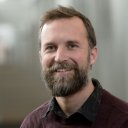
 Stefan M. Wild
· 3 previous affiliations
- Northwestern UniversitySince 2015
- Researcher · Since 2015
- Lawrence Berkeley National LaboratorySince 2022
- Researcher · Since 2022
- Argonne National Laboratory2009–2022
- Researcher · 2009–2022
Research Overview
Stefan M. Wild focuses on predictive modeling for high-performance computing, randomized algorithms for scientific computing, and the robustness of machine learning models in scientific domains. His trajectory spans from optimizing parallel I/O infrastructure to advancing domain adaptation for astronomical surveys. Most recently, his work investigates the generalization capabilities and practical utility of quantum kernel methods.
Research Trajectory
Stefan M. Wild's early work in the provided corpus addressed the critical challenge of performance variability in large-scale high-performance computing (HPC) systems. To efficiently manage heterogeneous shared resources, he developed deep learning approaches, including the use of conditional variational autoencoders (CVAEs), to quantify I/O performance variability. He demonstrated this approach on production supercomputers like NERSC's Edison system in Modeling I/O Performance Variability Using Conditional Variational Autoencoders. He further improved predictive modeling by explicitly treating variability through Gaussian process-based machine learning algorithms that group applications with similar characteristics, as detailed in Machine Learning Based Parallel I/O Predictive Modeling: A Case Study on Lustre File Systems. Recognizing that HPC platform conditions change over time due to hardware degradation and software upgrades, he introduced adaptive learning techniques to mitigate concept drift and maintain the accuracy of predictive performance models in Adaptive Learning for Concept Drift in Application Performance Modeling.
Expanding into broader scientific computing and optimization, his research applied advanced machine learning to complex domain-specific challenges. With collaborators, he participated in the development of scalable reinforcement learning methods for neural architecture search, specifically targeting nonimage and nontext data for cancer diagnosis and prognosis in Scalable reinforcement-learning-based neural architecture search for cancer deep learning research. In computational cosmology, he addressed the massive computational cost of finding the center of dark matter halos in N-body simulations containing millions of particles. By exploiting latent structures, he proposed a method to approximate exact gravitational potential calculations in Hierarchical Analysis of Halo Center in Cosmology. Concurrently, he contributed to establishing comprehensive roadmaps for integrating randomized algorithms into scientific computing. This work, which advocated for matrix sketching and randomized sampling to overcome the stagnation of Moore's Law, is detailed in Randomized Algorithms for Scientific Computing (RASC) and supports the area of Randomized Subspace Projections for Efficient Matrix Algebra. He also advanced optimization techniques for expensive black-box models by introducing a closed-form method for estimating active subspaces using Gaussian processes, eliminating the need for computationally expensive finite differencing in Sequential Learning of Active Subspaces.
In recent years, his focus has encompassed both the robustness of deep learning in the physical sciences and the theoretical foundations of quantum machine learning. He investigated how common data imperfections, such as noise and single-pixel errors, degrade models used for galaxy morphology classification. By demonstrating that domain adaptation can dramatically improve model reliability for real-world astronomical surveys in DeepAdversaries: examining the robustness of deep learning models for galaxy morphology classification, he advanced the research direction Statistical Alignment for Domain Invariant Representations and the broader area of Mechanisms for Adversarial Resilience in Neural Networks. This trajectory in astrophysics culminated in DeepAstroUDA: semi-supervised universal domain adaptation for cross-survey galaxy morphology classification and anomaly detection.
Simultaneously, he evaluated the practical utility of quantum machine learning techniques. He provided numerical analyses showing how quantum kernels suffer from exponential spectrum flattening as the number of qubits grows, necessitating strict hyperparameter control, in Numerical evidence against advantage with quantum fidelity kernels on classical data. Continuing this line of inquiry, he collaborated on research demonstrating how bandwidth affects generalization in quantum feature spaces in Bandwidth Enables Generalization in Quantum Kernel Models, contributing to work in The Quantum Simulation to Hardware Performance Gap.
Current Directions
The most recent papers in the evidence address the theoretical limits of quantum machine learning alongside robust deep learning for the physical sciences. His quantum research investigates the generalization properties of quantum kernels and the conditions under which quantum models can achieve practical advantage over classical baselines. This ongoing work contributes to the research direction Establishing Practical Quantum Advantage Against Classical Baselines and the area of Learnable Measurement Operators for Expressive Quantum Neural Networks. In the domain of astrophysics, recent work focuses on semi-supervised universal domain adaptation to enable cross-survey galaxy morphology classification and anomaly detection, ensuring that machine learning models remain reliable across diverse and imperfect scientific datasets.
Profile updated
| Title | Venue | Year |
|---|---|---|
| HFBTHO-AD: Differentiation of a nuclear energy density functional code | Comput. Phys. Commun | 2026 |
| Research Spotlights | SIAM Rev | 2026 |
| Ecosystems for Scientific Computing in the Age of Artificial Intelligence | Comput. Sci. Eng | 2026 |
| Bandwidth Enables Generalization in Quantum Kernel Models | TMLR | 2023 |
| Numerical evidence against advantage with quantum fidelity kernels on classical data | Physical | 2023 |
| DeepAstroUDA: semi-supervised universal domain adaptation for cross-survey galaxy morphology classification and anomaly detection | Mach. Learn. Sci. Technol | 2023 |
| DeepAdversaries: examining the robustness of deep learning models for galaxy morphology classification | Mach. Learn. Sci. Technol | 2022 |
| Semi-Supervised Domain Adaptation for Cross-Survey Galaxy Morphology Classification and Anomaly Detection | Openalex | 2022 |
| Sequential Learning of Active Subspaces | J. Comput. Graph. Stat | 2021 |
| Hierarchical Analysis of Halo Center in Cosmology | Crossref | 2021 |
Loading new papers…
Other researchers whose papers cluster into the same research directions — a proxy for overlapping technical interests and shared intellectual neighborhoods.
See something wrong? Report a mistake