

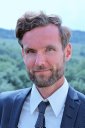
 Stefan Dietze
· 4 previous affiliations
- Full Professor · Since 2018
- Heinrich Heine University DüsseldorfSince 2018
- Full Professor · Since 2018
- L3S Research Center2011–2018
- Principal Researcher · 2011–2018
- The Open University2006–2011
- Postdoc · 2006–2011
Research Overview
Stefan Dietze focuses on semantic technologies, structured web data, and information retrieval. His trajectory spans from early foundational work on Linked Data integration and entity summarization to recent investigations into graph-based machine learning and automated fact-checking. Currently, his research addresses the intersection of large language models, knowledge graphs, and the verification of online information.
Research Trajectory
In the early 2010s, Dietze’s research centered on the interoperability and integration of distributed data on the Web, particularly through the lens of semantic technologies. A representative early contribution is his first-author work, Socio-semantic Integration of Educational Resources - the Case of the mEducator Project (2013). This research addressed the fragmented landscape of competing metadata schemas in technology-enhanced learning, demonstrating how Linked Data principles could facilitate Web-scale integration of educational resources. This focus on maintaining and integrating dynamic data structures aligns with his broader interest in the research direction of Managing the Evolution of Semantic Knowledge Bases.
As the volume of publicly available Linked Data grew, Dietze’s focus shifted toward the challenges of scale, discoverability, and data retrieval. In 2014, he co-authored A Scalable Approach for Efficiently Generating Structured Dataset Topic Profiles, which proposed techniques for extracting and ranking topics to create descriptive metadata profiles for datasets. This work aimed to lower the barrier to data reuse by providing clear signals about a dataset's coverage and dynamics. Building on this need to navigate massive semantic networks, he led research on Adaptive Focused Crawling of Linked Data (2015). As the senior author, he introduced an adaptive crawling approach designed to efficiently capture the relevant semantic neighborhood of seed entities, a critical problem when traversing the Web of Data. These efforts to manage massive datasets connect to the broader theme of Hybrid Storage Architectures for Large Scale Knowledge Graphs.
By the mid-to-late 2010s, Dietze increasingly investigated the extraction and utilization of embedded Web markup, such as Microdata and RDFa. Unlike traditional RDF graphs, embedded markup is often flat, highly redundant, and lacks explicit co-reference links. To address these distinct characteristics, he led the development of specialized entity-centric methods. In Towards Entity Summarisation on Structured Web Markup (2016), his team combined entity retrieval and summarization techniques tailored specifically for the granular nature of markup data. He extended this line of inquiry in FuseM: Query-Centric Data Fusion on Structured Web Markup (2017), proposing a query-centric data fusion approach to overcome the limitations of general data fusion methods when applied to dynamic Web markup. This body of work contributed to the broader area of Bridging the Lexical Gap in Information Retrieval, focusing on how structured data can better satisfy user search intent.
Entering the 2020s, Dietze’s trajectory expanded to incorporate advanced machine learning architectures, particularly for modeling complex structural relationships in text and image data. As senior author on Exploring rich structure information for aspect-based sentiment classification (2023), he addressed the limitations of existing Graph Convolutional Networks (GCNs) in natural language processing. The proposed model moved beyond relying solely on syntactic dependency trees, integrating multiple types of structural information between words to improve the accuracy of aspect-based sentiment classification.
Current Directions
The most recent papers in the evidence indicate a strong focus on the intersection of modern artificial intelligence and information verification. Dietze is actively exploring the complementary strengths of Large Language Models (parametric knowledge) and Knowledge Graphs (explicit knowledge), investigating how hybrid representations can address the limitations of standalone language models.
Concurrently, his recent collaborative work emphasizes the automated detection and mitigation of online disinformation. He has contributed to community-wide evaluation frameworks, such as the CLEF CheckThat! Lab, focusing on the core components of the information verification pipeline. This includes developing methodologies for identifying subjective text, retrieving supporting evidence, normalizing claims, and fact-checking numerical claims to support robust decision-making in digital environments.
Profile updated
Loading new papers…
Other researchers whose papers cluster into the same research directions — a proxy for overlapping technical interests and shared intellectual neighborhoods.
See something wrong? Report a mistake