

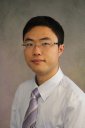
 Stanley H. Chan
· 1 previous affiliation
- Purdue University West LafayetteSince 2014
- Full Professor · Since 2014
Research Overview
Stanley H. Chan focuses on computational imaging, image restoration, and the integration of physical models with deep learning. His trajectory spans foundational algorithms for single-photon sensors and atmospheric turbulence mitigation to advanced generative models for video synthesis. Currently, his work emphasizes physics-consistent generative photography and controllable video generation.
Research Trajectory
Chan’s early research focused on optimization techniques for image and video processing, as well as theoretical graph analysis. He introduced An Augmented Lagrangian Method for Total Variation Video Restoration (2011) to improve the efficiency of recovering degraded video sequences. Transitioning to graph theory, his group explored sublinear local algorithms for massive graphs and graphon limits for scale-invariant graph learning in Stochastic blockmodel approximation of a graphon: Theory and consistent estimation (2013). Returning to image filtering, he presented Monte Carlo Non-Local Means: Random Sampling for Large-Scale Image Filtering (2014), which provided high-probability convergence guarantees for heavy-tailed stochastic optimization and stochastic greedy selection for submodular maximization to significantly speed up image denoising.
In the mid-2010s, his focus shifted toward computational imaging, particularly the processing of massive binary data streams from single-photon detectors. He developed Images from Bits: Non-Iterative Image Reconstruction for Quanta Image Sensors (2016), proposing a direct recovery method for oversampled binary observations. Concurrently, he advanced automated hyperparameter selection for robust machine learning in inverse problems with Plug-and-Play ADMM for Image Restoration: Fixed-Point Convergence and Applications (2017). He subsequently participated in developing Plug-and-Play Unplugged: Optimization-Free Reconstruction Using Consensus Equilibrium (2018), a framework that explored weight fusion across heterogeneous model architectures, equilibrium selection in multi-agent systems, and learned priors for solving imaging inverse problems without requiring traditional optimization formulations.
Entering the 2020s, his research expanded into atmospheric turbulence mitigation and the fundamental limits of advanced sensors. His team developed Image Reconstruction of Static and Dynamic Scenes Through Anisoplanatic Turbulence (2020), utilizing physics-informed deep learning for image restoration in degraded media. He collaborated on HDR Imaging With Quanta Image Sensors: Theoretical Limits and Optimal Reconstruction (2020), moving beyond the static scene assumption and contributing to the broader research direction of Overcoming Sensor Saturation and Dynamic Range Clipping. He further analyzed how to resolve the exposure conflict in dynamic low-light imaging in What Does a One-Bit Quanta Image Sensor Offer? (2022), analytically deriving optimal parameters for frame rates and exposure bracketing.
The year 2022 marked a cluster of significant contributions to turbulence modeling and blind deconvolution. His group introduced data-driven surrogate models for high-fidelity physics in Real-Time Dense Field Phase-to-Space Simulation of Imaging Through Atmospheric Turbulence (2022), overcoming computational bottlenecks in simulating atmospheric effects. He clarified fundamental physical models in Tilt-Then-Blur or Blur-Then-Tilt? Clarifying the Atmospheric Turbulence Model (2022), a study that heavily influenced the research areas of Spatially Variant Kernels for Real-World Image Restoration and Restoring Images Distorted by Atmospheric Turbulence. Building on these physical insights, his group embedded physical laws into neural network loss functions with the Imaging through the Atmosphere using Turbulence Mitigation Transformer (2022). Additionally, they advanced physics-guided deep learning for image restoration in Photon-Limited Blind Deconvolution Using Unsupervised Iterative Kernel Estimation (2022).
More recently, his work has addressed complex noise profiles and generative modeling. His group tackled extreme low-light conditions in HDR Imaging with Spatially Varying Signal-to-Noise Ratios (2023). In 2024, they introduced Kernel Diffusion: An Alternate Approach to Blind Deconvolution, leveraging diffusion priors for non-linear inverse problems and landscape smoothing for non-convex global optimization. They also developed Quanta Video Restoration (2024), an end-to-end network that balances measurement density and quantization precision, utilizing denoising before alignment for robust motion estimation and flow-guided deformable alignment to generalize image restoration across diverse sensor noise profiles.
Bridging physical camera models and generative AI, his group introduced Generative Photography: Scene-Consistent Camera Control for Realistic Text-to-Image Synthesis (2025), decoupling motion planning from pixel synthesis in video generation to allow for precise control over camera intrinsic settings. They further extended this physical grounding in NewtonGen: Physics-consistent and Controllable Text-to-Video Generation via Neural Newtonian Dynamics (2026), advancing trajectory-controllable video diffusion by augmenting physical models with neural residuals and grounding generative models in the laws of physics.
Current Directions
The most recent work in the evidence focuses on bridging the gap between data-driven generative models and the physical world. This involves integrating classical mechanics and camera intrinsic settings into text-to-image and text-to-video synthesis. By decoupling motion reasoning from pixel generation and embedding physical common sense into neural architectures, recent projects aim to create generative models that are both visually realistic and strictly adherent to physical laws. This direction allows for precise, user-defined control over scene dynamics, initial conditions, and camera parameters, addressing fundamental limitations in how current generative tools interpret the physical environment.
Profile updated
Loading new papers…
Other researchers whose papers cluster into the same research directions — a proxy for overlapping technical interests and shared intellectual neighborhoods.
See something wrong? Report a mistake