

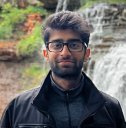
 Sreehari Sankar
· 5 previous affiliations
- Case Western Reserve UniversitySince 2019
- PhD student · 2019–2027
- Doctor of Philosophy - PhD, Artificial Intelligence · 2019–2025
- Graduate Research Assistant · 2022–2024
- Master of Science - MS, Computer Science · 2019–2022
- BetterHelp2024–2026
- AI/ML Engineer III · 2026
- ML/AI Engineer II · 2024
- Brave Software2023
- Machine Learning Scientist · 2023
- SmartNews2022
- Machine Learning Scientist · 2022
- Government Model Engineering College2015–2019
- Undergrad student · 2015–2019
Research Overview
Sreehari Sankar focuses on the safety, reliability, and formal verification of large language models. His work spans from adversarial pipelines for scalable question generation to probabilistic frameworks for automated reasoning tasks. Recently, his research investigates proactive, anomaly-based guardrails for language model safety and cross-lingual transfer.
Research Trajectory
Sankar’s research trajectory begins with his work on data generation pipelines and model safety. He introduced a production-ready approach to safely scaling question generation to massive datasets in Adversarial and Safely Scaled Question Generation. Recognizing the pitfalls and error rates associated with traditional abstractive summarization, this work employed an adversarial methodology. By utilizing a question-answering model to actively prune unanswerable or low-quality questions, the pipeline achieved a significant increase in perceived quality and yielded a higher volume of valid questions. This contribution intersects with the area of Decontextualization for Self-Contained Text Units, the research direction Post-Generation Safety Auditing for Large Language Models, and the broader field of Aligning Retrieval with Language Model Utility.
In subsequent work on automated reasoning, Sankar collaborated on methods to reconcile the probabilistic nature of large language models with the deterministic rigor required by formal methods. In Grammars of Formal Uncertainty: When to Trust LLMs in Automated Reasoning Tasks, he and his co-authors addressed the challenge of using language models to generate formal code for verification. The paper introduced a framework that models model outputs as Probabilistic Context-Free Grammars (PCFGs). This approach allows for the quantification of uncertainty and enables "selective verification," which substantially reduces error rates with minimal abstention. This work advances the research area of Bridging Informal Mathematical Intuition and Formal Verification.
Continuing his focus on model safety and reliability, Sankar and his collaborators developed proactive defense mechanisms for language model guardrails. In Trust The Typical, the authors critiqued the reactive, exhaustive listing of potential harms that characterizes many current guardrail systems. Instead, they proposed deeply modeling the statistical distribution of typical, safe language and treating harmful or adversarial prompts as out-of-distribution anomalies. This language-agnostic defense mechanism demonstrated a marked reduction in false alarms and was designed for low-overhead integration into production inference engines. This research contributes to the area of Cross-Lingual Safety Transfer in Large Language Models and the research direction One-Class Classification for Generalized Synthetic Media Detection.
Current Directions
The most recent papers in the evidence address the reliability and safety of large language models deployed in production environments. A primary theme in Sankar's current work is the shift toward proactive, statistical anomaly detection for safety guardrails, moving away from reactive filtering methods. By modeling the distribution of safe language, this approach seeks to build more robust, language-agnostic defenses against adversarial inputs. Additionally, his recent collaborations investigate uncertainty quantification in formal reasoning, focusing on how probabilistic models can be safely and effectively applied to rigorous, deterministic tasks like formal verification.
Profile updated
Loading new papers…
Other researchers whose papers cluster into the same research directions — a proxy for overlapping technical interests and shared intellectual neighborhoods.
See something wrong? Report a mistake