

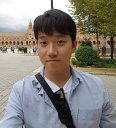
 Soonmin Hwang
· 4 previous affiliations
- Hanyang UniversitySince 2023
- Assistant Professor · Since 2023
- Carnegie Mellon University2021–2023
- Postdoc · 2021–2023
- Tesla (United States)2019–2021
- Scientist · 2019–2021
- PhD student · 2014–2019
- MS student · 2012–2014
Research Overview
Soonmin Hwang focuses on multispectral sensor fusion, robust visual perception, and autonomous driving systems. His early work addressed the challenges of pedestrian detection and hardware synchronization across diverse optical and thermal modalities. Currently, his research investigates domain adaptation, low-light object detection, and generative scene synthesis to ensure reliable perception in adverse weather and complex environments.
Research Trajectory
During his doctoral studies at KAIST, Hwang’s research centered on improving computer vision systems for pedestrian detection, particularly in challenging real-world conditions. Recognizing that pedestrian detection suffers from large intra-class variations and severe data imbalance, he introduced A Two Phase Approach for Pedestrian Detection (2014). This work framed the task as a rare class detection problem and proposed a two-phase classifier that integrated a baseline detector with a hard negative expert to separately optimize recall and precision.
To extend perception capabilities beyond standard optical cameras, Hwang began exploring multispectral imaging. He developed Low-Cost Synchronization for Multispectral Cameras (2015), creating an accessible hardware synchronization system suitable for advanced driver-assistance systems (ADAS). This hardware foundation enabled his subsequent work on Multispectral pedestrian detection: Benchmark dataset and baseline (2015). By utilizing a beam splitter-based setup, he introduced a large-scale dataset of well-aligned color-thermal image pairs and proposed the multispectral aggregated channel features (ACF) baseline. This foundational dataset advanced several key areas, including the research direction of Robust Feature Fusion for Spatially Misaligned Sensors and the broader area of Robust Visual Perception Under Challenging Illumination. It also established important benchmarks in the domain of Zero Baseline Coaxial Imaging for Multimodal Fusion.
Building on his expertise in multi-sensor systems, Hwang proposed Fast multiple objects detection and tracking fusing color camera and 3D LIDAR for intelligent vehicles (2016). This framework addressed the high computational complexity of detection and tracking multiple objects (DATMO) by combining 2D camera data with 3D LiDAR point clouds, achieving highly efficient segmentation and tracking speeds suitable for real-world intelligent vehicles. He then investigated the architectural limitations of one-stage object detectors, which traditionally struggle with small objects due to a lack of strong semantics in lower network layers. In StairNet: Top-Down Semantic Aggregation for Accurate One Shot Detection (2017), he addressed this by designing a feature-combining module that propagates contextual information in a top-down manner, contributing to the area of Hierarchical Feature Fusion for Multi Scale Representation Learning.
Following roles as a Senior Machine Learning Scientist at Tesla and a postdoctoral researcher at Carnegie Mellon University, Hwang joined Hanyang University as an Assistant Professor. His research expanded to address the gap between static datasets and dynamic, egocentric robot sensing. He collaborated on T2FPV: Constructing High-Fidelity First-Person View Datasets From Real-World Pedestrian Trajectories (2022), which introduced a first-person view dataset and an end-to-end module designed to correct noisy perception data for more accurate trajectory prediction. Continuing his focus on robust perception, he contributed to an Empirical Study: Monocular Depth Estimation from RGB, NIR, Thermal Image in Adverse Weather Conditions (2023), which analyzed the reliability of various sensor modalities for spatial understanding in rain, fog, and low-light environments.
To tackle the domain discrepancy that occurs when perception algorithms encounter unseen LiDAR specifications at test time, he co-developed LiDomAug. This fast, flexible LiDAR augmentation method aggregates raw scans to simulate dynamic distortion and occlusion on demand. The framework was initially detailed in the preprint Instant Domain Augmentation for LiDAR Semantic Segmentation (2023) and subsequently published at CVPR as Instant Domain Augmentation for LiDAR Semantic Segmentation (2023).
Most recently, Hwang’s research has addressed unsupervised domain adaptation and generative scene synthesis. He explored thermal semantic segmentation for autonomous driving in Boosting Cross-Spectral Unsupervised Domain Adaptation for Thermal Semantic Segmentation (2025), utilizing a masked mutual learning strategy to share information between RGB and thermal sensors alongside a prototypical self-supervised loss. He also participated in the development of MOSAIC: Generating Consistent, Privacy-Preserving Scenes from Multiple Depth Views in Multi-Room Environments (2025), a training-free diffusion framework that generates photorealistic, 3D-consistent RGB images from depth maps to create privacy-preserving digital twins. Advancing low-light perception, he guided the development of a Self-Guided Low Light Object Detection Framework (2026), which fuses enhanced and denoised images in the Fourier domain during training to extract robust features without adding computational overhead during deployment.
Current Directions
Recent work investigates robust perception in degraded environments and generative approaches for spatial understanding. The most recent papers in the evidence address unsupervised domain adaptation for thermal semantic segmentation, utilizing masked mutual learning strategies to improve performance in low-light and nighttime scenarios where labeled thermal data is scarce. Additionally, his research explores training-free diffusion frameworks for generating 3D-consistent, privacy-preserving indoor scenes directly from depth maps, eliminating the geometric misalignments common in sequential generation. Another active focus is the design of self-guided frameworks for low-light object detection, which leverage Fourier-domain fusion during the training phase to extract robust visual features that persist during real-world deployment without increasing inference time.
Profile updated
| Paper | Venue | Year |
|---|---|---|
| Self-Guided Low Light Object Detection FrameworkGitHubgw-shin/ | ICLR | 2026 |
Loading new papers…
Other researchers whose papers cluster into the same research directions — a proxy for overlapping technical interests and shared intellectual neighborhoods.
See something wrong? Report a mistake