

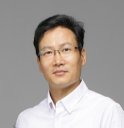
 Soon Ki Jung
· 6 previous affiliations
- Kyungpook National UniversitySince 1998
- Vice President for Research · Since 2024
- Full Professor · Since 2009
- Head, Graduate School of Computer Science and Engineering · 2019–2024
- Associate Professor · 2004–2009
- Assistant Professor · 1998–2004
- Association for Computing Machinery2021–2023
- Asia Conference Advisory Group (SACAG) · 2021–2023
- IDIS Co. Ltd.2007–2020
- Non Executive Board Member · 2007–2020
- University of Southern California2001–2009
- Visiting Faculty · 2008–2009
- Research Associate · 2001–2002
- University of Maryland, College Park1997–1998
- Postdoc · 1997–1998
- Ph.D, Computer Science · 1992–1997
Research Overview
Soon Ki Jung focuses on computer vision, generative adversarial networks, and moving object detection in complex environments. Early work emphasized robust background subtraction and video object segmentation using spatiotemporal modeling and adversarial learning. More recently, this research has shifted toward generative latent space manipulation, facial de-identification, and privacy-preserving synthetic data generation.
Research Trajectory
As a senior researcher and principal investigator, Soon Ki Jung's documented work initially centered on robust computer vision techniques for video surveillance and object tracking. In 2018, Jung led work on background estimation, addressing challenges like dynamic backgrounds and foreground occlusions in Spatiotemporal Low-Rank Modeling for Complex Scene Background Initialization. This method encoded spatiotemporal information into dynamic video clips to estimate robust background models that scale better than traditional batch-mode matrix schemes.
This foundational computer vision research quickly incorporated deep learning, specifically Generative Adversarial Networks (GANs), to handle illumination variations, shadows, and color camouflage. This was demonstrated in Unsupervised RGBD Video Object Segmentation Using GANs, which fused color and depth information to segment moving objects in challenging real-world scenes. The focus on adversarial learning for complex scene analysis matured over the next few years, culminating in approaches like Unsupervised Moving Object Detection in Complex Scenes Using Adversarial Regularizations (2021). Here, scene-specific GANs were trained in an unsupervised setting to isolate moving objects from dynamic backgrounds without relying on manual annotations.
Alongside video surveillance applications, Jung also applied advanced segmentation architectures to medical imaging. As the senior author, Jung oversaw the development of a Lightweight Encoder-Decoder Architecture for Foot Ulcer Segmentation (2022). This model utilized residual connections and spatial attention mechanisms, achieving high performance through patch-based training and test-time augmentations rather than relying on heavy, pre-trained backbone architectures.
By 2023, the trajectory shifted significantly toward the manipulation of generative models for privacy preservation and stylized image generation. Jung's lab began exploring the broader research direction of Preserving Manifold Fidelity in Generative Latent Spaces. This theoretical interest was practically applied in Latent Space Navigation for Face Privacy: A Case Study on the MNIST Dataset, which proposed an encoder-decoder architecture to generate synthetic samples that confuse facial recognition classifiers while remaining ambiguous to human observers.
This interest in privacy evolved into specialized techniques for facial de-identification. Contributing to themes such as Disentangling Identity from Attributes for Targeted Image Editing, Jung directed the development of Face De-Identification Using Face Caricature (2024). This work addressed the loss of human perception and facial attributes in standard privacy techniques. By employing a two-step process that first exaggerates facial features while maintaining contours, and then applies an unpaired appearance style generator, the method successfully obscures identity while maintaining realistic, expressive visual content.
Current Directions
The most recent papers in the evidence address the intersection of generative AI, image privacy, and facial manipulation. Current work investigates how latent space navigation can be used to synthesize data that protects user identity without destroying the utility or perceptual realism of the image. This involves active research in the area of Linear Semantic Geometry in Generative Models, as well as ongoing efforts to balance de-identification with the preservation of facial attributes. By leveraging stylized generation and caricature, Jung's recent research seeks to resolve the tension between obscuring identifiable features and maintaining the semantic richness required for downstream visual applications.
Profile updated
Loading new papers…
Loading research neighbors…
See something wrong? Report a mistake