

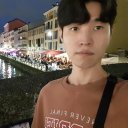
 Soobin Um
· 4 previous affiliations
- Kookmin UniversitySince 2025
- Assistant Professor · Since 2025
- Doctor of Philosophy, Artificial Intelligence · 2021–2025
- Master's Degree, Electrical Engineering · 2012–2014
- Agency for Defense Development2014–2021
- Research Scientist · 2014–2021
- Hanyang University2008–2012
- Undergrad student · 2008–2012
Research Overview
Soobin Um focuses on generative modeling, trustworthy artificial intelligence, and the intersection of generative methods with scientific discovery. His work addresses the challenges of fairness and minority sample generation in diffusion models, ensuring that synthetic data distributions do not marginalize rare features. Recently, his research has expanded to include physics-guided inverse design and the optimization of text-to-image and video synthesis.
Research Trajectory
Before focusing on generative artificial intelligence, early research included work on wireless communication systems, such as developing A computationally efficient FBMC transceiver based on modified PPFB structure.
His focus subsequently shifted toward trustworthy AI, specifically addressing demographic imbalances in synthetic data. He developed optimization frameworks to regulate unfairness in generative models for scenarios where demographic labels are unavailable. This included A Fair Generative Model Using Total Variation Distance, which quantified unfairness using a balanced reference dataset. He expanded on this approach in A Fair Generative Model Using LeCam Divergence, contributing to the research direction of Differentiable Proxies for Fair Machine Learning and the broader area of Fairness Guarantees and the Smallest Subgroup.
A major theme of his trajectory is mitigating the "majority bias" inherent in diffusion models, which tend to favor common patterns over rare ones. He introduced a self-guided method in Self-Guided Generation of Minority Samples Using Diffusion Models that leverages a pretrained model's reconstruction error to steer generation toward low-density data regions without relying on external classifiers. Continuing this line of inquiry, he developed a label-agnostic technique in Don't Play Favorites: Minority Guidance for Diffusion Models to improve the diversity and quality of rare sample generation.
He later applied these principles to large-scale foundation models. In Minority-Focused Text-to-Image Generation via Prompt Optimization, he addressed how guided samplers like classifier-free guidance (CFG) exacerbate high-density focus, proposing a framework to counter this effect in text-to-image latent diffusion models. To reduce the computational overhead of traditional guidance, he introduced Boost-and-Skip: A Simple Guidance-Free Diffusion for Minority Generation. By initiating the process with higher-variance noise and skipping early steps, this method achieves robust minority generation while significantly reducing memory usage, advancing work in the area of Reconciling Deterministic and Stochastic Diffusion Sampling.
Alongside his core focus on image generation, he has participated in research applying diffusion models to robotic control and reinforcement learning. This included contributions to DPAIL: Training Diffusion Policy for Adversarial Imitation Learning without Policy Optimization, a framework that captures multi-modal expert behaviors while avoiding expensive reinforcement learning inner loops, aligning with the research direction of Preventing Entropy Collapse in Reinforcement Learning.
Current Directions
The most recent papers in the evidence indicate an expansion of generative modeling into scientific discovery, video synthesis, and advanced diversity optimization. Recent work investigates the intersection of diffusion models and physical sciences, utilizing adjoint sensitivity analysis for the inverse design of photonic devices in Physics-Guided and Fabrication-Aware Inverse Design of Photonic Devices Using Diffusion Models.
In the domain of visual synthesis, ongoing research addresses mode collapse and motion dynamics. He has explored lightweight preprocessing techniques to boost image diversity, such as optimizing initial starting noise in Diverse Text-to-Image Generation via Contrastive Noise Optimization. Additionally, his work extends to text-to-video generation, injecting stochastic noise into motion-related embeddings to enhance dynamic movement in MotionCFG: Boosting Motion Dynamics via Stochastic Concept Perturbation. Finally, he continues to advance minority sampling by integrating Joint-Embedding Predictive Architectures (JEPA) to steer diffusion models toward semantically atypical regions based on broader world priors, as seen in Beyond Generative Priors: Minority Sampling with JEPA-Guided Diffusion.
Profile updated
Loading new papers…
Other researchers whose papers cluster into the same research directions — a proxy for overlapping technical interests and shared intellectual neighborhoods.
See something wrong? Report a mistake