

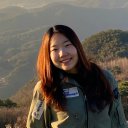
 Soo Ye Kim
· 3 previous affiliations
- Adobe Systems (United States)Since 2021
- Senior Research Scientist · Since 2026
- Current
- Research Scientist 2 · 2024–2026
- Research Scientist · 2022–2024
- Research Intern · 2021
- Doctor of Philosophy - PhD, Electrical Engineering · 2018–2022
- Master of Science - MS, Electrical Engineering · 2016–2018
- Undergrad student · 2012–2016
- Google (United States)2020–2021
- Student Researcher · 2020–2021
- Intern · 2020
Research Overview
Soo Ye Kim focuses on low-level computer vision, image and video restoration, and controllable generative modeling. Her early research addressed the joint optimization of super-resolution, inverse tone-mapping, and frame interpolation for high-fidelity video enhancement. More recently, her work investigates training-free control mechanisms and high-frequency detail preservation in diffusion models for advanced image and video synthesis.
Research Trajectory
Kim’s early research focused heavily on video enhancement, specifically addressing the computational and qualitative challenges of upscaling legacy media for modern high-definition displays. In 2019, she proposed Video Super-Resolution Based on 3D-CNNS with Consideration of Scene Change, utilizing 3D convolutional neural networks to better capture spatio-temporal coherence without the need for explicit motion alignment preprocessing. Recognizing that modern displays require not just higher resolution but also expanded dynamic range, she introduced Deep SR-ITM: Joint Learning of Super-Resolution and Inverse Tone-Mapping for 4K UHD HDR Applications. This work established a joint framework to directly map low-resolution, standard dynamic range video to high-resolution, high dynamic range outputs.
Because increasing spatial resolution often exacerbates the perception of motion artifacts like judder, Kim expanded this joint optimization approach to include temporal upsampling. With FISR: Deep Joint Frame Interpolation and Super-Resolution with a Multi-Scale Temporal Loss, she developed a unified network to simultaneously interpolate frames and increase resolution. She further refined the joint super-resolution and inverse tone-mapping problem through a divide-and-conquer generative adversarial network in JSI-GAN: GAN-Based Joint Super-Resolution and Inverse Tone-Mapping with Pixel-Wise Task-Specific Filters for UHD HDR Video, which utilized specialized subnets for image reconstruction, detail restoration, and local contrast enhancement. Around this period, her investigations into neural network behavior also touched upon the broader theoretical area of Spectral Bias and the Frequency Principle in Neural Networks.
Moving beyond controlled upsampling, Kim’s work transitioned into blind super-resolution, where degradation kernels are unknown and often spatially variant. She developed KOALAnet: Blind Super-Resolution Using Kernel-Oriented Adaptive Local Adjustment, a framework that jointly learns degradation characteristics and restores features. This work made significant contributions to research directions such as Spatially Variant Kernels for Real-World Image Restoration and Spatially Variant Kernel Prediction for Image Restoration. Crucially, KOALAnet addressed the complex problem of Disentangling Artistic Intent from Technical Degradation, allowing the model to preserve intentional aesthetic effects like bokeh while removing unintentional camera blur.
Her research also explored depth estimation and image inpainting. In Layered Depth Refinement with Mask Guidance, she formulated a novel approach to correct the isolated holes and inaccurate boundaries often produced by single-image depth estimation models, utilizing generic masks to guide layered refinement. To tackle the loss of fine textures in deep inpainting, she introduced Zoom-to-Inpaint: Image Inpainting with High-Frequency Details. By applying super-resolution to coarsely reconstructed outputs and refining them at high resolution, this method successfully reconstructed high-frequency details that are typically smoothed out by standard neural networks.
Following her doctoral studies, Kim continued her research as a Research Scientist at Adobe Research, where her focus shifted toward advanced generative modeling and diffusion techniques. She led the development of Descanning: From Scanned to the Original Images with a Color Correction Diffusion Model, introducing a large-scale dataset and a novel diffusion architecture that combines global color correction with local generative refinement to reverse complex scanning degradations.
In recent collaborative projects, Kim has focused on enhancing the controllability and efficiency of diffusion models. She participated in the development of Frame Guidance: Training-Free Guidance for Frame-Level Control in Video Diffusion Models, a model-agnostic framework that enables fine-grained video control using sketches or style references without requiring expensive fine-tuning. She also contributed to Both Semantics and Reconstruction Matter: Making Representation Encoders Ready for Text-to-Image Generation and Editing, which regularizes powerful semantic encoders into a compact latent space to improve both structural and pixel-level fidelity in image synthesis. Additionally, her work on OmniText: A Training-Free Generalist for Controllable Text-Image Manipulation demonstrates how manipulating the attention mechanisms of off-the-shelf diffusion models can achieve precise text insertion and erasure while matching the surrounding aesthetic. Through these recent advancements, her collaborative efforts intersect with broader research areas, including Zero-Shot Video Intelligence from Static Image Pre-training and the study of Multi-dimensional Rotary Embeddings for Spatiotemporal Transformers.
Current Directions
The most recent papers in the evidence indicate a strong focus on controllable generative modeling, particularly leveraging diffusion architectures for high-fidelity image and video synthesis. Recent work investigates training-free guidance frameworks that allow for fine-grained, frame-level control over video generation, circumventing the computational overhead typically associated with model fine-tuning. By manipulating attention mechanisms and optimizing latent spaces, these approaches enable precise aesthetic and structural control, such as pixel-perfect text manipulation within images.
Additionally, current research addresses the integration of robust semantic representation encoders into text-to-image pipelines. This involves regularizing powerful "understanding" encoders to ensure that generative models maintain both semantic accuracy and pixel-level reconstruction quality. Another ongoing theme is the application of diffusion models to complex, real-world restoration tasks, such as recovering original image states from degraded scans through a combination of global color correction and local generative refinement.
Profile updated
Loading new papers…
Other researchers whose papers cluster into the same research directions — a proxy for overlapping technical interests and shared intellectual neighborhoods.
See something wrong? Report a mistake