

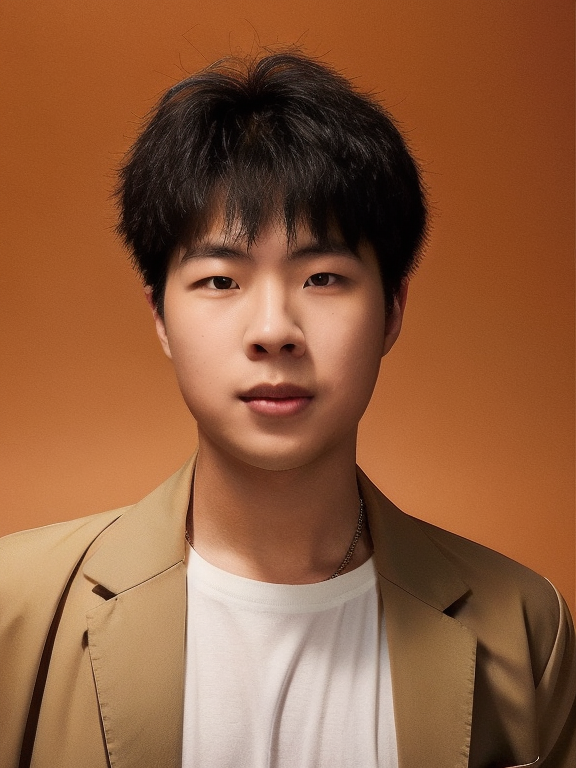
 Songning Lai
· 2 previous affiliations
- Researcher · Current
- Shandong University2020–2024
- Undergrad student · 2020–2024
Research Overview
Songning Lai focuses on trustworthy artificial intelligence, multimodal learning, and continual learning architectures. His early research explored multimodal sentiment analysis and bioinformatics before shifting toward the explainability and robustness of deep learning models, particularly through concept bottleneck models. Currently, his work addresses reliable time series forecasting, knowledge editing in large language models, and robust motion generation.
Research Trajectory
Lai's initial publications addressed applied machine learning and multimodal analysis. In 2022, he developed models for bioinformatics, such as Predicting Lysine Phosphoglycerylation Sites using Bidirectional Encoder Representations with Transformers & Protein Feature Extraction and Selection, which utilized protein feature acquisition and KNN data cleaning to identify phosphorylation sites. Concurrently, he explored the intersection of text, audio, and visual data, publishing a comprehensive overview of the field in Multimodal sentiment analysis: A survey. This foundational interest evolved into novel architectures for disentangling information streams. In Shared and Private Information Learning in Multimodal Sentiment Analysis with Deep Modal Alignment and Self-supervised Multi-Task Learning, he introduced a deep modal shared information learning module. This research contributed to broader efforts in the area of Robust Alignment and Fusion in Multimodal Transformers and the research direction of Disentangling Shared and Specific Features in Multimodal Learning.
By 2024, Lai's focus expanded significantly into trustworthy AI, with a particular emphasis on explainability and robustness. A central theme of this period is the use of Concept Bottleneck Models (CBMs) to provide interpretable, label-free insights into neural networks. He introduced the Faithful Vision-Language Concept (FVLC) model in Faithful Vision-Language Interpretation via Concept Bottleneck Models, utilizing a min-max optimization framework to ensure explanations remain consistent under perturbation. This commitment to interpretable and stable systems extended to autonomous driving applications, where he participated in developing DRIVE: Dependable Robust Interpretable Visionary Ensemble Framework in Autonomous Driving, a framework designed to prevent erratic reasoning and hallucinated justifications in end-to-end driving models.
Parallel to his work on explainability, Lai tackled the stability-plasticity dilemma in continual learning. His research in the area of Analytic Weight Updates for Incremental Learning sought to mitigate catastrophic forgetting without incurring high computational costs. In SegACIL: Solving the Stability-Plasticity Dilemma in Class-Incremental Semantic Segmentation, he proposed a single-epoch continual learning method for semantic segmentation based on a linear closed-form solution. This approach, which aligns with the broader field of High-Dimensional Random Projections for Analytic Continual Learning, was further expanded to handle both 2D images and 3D point clouds in CFSSeg: Closed-Form Solution for Class-Incremental Semantic Segmentation of 2D Images and 3D Point Clouds. He subsequently bridged his interests in continual learning and interpretability by developing the CONCIL framework in Learning New Concepts, Remembering the Old: Continual Learning for Multimodal Concept Bottleneck Models, reformulating CBM updates as analytic linear regression problems to achieve robust knowledge retention.
During this same period, Lai investigated techniques for model merging and multi-task learning, contributing to the research direction of Overcoming Parameter Interference in Model Merging. He developed a training-free framework in Beyond Task Vectors: Selective Task Arithmetic Based on Importance Metrics, which uses a loss-sensitive metric to mask and sparsify task vectors, enabling precise task forgetting and merging. He also introduced Wolf2Pack: The AutoFusion Framework for Dynamic Parameter Fusion, utilizing a differentiable Sinkhorn operator to learn parameter permutations and fuse independently trained networks without shared pre-trained weights.
Moving into 2025 and 2026, while working as a Quant Researcher at JoinQuant, Lai's research diversified into time series forecasting, physical reasoning, and generative modeling. Addressing the unreliability of deep learning models on out-of-distribution data, he proposed a dual rejection mechanism in Towards Reliable Time Series Forecasting under Future Uncertainty: Ambiguity and Novelty Rejection Mechanisms. This framework combines novelty detection via Variational Autoencoders with ambiguity assessment to allow models to safely abstain from uncertain predictions. He continued this trajectory in multimedia contexts with From Guesswork to Guarantee: Towards Faithful Multimedia Web Forecasting with TimeSieve. In medical time series, Lai co-authored ClinStab: Stability-Oriented Learning for Medical Time Series via Dual-Stream Alignment, introducing a Medformer-based framework with dual-stream modulation and perturbation-aware optimization to improve clean and robust classification on physiological signals such as EEG and ECG.
In the domain of physical reasoning, Lai collaborated on Mimicking the Physicist's Eye : A VLM-centric Approach for Physics Formula Discovery, which introduced VIPER-R1, a multimodal model that integrates visual perception and trajectory data to discover fundamental symbolic formulas. His work on motion dynamics also extended to robotics, contributing to the field of Frequency Domain Representations for Motion Modeling. In Free-T2M: Robust Text-to-Motion Generation for Humanoid Robots via Frequency-Domain, he helped develop a framework that treats diffusion denoising as a hierarchical motion planner, aligning low-frequency global trajectories with high-frequency fine motor details. Recognizing the limitations of existing evaluation methods in this space, he subsequently co-authored Towards Better Evaluation Metrics for Text-to-Motion Generation, proposing novel metrics based on optimal transport and Maximum Mean Discrepancy to replace traditional measures like FID.
Most recently, Lai has explored the mechanics of large language models. In ACE: Attribution-Controlled Knowledge Editing for Multi-hop Factual Recall, he participated in designing a framework that identifies and edits specific query-value neuron pathways, significantly improving how LLMs update interconnected facts during multi-hop reasoning tasks. Lai also contributed to robot policy consolidation in Trajectory-Calibrated Merging of Embodied Policies, which introduces Trajectory-Calibrated Regression to merge embodied specialist models without gradient retraining by calibrating across multi-timescale execution rollouts.
Current Directions
The most recent papers in the evidence indicate a focus on the reliability and precise control of complex generative and forecasting models. One major direction involves reliable time series forecasting under uncertainty, where recent work develops dual rejection mechanisms that allow models to abstain from predictions when faced with out-of-distribution data or high ambiguity. In the realm of generative AI, current research addresses text-to-motion generation for humanoid robots, utilizing frequency-domain perspectives to improve physical plausibility, alongside the development of more robust evaluation metrics based on optimal transport. Additionally, recent investigations into large language models focus on attribution-controlled knowledge editing, seeking to precisely update interconnected facts and improve multi-hop reasoning by targeting specific neuron pathways.
Profile updated
Loading new papers…
Other researchers whose papers cluster into the same research directions — a proxy for overlapping technical interests and shared intellectual neighborhoods.
See something wrong? Report a mistake