

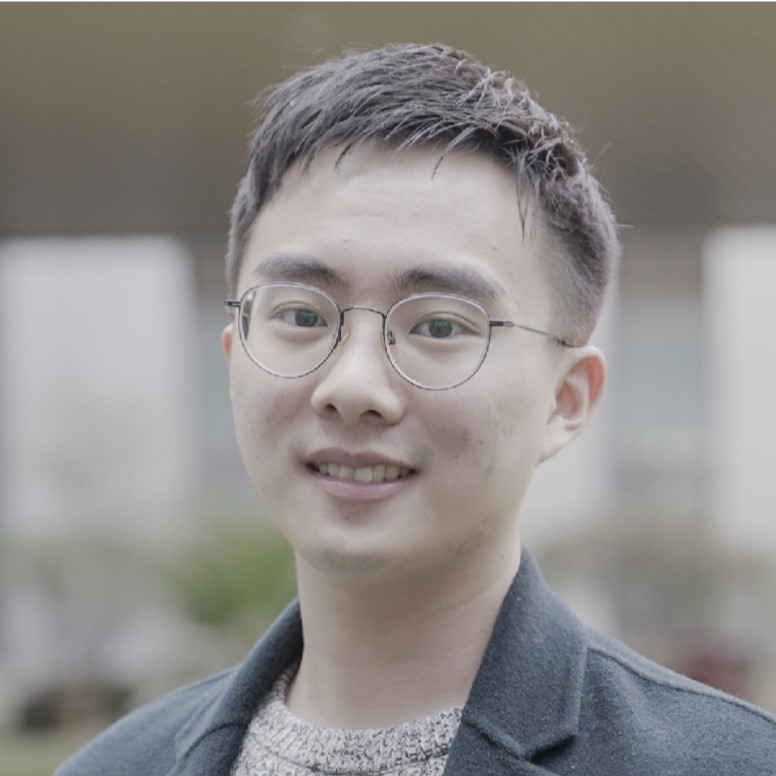
 Songlin Yang
· 7 previous affiliations
- PhD student · 2025–2028
- Current
- Tencent (China)Since 2025
- Student Researcher · Since 2025
- Researcher · 2025–2026
- Nanyang Technological University2024–2025
- Associate Researcher · 2024–2025
- Institute of Automation2021–2024
- Master of Science - MS, Pattern Recognition and Intelligent Systems · 2021–2024
- Chinese Academy of Sciences2021–2024
- Master of Science - MS, Pattern Recognition and Intelligent Systems · 2021–2024
- 微软2022
- Research Assistant · 2022
- Research Assistant · 2021
2 other authors named Songlin Yang: Songlin Yang (Thinking Machines · Thinking Machines Lab · 30 papers), Songlin Yang (Alibaba Group (China) · Vivo · 2 papers)
Research Overview
Songlin Yang focuses on multimodal generative AI, 3D vision, and trustworthy content generation. His trajectory spans early work in facial privacy and neural rendering to recent advancements in diffusion models, 3D morphing, and robust preference alignment. Currently, he investigates the evaluation and safety of generative models alongside unified architectures for 3D understanding.
Research Trajectory
His early research addressed the intersection of facial analysis, privacy, and security. In 2021, he introduced A Systematical Solution for Face De-identification, which utilized attribute disentanglement and generative adversarial networks to separate identity from expression, allowing for complete identity removal while preserving facial dynamics. Building on this security-conscious foundation, he later investigated the robustness of biometric systems, developing a framework in Exposing Fine-Grained Adversarial Vulnerability of Face Anti-Spoofing Models to analyze how specific model architectures and auxiliary features respond to adversarial perturbations.
Parallel to his work in security, he advanced techniques for realistic facial synthesis and editing. He developed a 3D-aware encoder based on StyleNeRF to facilitate realistic facial manipulations in Designing A 3d-Aware Stylenerf Encoder for Face Editing. Expanding into video, he contributed to Context-Aware Talking-Head Video Editing, a framework that combines animation prediction with neural rendering to seamlessly insert, delete, or substitute words in source video while maintaining accurate lip synchronization. This focus on neural rendering culminated in Learning Dense Correspondence for NeRF-Based Face Reenactment, which tackled the challenge of establishing dense correspondence between implicit NeRF representations—which lack the explicit vertex annotations of traditional 3D parametric models—to improve motion transfer and 3D consistency.
As diffusion models emerged as powerful generative priors, his research expanded to leverage these models for complex 3D and semantic tasks. In Textured 3D Regenerative Morphing with 3D Diffusion Prior, he proposed a method to create smooth, plausible interpolations between 3D objects without relying on explicit point-to-point correspondences, overcoming traditional limitations in shape-only morphing. He also explored personalized generation in Beyond Inserting: Learning Subject Embedding for Semantic-Fidelity Personalized Diffusion Generation, focusing on learning subject embeddings that maintain high semantic fidelity. Further integrating foundation models into 3D understanding, he adapted 3D geometric priors for dense semantic matching in Dense Semantic Matching with VGGT Prior, successfully mitigating geometric ambiguities across different objects of the same category.
A significant portion of his recent trajectory addresses the evaluation, safety, and alignment of generative models. To improve how multimodal large language models assess images, he co-developed Q-Scorer in Revisiting MLLM Based Image Quality Assessment: Errors and Remedy, introducing abstract tokens to enable continuous quality scoring without degrading the model's linguistic capabilities. In the domain of AI safety, he contributed to Adaptive Median Smoothing: Adversarial Defense for Unlearned Text-to-Image Diffusion Models at Inference Time, an inference-time defense mechanism that applies token-specific noise to block adversarial prompts from regenerating erased concepts. Additionally, he led the development of HandEval: Taking the First Step Towards Hand Quality Evaluation in Generated Images. By combining a large-scale dataset with structural keypoint priors, this work established a systematic framework for scoring hand realism, contributing significantly to the broader research direction of Structural Priors for Anatomically Correct Human Image Synthesis.
Most recently, his work has pushed the boundaries of preference alignment and unified 3D optimization. In $\alpha$-DPO: Robust Preference Alignment for Diffusion Models via $\alpha$ Divergence, he helped introduce a noise-robust framework that replaces standard KL divergence with a mode-seeking $\alpha$-divergence objective, improving image-text alignment even on noisy datasets. Concurrently, he contributed to RGGT: A Generative-Prior-Guided Transformer for Unified Rigid and Non-Rigid Point Cloud Registration, which leverages 3D generative priors and a novel attention mechanism to unify rigid and non-rigid point cloud registration within a single optimization space.
Current Directions
Based on the most recent papers in the evidence, his current work investigates the robust alignment and evaluation of multimodal generative models, alongside advanced 3D understanding. A major focus is developing noise-robust preference optimization techniques to better align diffusion models with human expectations, particularly when training data contains subjective or mislabeled preferences. Simultaneously, he is exploring the integration of generative priors into foundational 3D tasks, such as unifying rigid and non-rigid point cloud registration. Finally, he continues to address the safety and reliability of generative AI, designing inference-time defenses for machine unlearning and creating specialized evaluation frameworks to assess the anatomical fidelity of AI-generated content.
Profile updated
Loading new papers…
Other researchers whose papers cluster into the same research directions — a proxy for overlapping technical interests and shared intellectual neighborhoods.
See something wrong? Report a mistake