

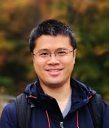
 Songhe Feng
· 1 previous affiliation
- Beijing Jiaotong UniversitySince 1999
- Full Professor · Since 2017
- Associate Professor · 2012–2017
- Assistant Professor · 2009–2012
- PhD student · 2003–2009
- Undergrad student · 1999–2003
Research Overview
Songhe Feng focuses on multimodal machine learning, partial label learning, and cross-domain image semantic understanding. His early work addressed noisy and incomplete annotations through matrix recovery and graph matching techniques. More recently, his research has advanced to tackle continual learning, incomplete multi-view clustering, and compositional zero-shot learning using adaptive test-time frameworks.
Research Trajectory
Feng’s research initially explored methods for handling noisy and incomplete data in computer vision tasks. In collaboration with others, he investigated image tag completion, participating in the development of a noisy matrix recovery algorithm to simultaneously enrich missing tags and filter out incorrect ones in Image Tag Completion by Noisy Matrix Recovery. He later advanced techniques for establishing correspondences between graph elements, a fundamental problem in computer vision. He directed work on Graph Matching with Adaptive and Branching Path Following, which introduced a branching path following strategy to handle singular points and improve graph matching accuracy.
A major theme in his trajectory is the challenge of learning from ambiguous or redundant annotations, particularly in the research direction of Disambiguation in Partial Label Learning. He introduced Partial Multi-Label Learning by Low-Rank and Sparse Decomposition, addressing the problem of redundant labeling where the true label is obscured by irrelevant noise. He expanded on this foundation with HERA: Partial Label Learning by Combining Heterogeneous Loss with Sparse and Low-Rank Regularization and GM-PLL: Graph Matching Based Partial Label Learning, integrating graph matching techniques into partial label learning frameworks. He further refined these methods with A Self-Paced Regularization Framework for Partial-Label Learning, which incorporated a self-paced learning strategy to prioritize easier examples before tackling more complex, ambiguous instances.
As his work evolved, Feng began addressing the challenges of continual learning and model adaptation in dynamic environments. He directed research in the area of Meta-Learning Auxiliary Tasks for Gradient Alignment, proposing a meta-learning framework for continuous generalized category discovery in MetaGCD: Learning to Continually Learn in Generalized Category Discovery. This work enabled models to incrementally discover new object categories from unlabeled data while retaining previously learned knowledge. He also collaborated on MetaZSCIL: A Meta-Learning Approach for Generalized Zero-Shot Class Incremental Learning, which tackled the sequential learning of new classes using only text-based attribute descriptors without requiring new images.
Feng has also made significant contributions to the broader area of Learning from Incomplete Multi-View Data. He led the development of the EDISON framework in EDISON: Enhanced Dictionary-Induced Tensorized Incomplete Multi-View Clustering with Gaussian Error Rank Minimization, which effectively groups data even when information from some views is missing. He continued this line of inquiry with KOALA: Kernel Coupling and Element Imputation Induced Multi-View Clustering, addressing the dual challenges of incomplete data and unaligned sample correspondences across different views.
Concurrently, Feng has focused on making models more robust at test time and capable of compositional generalization. He directed work on Test-Time Domain Adaptation by Learning Domain-Aware Batch Normalization, introducing Meta-Adaptive Batch Normalization to help deep learning models adapt to new environments during inference. He also introduced a new benchmark and framework in Continual Compositional Zero-Shot Learning, utilizing "Super-Primitives" and dual knowledge distillation to allow models to learn new attributes and objects incrementally. He collaborated on TOMCAT: Test-time Comprehensive Knowledge Accumulation for Compositional Zero-Shot Learning, a framework that dynamically updates visual and textual prototypes using unlabeled data during the testing phase. Most recently, he developed the TRIDENT framework in Leveraging MLLM Embeddings and Attribute Smoothing for Compositional Zero-Shot Learning, which replaces shallow word embeddings with rich states from Multimodal Large Language Models and introduces attribute smoothing to improve the recognition of novel attribute-object combinations.
Current Directions
The most recent papers in the evidence indicate a strong focus on compositional zero-shot learning and test-time adaptation. Feng is investigating how to bridge the performance gap between seen training data and unseen test-time compositions by dynamically accumulating knowledge during inference. This involves leveraging rich representations from Multimodal Large Language Models to generate auxiliary descriptive attributes, thereby preventing models from becoming overconfident in familiar training pairs. Additionally, he continues to advance methods for incomplete multi-view clustering, developing frameworks that simultaneously handle missing views and unaligned sample correspondences through kernel coupling and element imputation.
Profile updated
Loading new papers…
Other researchers whose papers cluster into the same research directions — a proxy for overlapping technical interests and shared intellectual neighborhoods.
See something wrong? Report a mistake