

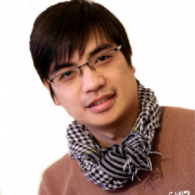
 Son N. Tran
· 4 previous affiliations
- Deakin UniversitySince 2023
- Associate Professor · Since 2023
- University of Tasmania2019–2023
- Lecturer · 2019–2023
- Postdoc · 2016–2019
- City University2011–2015
- PhD student · 2011–2015
Research Overview
Son N. Tran focuses on sequence classification, unsupervised feature learning, and multimodal representation learning. The available evidence traces a trajectory from radar-based human identification to the development of gated restricted Boltzmann machines for temporal data. More recently, this work has extended into deep auto-encoder architectures for dimensional emotion recognition and neuro-symbolic reasoning.
Research Trajectory
The available corpus of work, spanning from 2018 to 2022, begins with collaborative research on signal processing and biometrics. As a second author, Tran contributed to Human Identification via Unsupervised Feature Learning from UWB Radar Data (2018), which explored unsupervised methods for extracting identifying features from ultra-wideband radar signals.
A primary methodological contribution appears in 2020, where Tran led the development of novel energy-based models for temporal data. As first author of Sequence Classification Restricted Boltzmann Machines With Gated Units, Tran addressed the computational intractability often found in recurrent temporal restricted Boltzmann machines (RTRBMs). Because maximizing log-likelihoods in these models typically requires exponential gradient computations, this work optimized a conditional rather than a joint probability distribution. By introducing a gated architecture, the model was designed to better capture temporal dependencies in sequence classification. This approach aligns with broader interests in the research direction of Logical Inference as Energy Minimization, where energy-based frameworks are adapted to handle complex reasoning and pattern recognition tasks.
In subsequent years, Tran participated as a middle author in applied deep learning research, specifically targeting affective computing. This is evidenced by contributions to Deep Auto-Encoders With Sequential Learning for Multimodal Dimensional Emotion Recognition, published in IEEE Transactions on Multimedia in 2022. This research proposed a two-stream auto-encoder combined with long short-term memory networks to simultaneously extract and fuse complementary features from multimodal data streams, allowing for end-to-end emotion recognition.
Beyond sequence classification and affective computing, the broader taxonomy of Tran's research profile indicates contributions to several advanced areas of machine learning. These include the research direction of Differentiable Logic for Neuro-Symbolic Reasoning and the area of Reasoning with Weighted Logical Constraints, which seek to bridge the gap between continuous neural optimization and discrete logical constraints. Additional thematic connections in the corpus point to work in Equivariant Neural Networks for Geometric Data and the broader area of Local to Global Alignment in Graph Representation Learning.
Current Directions
Based on the provided evidence, the most recent specific publication is from 2022, while associated research themes extend into 2025. Tran's recent collaborative work addresses end-to-end multimodal feature fusion for dimensional emotion recognition, focusing on how to simultaneously extract and combine complementary features from diverse data streams.
Concurrently, the broader trajectory indicates ongoing engagement with the research direction of Differentiable Logic for Interpretable and Efficient Models. This area focuses on resolving the fundamental tension between continuous gradient-based learning and discrete symbolic logic, aiming to build models that are both interpretable and capable of handling complex, real-world constraints where strict classical logic often proves too brittle.
Profile updated
Loading new papers…
Loading research neighbors…
See something wrong? Report a mistake