

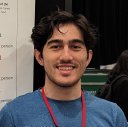
 Skyler Hallinan
· 6 previous affiliations
- Microsoft AISince 2026
- Member of Technical Staff · Since 2026
- University of Southern CaliforniaSince 2024
- PhD student · Since 2024
- Research Intern · 2026
- Samaya AI2025
- Research Intern · 2025
- University of Washington2017–2024
- Undergraduate Reseacher · 2020–2024
- MS student · 2021–2024
- Teaching Assistant · 2021–2023
- Undergrad student · 2017–2021
- Master of Science - MS, Computer Science
- Apple (United States)2023–2024
- AI/ML Research Intern · 2023–2024
Research Overview
Skyler Hallinan focuses on the development of autonomous AI systems, emphasizing data attribution, inference-time reasoning, and the curation of training experiences for large language models. His trajectory spans from early work on text detoxification and style transfer to recent investigations into how models memorize data and exhibit linguistic creativity. Currently, he investigates scalable methods for membership inference and structured evaluation frameworks for multi-turn conversations.
Research Trajectory
Hallinan's early work explored methods for enhancing the reasoning capabilities of language models, particularly through reinforcement learning and test-time optimization. In 2022, he introduced Rainier: Reinforced Knowledge Introspector for Commonsense Question Answering, a framework designed to improve multi-hop reasoning by training models to generate their own knowledge contexts rather than relying solely on external retrieval.
In 2023, his focus expanded to encompass pragmatic reasoning, text detoxification, and style transfer. He developed Misinfo Reaction Frames: Reasoning about Readers’ Reactions to News Headlines, which modeled how readers respond to news content to better understand pragmatic reasoning and trust in media. Concurrently, he addressed safety and stylistic control in text generation. With Detoxifying Text with MaRCo: Controllable Revision with Experts and Anti-Experts, he proposed an unsupervised algorithm leveraging the disagreement between toxic and non-toxic language models to revise subtle biases, contributing to the field of Semantic Preservation in Automated Text Detoxification. He also introduced STEER: Unified Style Transfer with Expert Reinforcement, a framework combining expert-guided synthetic data generation with reinforcement learning to rewrite text into multiple target styles while maintaining semantic fidelity.
During this period, Hallinan also participated in collaborative efforts to improve model outputs at inference time without relying on extensive fine-tuning. He contributed to Self-Refine: Iterative Refinement with Self-Feedback, a method enabling language models to iteratively improve their initial outputs, which advanced the direction of Autonomous Self-Correction Loops for Generative Output Refinement. Additionally, he was involved in the development of Inference-Time Policy Adapters (IPA): Tailoring Extreme-Scale LMs without Fine-tuning. This work explored lightweight mechanisms to steer frozen models toward specific constraints, intersecting with the areas of Parameter-Efficient Reinforcement Learning with Low-Rank Adaptation and Steering Language Models via Inference Time Logit Arithmetic.
Moving into 2024, his research continued to explore distillation and stylistic control. He collaborated on Tailoring Self-Rationalizers with Multi-Reward Distillation, which utilized a multi-reward reinforcement learning approach to help smaller language models generate human-preferred explanations, contributing to the area of Multi-Objective Reward Balancing for Conversational Agents. He also led the development of StyleRemix: Interpretable Authorship Obfuscation via Distillation and Perturbation of Style Elements. By perturbing specific stylistic invariants using lightweight adapters, this work provided a controllable method for hiding an author's identity while preserving the underlying message.
In 2025, Hallinan's work has increasingly focused on data attribution, memorization, and the evaluation of model outputs. He developed The Surprising Effectiveness of Membership Inference with Simple N-Gram Coverage, introducing a scalable membership inference attack that operates solely on a language model's text outputs, making it applicable to black-box APIs. He also collaborated on AI as Humanity’s Salieri: Quantifying Linguistic Creativity of Language Models via Systematic Attribution of Machine Text against Web Text, which established a statistical measure to determine how much of a model's output is reconstructed from existing web data. This research directly advanced the area of Quantifying Linguistic Originality in Large Language Models. Finally, he contributed to Amulet: Putting Complex Multi-Turn Conversations on the Stand with LLM Juries, a framework that improves the accuracy of automated evaluation in multi-turn conversations by grounding the reasoning of LLM-judges in established linguistic theories.
Current Directions
Recent work investigates the intersection of data attribution, model evaluation, and privacy in large language models. The most recent papers in the evidence address how models memorize and reproduce their training data, developing scalable membership inference techniques that operate effectively even in black-box settings. Alongside privacy considerations, this research direction explores the statistical signatures of machine-generated text to quantify linguistic originality, distinguishing between genuine creativity and the remixing of existing web corpora. Furthermore, current efforts focus on refining automated evaluation frameworks, utilizing structured, theory-grounded approaches to improve how models assess complex, multi-turn conversations.
Profile updated
Loading new papers…
Other researchers whose papers cluster into the same research directions — a proxy for overlapping technical interests and shared intellectual neighborhoods.
See something wrong? Report a mistake