

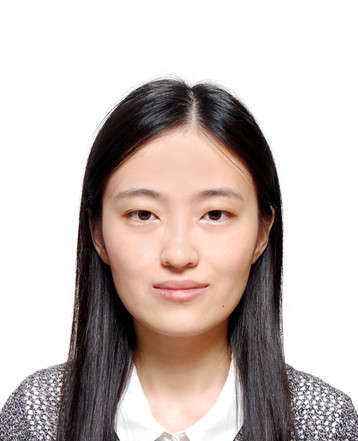
 Siqi Bao
· 2 previous affiliations
- Baidu (China)Since 2017
- Researcher · Since 2017
- PhD student · 2012–2017
Research Overview
Siqi Bao focuses on conversational artificial intelligence, large-scale dialogue generation, and knowledge-grounded reasoning. His early work addressed medical image segmentation before transitioning to foundational architectures for open-domain and task-oriented chatbots. Recently, his research investigates retrieval-augmented generation, synthetic data for agentic search, and efficiency optimizations for large language models.
Research Trajectory
Bao’s early research focused on computer vision and medical image analysis. He developed techniques for structural boundary segmentation, introducing a method in Label Inference with Registration and Patch Priors that utilized signed distance functions to evaluate segmentation confidence. He subsequently expanded this work into three-dimensional deep learning architectures, proposing a convolutional long short-term memory approach for brain magnetic resonance image segmentation in 3D Randomized Connection Network With Graph-Based Label Inference.
By 2019, his focus shifted entirely to natural language processing and conversational AI. He explored methods for evolving dialogue strategies in Know More about Each Other: Evolving Dialogue Strategy via Compound Assessment. This work contributed to several emerging research areas, including the area of Stateful Coverage Mechanisms for Non-Redundant Dialogue, the broader field of Preventing Language Drift in Task Oriented Dialogue, and the direction of Multi-Objective Reward Balancing for Conversational Agents.
Following this, Bao led the development of the PLATO series of dialogue models, which sought to address the inherent one-to-many mapping problem in human conversation. He introduced the foundational model in PLATO: Pre-trained Dialogue Generation Model with Discrete Latent Variable, utilizing discrete latent variables to improve response coherence and informativeness. He then scaled this approach with PLATO-2: Towards Building an Open-Domain Chatbot via Curriculum Learning, which employed a two-stage learning process to refine general response patterns into diverse replies. The architecture was further expanded in PLATO-XL: Exploring the Large-scale Pre-training of Dialogue Generation, an 11-billion parameter model that incorporated multi-party aware pre-training to reduce hallucination and inconsistency in open-domain chitchat.
Concurrently, Bao investigated how to ground dialogue systems in external knowledge to improve factual accuracy and domain adaptability. With collaborators, he developed Q-TOD: A Query-driven Task-oriented Dialogue System, which extracted natural language queries from dialogue contexts to retrieve relevant knowledge records, bypassing the constraints of rigid knowledge base schemas. This research advanced the area of Schema Guided Modeling for Scalable Conversational AI and the direction of Open-Vocabulary Dialogue State Tracking via Sequence Generation. He further addressed information deficiency in open-domain settings with PLATO-K: Internal and External Knowledge Enhanced Dialogue Generation, proposing a dialogic learning process that combined parametric memory with active external search.
In 2023, his work continued to refine knowledge-intensive interactions. He participated in the design of unsupervised joint modeling techniques in Query Enhanced Knowledge-Intensive Conversation via Unsupervised Joint Modeling, contributing to the research direction of Reducing Contextual Noise for Robust Reasoning. To better align conversational agents with human preferences, he collaborated on the Diamante framework in Towards Boosting the Open-Domain Chatbot with Human Feedback, which leveraged both explicit demonstrations and implicit feedback to generate more engaging responses.
Expanding the modalities and capabilities of dialogue systems, Bao contributed to Learning to Select External Knowledge With Multi-Scale Negative Sampling, which improved how task-oriented systems handle out-of-API queries. He also oversaw research into multimodal conversational agents, guiding the development of Towards Building an Open-Domain Dialogue System Incorporated With Internet Memes, which modeled emotional trajectories to retrieve and integrate internet memes into text-based chats.
Most recently, in 2026, Bao's research has expanded into the optimization and application of large language models for complex reasoning and retrieval tasks. He collaborated on Retro*: Optimizing LLMs for Reasoning-Intensive Document Retrieval, a reinforcement learning-based framework designed for scenarios where the connection between a query and a document is highly abstract. He also participated in the development of the InfoSeek framework in Open Data Synthesis for Deep Research, addressing the data drought in agentic search by synthesizing complex training workflows. Additionally, he contributed to architectural efficiency research with ProxyAttn: Guided Sparse Attention via Representative Heads, a training-free algorithm that reduces the computational cost of processing long contexts.
Current Directions
Bao’s most recent work investigates the intersection of large language models, agentic search, and complex reasoning. A primary focus is on "deep research" workflows, where models must perform iterative searching, query decomposition, and multi-step reasoning. To support this, his research explores open data synthesis techniques that generate high-quality training environments mimicking real-world research tasks. Additionally, he is actively working on architectural optimizations for large language models, specifically developing sparse attention mechanisms that drastically reduce the computational overhead of processing long-context documents without sacrificing precision.
Profile updated
Loading new papers…
Other researchers whose papers cluster into the same research directions — a proxy for overlapping technical interests and shared intellectual neighborhoods.
See something wrong? Report a mistake