

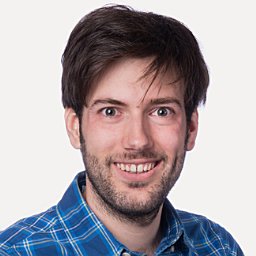
 Simone Lionetti
6 previous affiliations
- Researcher & Lecturer · 2024–2025
- Highly Specialised Senior Research Associate · 2022–2024
- Postdoc · 2019–2024
- Durham University2018–2019
- Postdoc · 2018–2019
- ETH Zurich2013–2018
- Scientific Assistant · 2013–2018
- University of Milan2010–2013
- Laurea Magistrale in Fisica, Physics · 2010–2013
- Master Student · 2012
- Temporary Employee · 2011
Research Overview
Simone Lionetti focuses on data quality, robust machine learning, and self-supervised representation learning, with a particular emphasis on medical imaging and environmental monitoring. His work addresses the challenges of noisy labels, out-of-distribution detection, and dataset curation to improve the reliability of model evaluation. Recently, he has expanded his research to include foundation models for acoustic analysis in hearable devices.
Research Trajectory
Lionetti’s early work centers on improving the reliability of machine learning models by addressing data quality and annotation issues, particularly in high-stakes domains like medical imaging. In 2023, he participated in developing a resource-efficient data-cleaning protocol for dermatology datasets in Towards Reliable Dermatology Evaluation Benchmarks. This work contributed to the research direction of Automated Quality Control for Large Medical Imaging Datasets and the area of Patient Level Data Partitioning in Medical AI, while also utilizing techniques from the broader area of Generalized Likelihood Ratio Stopping Rules to establish intuitive termination criteria for human confirmation processes. To handle noisy labels and outliers directly during model training, he collaborated on Robust T-Loss for Medical Image Segmentation, which introduced a loss function based on the Student-t distribution that dynamically adjusts its sensitivity to outliers without requiring prior knowledge of the noise level.
Addressing dataset curation more broadly, Lionetti helped develop SelfClean: A Self-Supervised Data Cleaning Strategy. This procedure leverages a self-supervised latent space to identify irrelevant images, near-duplicates, and label errors while avoiding human annotation biases. The methodology intersects with research areas such as Efficiency and Computational Bottlenecks in Self-Supervised Pretraining, the direction of Refining Labels via Local Feature Space Consistency, and the area of Resolving Ambiguity Between Hard Samples and Label Noise.
In 2024, Lionetti continued to refine these self-supervised auditing techniques. He co-authored Intrinsic Self-Supervision for Data Quality Audits, which formalized data cleaning as a ranking and scoring problem using context-aware representations and distance-based indicators to automate quality control decisions. Applying these representation learning strategies to environmental domains, he led research on Self-Supervised and Few-Shot Learning for Robust Bioaerosol Monitoring. This work demonstrated how combining self-supervised and few-shot learning can effectively classify holographic images of bioaerosol particles, significantly reducing the need for large, manually annotated datasets when deploying models to new geographical regions. Concurrently, he investigated out-of-distribution (OOD) detection for safety-critical applications in Hyperbolic Metric Learning for Visual Outlier Detection. This research explored a metric framework utilizing Hyperbolic geometry to better capture the hierarchical concept structure of visual data, revealing that synthetic outliers behave differently in Hyperbolic spaces compared to traditional Euclidean spaces.
Most recently, Lionetti has extended his focus on robust evaluation to the audio domain. In 2025, he directed the development of Evaluation of Deep Audio Representations for Hearables, introducing the DEAR dataset and benchmark to assess how effectively foundation models capture essential acoustic properties for computational sound scene analysis.
Current Directions
Lionetti's most recent work investigates the evaluation and application of foundation models across diverse modalities, moving beyond visual data to encompass acoustic environments. His current research addresses the rigorous benchmarking of deep audio representations, specifically focusing on how well these models capture the spatial and acoustic properties necessary for hearable devices. A persistent theme across his recent projects is the reduction of annotation dependency through self-supervised and few-shot learning, enabling robust machine learning in specialized domains ranging from environmental bioaerosol monitoring to computational sound scene analysis.
Profile updated
Loading new papers…
Other researchers whose papers cluster into the same research directions — a proxy for overlapping technical interests and shared intellectual neighborhoods.
See something wrong? Report a mistake