

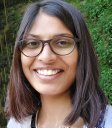
 Silky Singh
· 5 previous affiliations
- Pinterest (United States)Since 2025
- Machine Learning Engineer · Since 2026
- Machine Learning Intern · 2025
- Stanford UniversityCurrent
- Current
- MS student · 2024–2026
- Graduate Student Researcher · 2024–2025
- Lucile Packard Children's Hospital2025–2026
- Research Assistant · 2025–2026
- Adobe Systems (United States)2022–2024
- Machine Learning Engineer · 2022–2024
- Indian Institute of Technology Delhi2018–2022
- Bachelor's degree, Mathematics and Computing · 2018–2022
Research Overview
Silky Singh focuses on computer vision, specifically unsupervised video object segmentation and generative image editing. Early research addressed motion-guided object discovery in video sequences to reduce reliance on manual annotations. More recently, Singh's collaborative efforts explore exemplar-based editing using text-to-image diffusion models, emphasizing structural preservation and modular control.
Research Trajectory
Silky Singh’s research trajectory, as reflected in the available evidence, spans two primary phases: an initial focus on unsupervised object discovery in video, followed by collaborative contributions to generative image editing frameworks.
In 2023, Singh led first-author research addressing the challenges of video object segmentation (VOS) in unsupervised and self-supervised settings. A central problem in this domain is identifying and segmenting objects without relying on expensive human annotations, often by leveraging motion cues. Singh’s work in this period aligns with the research direction of Overcoming the Stationary Blind Spot in Motion Segmentation, which explores how models can group pixels based on shared trajectories. This focus was formalized in LOCATE: Self-supervised Object Discovery via Flow-guided Graph-cut and Bootstrapped Self-training (BMVC 2023). Building on these principles, Singh also introduced FODVid: Flow-guided Object Discovery in Videos, a pipeline designed to handle video nuances such as motion blur, occlusions, and illumination changes. By integrating intra-frame appearance with flow-guided graph-cuts and enforcing temporal consistency, this work aimed to provide a generalizable solution that avoids overfitting to specific video intricacies.
By 2024 and 2025, Singh’s focus expanded to include generative computer vision, participating as a middle author in research on text-to-image (T2I) diffusion models. While T2I models excel at generating high-quality images from text, editing existing images remains a complex challenge due to the many-to-many mapping between natural language and visual content. Singh contributed to ReEdit: Multimodal Exemplar-Based Image Editing with Diffusion Models (WACV 2025), an end-to-end framework designed to transfer edits from an exemplar pair to a target content image. This project intersects with the broader field of The Fidelity-Editability Trade-off in Image Editing, addressing the fundamental conflict between altering an image's subject while maintaining its original pose, lighting, and background. The ReEdit framework captures edits across both text and image modalities to ensure high fidelity, reflecting a growing interest in the area of Modular Inference Time Control for Generative Editing.
Current Directions
The most recent papers in the evidence indicate a continuing collaborative interest in refining the controllability and efficiency of diffusion-based image editing. Current work investigates how to effectively guide large-scale generative models without requiring extensive retraining or fine-tuning for every new capability.
This recent research is situated within broader themes such as Structural Preservation via Attention Feature Injection, which seeks to steer diffusion models to preserve scene composition during complex edits. Additionally, the emphasis on modular and efficient end-to-end frameworks suggests an alignment with work in the area of Accelerating Interactive Image Editing without Test-Time Optimization. By focusing on exemplar-based methods that capture multimodal inputs, Singh’s recent collaborative efforts aim to overcome the latency and fidelity limitations of traditional text-only instruction editing, enabling more precise and stable modifications to generated and real images.
Profile updated
Loading new papers…
Other researchers whose papers cluster into the same research directions — a proxy for overlapping technical interests and shared intellectual neighborhoods.
See something wrong? Report a mistake