

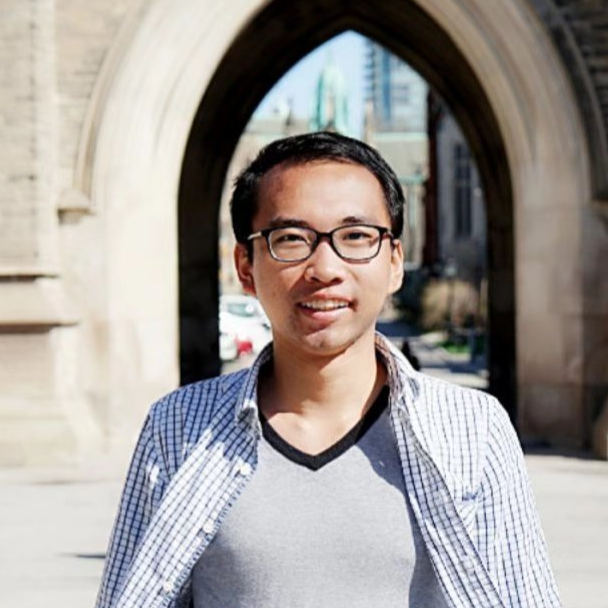
 Sijie Fu
· 3 previous affiliations
- Carnegie Mellon UniversityCurrent
- Current
- PhD student · 2021–2025
- Data Scientist PhD Intern · 2024
- Peking University2016–2020
- Undergrad student · 2016–2020
Research Overview
Sijie Fu focuses on the intersection of machine learning and the physical sciences, specifically in the areas of AI4Science, autonomous experimentation, and the data-driven modeling of chemical formulations. His work emphasizes the development of generative discovery frameworks, physics-inspired neural networks, and active learning workflows designed to accelerate the characterization and optimization of complex materials. Currently affiliated with Carnegie Mellon University, Fu’s research aims to democratize autonomous research through the integration of remote automated laboratories and advanced predictive modeling.
Research Trajectory
Fu’s research trajectory reflects a transition from the experimental characterization of fluid dynamics to the development of autonomous systems for chemical discovery. This evolution began with a focus on optical measurement techniques, specifically Particle Image Velocimetry (PIV) and Particle Tracking Velocimetry (PTV). During the early and mid-2010s, this work centered on the accuracy and algorithmic performance of these techniques in capturing three-dimensional flow structures. Research during this period involved comparative studies of measurement algorithms and their application to indoor airflow fields and thermal convection, establishing a foundation in high-fidelity data acquisition and experimental validation.
Following this phase, the focus shifted toward the application of machine learning to chemical and material systems. This transition was marked by a move from observing physical phenomena to predicting and generating them through computational models. The research began to incorporate generative models for molecular geometry and the use of neural network potentials for large-scale chemical screening. This shift was driven by the need to overcome the computational and experimental costs associated with traditional trial-and-error discovery in chemistry.
The current phase of Fu’s work is characterized by the integration of AI with automated laboratory infrastructure. This involves the development of closed-loop systems where machine learning models not only predict material properties but also direct the experimental process through active learning. This "self-driving laboratory" approach is complemented by the development of physics-inspired neural networks (PINNs) that incorporate domain-specific constraints, such as rheological laws, into deep learning architectures to improve the modeling of complex fluids and emulsions.
Current Directions
Fu’s current research is concentrated on three primary pillars: autonomous discovery, generative molecular modeling, and physics-informed predictive modeling. A central component of this work is the democratization of autonomous experimentation. By developing workflows that link remote automated laboratories with active learning algorithms, Fu seeks to make self-driving laboratories more accessible to the broader scientific community, reducing the reliance on expensive, localized automation infrastructure.
In the domain of generative modeling, the focus is on improving the geometric and physical validity of generated molecules. This involves developing guidance mechanisms for diffusion models that utilize non-differentiable quantum chemistry oracles. By leveraging zeroth-order optimization, these methods allow generative models to respect quantum physical laws without requiring massive labeled datasets for every property of interest.
Additionally, Fu is advancing the modeling of complex fluids through physics-inspired neural networks. This work addresses the challenges of predicting the viscosity and stability of multi-component formulations, such as emulsions. By embedding physical principles into the neural network architecture, these models achieve better generalization and interpretability than purely data-driven approaches, particularly in regimes where experimental data is sparse or expensive to obtain.
Representative Work
The following papers illustrate the evolution of Fu’s research from experimental fluid mechanics to autonomous chemical discovery.
In Autonomous Determination of Hansen Solubility Parameters via Active Learning, Fu leads the development of autoHSP, a workflow that integrates a remote automated laboratory with active learning to determine Hansen Solubility Parameters (HSP). This work demonstrates a closed-loop system that autonomously selects and executes experiments, significantly reducing the time and material required for chemical characterization. The study highlights the potential for centralized, semi-automated labs to serve as a cost-effective platform for autonomous research.
Fu’s earlier leadership in experimental measurement is evidenced in Numerical and experimental comparison of complete three-dimensional particle tracking velocimetry algorithms for indoor airflow study. This research provides a systematic evaluation of seven 3D PTV algorithms, comparing their performance on both simulated laminar flows and experimental indoor airflow data. The work established methodologies for selecting optimal measurement algorithms based on the specific requirements of the flow environment, such as particle density and velocity gradients.
The comparative analysis of measurement techniques is further explored in A Comparative Study Of Particle Image Velocimetry (Piv) And Particle Tracking Velocimetry (Ptv) For Airflow Measurement. As the lead author, Fu conducts an experimental study using both PIV and PTV under identical conditions to assess their relative performance in capturing velocity vector fields and turbulence profiles. The findings clarify the strengths and limitations of each technique for non-intrusive airflow measurement.
In the area of generative modeling, Fu participated in the development of Non-Differentiable Diffusion Guidance for Improved Molecular Geometry. This work addresses the challenge of generating realistic 3D molecular structures by guiding diffusion models with semi-empirical quantum mechanical methods. By using a non-differentiable expert oracle to estimate gradients, the researchers improved the stability and physical validity of the generated molecules, ensuring they better respect the underlying laws of quantum chemistry.
Further contributions to this area are detailed in Chemistry-Inspired Diffusion with Non-Differentiable Guidance, where Fu contributed to the development of ChemGuide. This framework utilizes zeroth-order optimization to leverage physics-based software as guidance for molecular diffusion. This approach allows for the generation of molecules with optimized properties without the need for traditional, differentiable neural network property predictors, thereby increasing the flexibility of the generative process.
Fu also participated in the application of advanced neural network potentials to large-scale chemical screening in Machine Learning-Accelerated Screening of Hydroquinone Analogs for Proton-Coupled Electron Transfer. This study utilizes the AIMNet2 neural network potential to calculate bond dissociation free energies for approximately 200,000 hydroquinone-like compounds. The work demonstrates how machine learning can accelerate the exploration of vast chemical spaces for energy conversion applications, identifying promising candidates for proton-coupled electron transfer that would be computationally prohibitive to study using traditional density functional theory alone.
Profile updated
| Paper | Venue | Year |
|---|---|---|
| Autonomous Determination of Hansen Solubility Parameters via Active LearningGitHubSijieFu/ | Unknown | 2025 |
Loading new papers…
Other researchers whose papers cluster into the same research directions — a proxy for overlapping technical interests and shared intellectual neighborhoods.
See something wrong? Report a mistake