

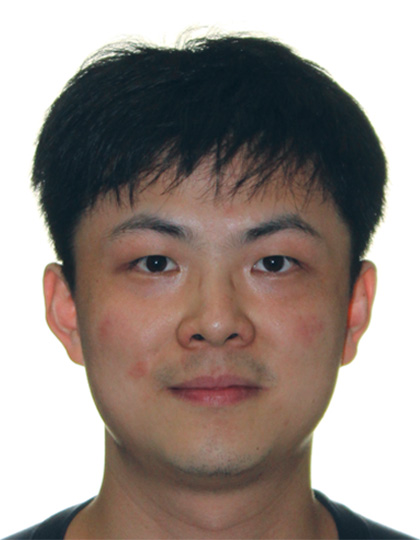
 Sijia Chen
· 3 previous affiliations
- Assistant Professor · 2025–2028
- University of Toronto2019–2024
- PhD student · 2019–2024
- Researcher · 2018–2019
5 other authors named Sijia Chen: Sijia Chen (Huazhong University of Science and Technology · 19 papers), Sijia Chen (Nanjing University · 3 papers), Sijia Chen (OpenAI (United States) · 2 papers), Sijia Chen (1 paper), Sijia Chen (Shanghai Artificial Intelligence Laboratory · Northeastern University · 1 paper)
Research Overview
Sijia Chen focuses on multimodal machine learning, distributed computing, and sequential decision-making. His early work addressed data fusion and personalized federated learning across heterogeneous networks. Currently, his research emphasizes enhancing the reasoning capabilities of large language and vision-language models through reinforcement learning and advanced prompting strategies.
Research Trajectory
Chen’s early research explored data representation and fusion techniques. He developed methods for handling unbalanced datasets in An Unbalanced Data Hybrid-Sampling Algorithm Based on Multi-Information Fusion (2017) and investigated multimodal sequence modeling in Attention Alignment Multimodal LSTM for Fine-Gained Common Space Learning (2018).
A significant portion of his subsequent trajectory addresses distributed computing, specifically federated learning (FL) under heterogeneous conditions. He tackled the challenge of non-IID data distributions in Towards Generalizable Personalized Federated Learning with Adaptive Local Adaptation. Extending this to multimodal contexts, he empirically observed that multimodal federated learning could counter-intuitively degrade performance compared to uni-modal counterparts. His analysis revealed that modality sub-networks and local models overfit and generalize at different rates, leading to the hierarchical gradient blending approach proposed in Towards Optimal Multi-Modal Federated Learning on Non-IID Data with Hierarchical Gradient Blending. This line of work in distributed systems continued with Calibre: Towards Fair and Accurate Personalized Federated Learning with Self-Supervised Learning and explorations of distributed generative models in Relic: Federated Conditional Textual Inversion with Prototype Alignment.
Concurrently, Chen advanced multimodal perception, particularly the task of visual grounding, which aligns natural language queries with specific image regions. Recognizing that existing methods were often bottlenecked by single-stage evaluate-and-rank processes relying on static candidate regions, he introduced a progressively optimized alignment process in Multi-Modal Dynamic Graph Transformer for Visual Grounding. He subsequently reimagined this task through the lens of generative models in Language-Guided Diffusion Model for Visual Grounding. By treating bounding boxes as noisy samples refined iteratively through a diffusion model, this work improved the handling of one-to-many queries and contributed to the broader area of Object Detection as a Generative Denoising Process, as well as research directions such as Generalized Visual Grounding for Multi-Target Scenes and Relational Reasoning for Structured Visual Understanding.
More recently, Chen’s focus has shifted toward the reasoning capabilities of large language models (LLMs). He investigated trial-and-error problem-solving frameworks in Boosting of Thoughts: Trial-and-Error Problem Solving with Large Language Models, contributing to the research direction of Diverse Reasoning Paths for Inference Time Scaling and the area of Reasoning via Negative Constraints and Error Reflection. Because standard chain-of-thought methods typically only move forward, a single hallucination can compromise an entire downstream answer. To address this, Chen developed a framework allowing models to backtrack and correct mistakes based on self-analysis in Toward Adaptive Reasoning in Large Language Models with Thought Rollback.
Extending this adaptive reasoning to multi-agent frameworks, he recently introduced rSIM: Incentivizing Reasoning Capabilities of LLMs via Reinforced Strategy Injection. This work demonstrates how a smaller planner model can guide a larger reasoner by injecting explicit strategies like self-reflection and decomposition into its thought process, contributing to the broader area of General Purpose Reasoning from Specialized Reinforcement Learning.
Current Directions
Chen’s most recent research focuses on enhancing the reasoning capabilities of large language models (LLMs) and vision-language models (VLMs) through post-training methods, prompting, and fine-tuning. A primary theme in his current work is the integration of reinforcement learning (RL) and multi-agent systems to develop advanced, reasoning-oriented models. By decoupling planning and execution into specialized agents, he investigates how sequential decision-making algorithms can yield more reliable problem-solving in generative AI. Additionally, he is exploring the application of these advanced LLMs and VLMs to practical scientific problems, particularly in telecommunications, including the development of datasets for reliable multimodal process supervision.
Profile updated
Loading new papers…
Other researchers whose papers cluster into the same research directions — a proxy for overlapping technical interests and shared intellectual neighborhoods.
See something wrong? Report a mistake