

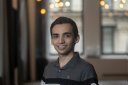
 Siavash Golkar
· 4 previous affiliations
- New York UniversitySince 2024
- Research Scientist · Since 2024
- Postdoc · 2016–2019
- Flatiron Institute2019–2023
- Associate Research Scientist · 2019–2023
- University of Cambridge2015–2016
- Postdoc · 2015–2016
- University of Chicago2012–2015
- PhD student · 2012–2015
Research Overview
Siavash Golkar focuses on biologically plausible learning algorithms, optimization techniques for deep neural networks, and the application of foundation models to scientific domains. His earlier work explored how cortical microcircuits might perform credit assignment without standard backpropagation, while his recent research investigates continuous numerical encodings and large-scale multimodal architectures for physics, astronomy, and bioinformatics.
Research Trajectory
His early research addressed fundamental optimization and memory challenges in artificial neural networks. In 2018, he introduced Backdrop: Stochastic Backpropagation, an optimization technique that applies dropout-like stochastic masking exclusively to the backward pass. By leaving the forward pass intact, this method decouples loss evaluation from gradient stochasticity, improving generalization for complex, non-decomposable loss functions. Following this, he developed Continual Learning via Neural Pruning (CLNP) in 2019. This approach mitigates catastrophic forgetting in lifelong learning by training new tasks only on inactive neurons and intentionally sacrificing a minimal amount of current performance to preserve future capacity, contributing to the area of Sparse Subnetworks and the Lottery Ticket Hypothesis.
Between 2020 and 2022, his focus shifted toward bridging the gap between deep learning and neuroscience, specifically looking for biologically plausible alternatives to backpropagation. He proposed A biologically plausible neural network for local supervision in cortical microcircuits, deriving an algorithm that avoids explicit error computation and weight sharing, mapping closely to the connectivity of the cortex. Collaborating on A simple normative network approximates local non-Hebbian learning in the cortex, he helped derive the Bio-RRR family of algorithms, which solve complex statistical problems using rules that mimic brain biology, advancing the research direction Credit Assignment with Segregated Dendritic Compartments.
This interest in neuromorphic principles extended to An online algorithm for contrastive Principal Component Analysis (2022), where he and his collaborators developed cPCA*, a robust, online version of contrastive PCA that processes streaming data using local learning rules, aligning with work in Training Neural Networks with Spatially Local Learning Rules. He further explored these themes in Constrained Predictive Coding as a Biologically Plausible Model of the Cortical Hierarchy, modifying the predictive coding framework to map faithfully onto cortical structures without requiring symmetric forward and backward weights, touching upon the broader areas of Neural Decorrelation and Whitening via Inhibitory Feedback and Non-linear Dendritic Computation in Artificial Neural Networks.
Beginning in 2023, his trajectory expanded significantly into the application of large language models and foundation architectures to scientific domains. A key contribution in this space is xVal: A Continuous Number Encoding for Large Language Models, which addresses the difficulty LLMs face when tokenizing numbers. The xVal scheme represents any real number using a single token scaled by the number's value, rendering the model end-to-end continuous and creating an inductive bias better suited for scientific datasets. He subsequently contributed to AstroCLIP: a cross-modal foundation model for galaxies (2024), which embeds both galaxy images and spectra into a unified latent space for zero-shot and few-shot learning in astronomy.
Continuing to adapt self-supervised paradigms for specialized data, he proposed TS-JEPA in Joint Embeddings Go Temporal (2025), an architecture designed to perform self-supervised learning in the latent space for time series data, avoiding the vulnerabilities of standard masked modeling. His recent work also explores the automation of scientific workflows. He oversaw the development of Protein Design with Agent Rosetta: A Case Study for Specialized Scientific Agents, introducing an AI agent that translates LLM reasoning into specific commands within the Rosetta software suite. In parallel, he participated in What's In Your Field? Mapping Scientific Research with Knowledge Graphs and Large Language Models, helping build a scalable pipeline to transform tens of thousands of scientific abstracts into structured knowledge graphs for trend analysis. Most recently, he contributed to the development of Walrus: A Cross-domain Foundation Model for Continuum Dynamics (2026), a 1.3-billion parameter model designed to emulate complex physical systems like fluid dynamics across diverse scales, contributing to the research direction Learning Partial Differential Equations on Irregular Domains.
Current Directions
The most recent papers in the evidence indicate a strong focus on building and adapting foundation models for complex physical and scientific systems. This involves designing specialized architectures and encoding schemes—such as continuous numerical representations and joint-embedding predictive architectures—that can handle the unique properties of scientific data, from time series and continuum dynamics to astronomical observations. Additionally, there is an emerging emphasis on deploying large language models as autonomous agents to navigate specialized scientific software and synthesize insights from unstructured research literature, aiming to automate and accelerate the broader scientific discovery process.
Profile updated
Loading new papers…
Other researchers whose papers cluster into the same research directions — a proxy for overlapping technical interests and shared intellectual neighborhoods.
See something wrong? Report a mistake