

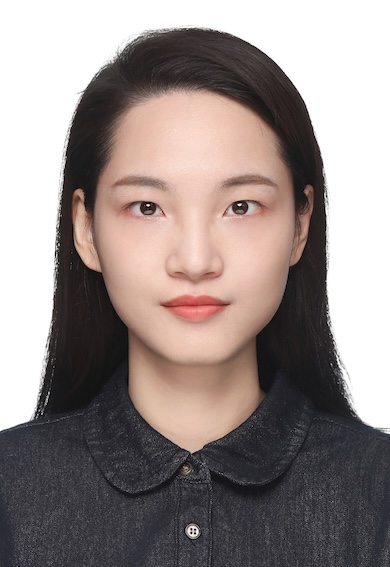
 Shuting He
· 4 previous affiliations
- Assistant Professor · Since 2024
- Nanyang Technological University2023–2024
- Postdoc · 2023–2024
- Zhejiang University2018–2023
- PhD student · 2018–2023
- Xiamen University2014–2018
- Undergrad student · 2014–2018
Research Overview
Shuting He focuses on computer vision and machine learning, with particular emphasis on low-shot learning, object re-identification, and complex scene segmentation. Her early work developed robust feature representations for vehicle and person re-identification, while her recent research investigates 3D scene understanding, multi-modal reasoning, and the stylization of 3D Gaussian Splatting representations.
Research Trajectory
Early work addressed object re-identification (ReID). She introduced Multi-Domain Learning and Identity Mining for Vehicle Re-Identification, proposing a multi-domain learning method to jointly train models on real and synthetic data. Following this, TransReID: Transformer-based Object Re-Identification was developed as a pure transformer-based framework that encodes images as patch sequences to overcome the information loss inherent in convolutional downsampling.
By 2023, the focus expanded to complex scene understanding and visual grounding. The benchmark GREC: Generalized Referring Expression Comprehension was introduced to extend classic referring expression comprehension to handle descriptions of multiple targets or no specific target. In collaborative efforts, she contributed to large-scale datasets for video object segmentation, participating in the development of MOSE: A New Dataset for Video Object Segmentation in Complex Scenes, which challenges models with occlusions and object disappearances. She also helped construct MeViS: A Large-scale Benchmark for Video Segmentation with Motion Expressions, prioritizing object identification through actions rather than static attributes. This work advanced the broader area of Generalized Visual Grounding for Multi-Target Scenes.
Transitioning into 3D vision, subsequent research explored the intersection of large language models and point cloud data. She proposed SegPoint: Segment Any Point Cloud via Large Language Model, leveraging multi-modal LLMs to produce point-wise segmentation masks across diverse tasks, contributing to the research direction of Reasoning Segmentation with Multimodal Large Language Models. Her work in the area of Deep Learning on Unstructured 3D Point Clouds includes Point Clouds Meets Physics: Dynamic Acoustic Field Fitting Network for Point Cloud Understanding, a physics-inspired neural network modeling local geometry as sound wave propagation. To address few-shot learning in this domain, she developed Taylor Series-Inspired Local Structure Fitting Network for Few-shot Point Cloud Semantic Segmentation, a pretraining-free framework treating local geometric structures as a polynomial fitting problem. To enable temporal reasoning in 3D sequential grounding, GroundFlow: A Plug-in Module for Temporal Reasoning on 3D Point Cloud Sequential Grounding was introduced as a lightweight dual-memory structure.
In the remote sensing domain, she addressed the high cost of manual annotation by developing ZoRI: Towards Discriminative Zero-Shot Remote Sensing Instance Segmentation.
Recently, her research has heavily engaged with 3D Gaussian Splatting (3DGS). She provided a comprehensive overview of the field in A Survey on 3D Gaussian Splatting Applications: Segmentation, Editing, and Generation and applied referring segmentation to these representations in ReferSplat: Referring Segmentation in 3D Gaussian Splatting. Directing recent projects, she has guided work on transferring artistic styles to 3D scenes, contributing to the area of Decoupling Style from Content in Diffusion Models. This includes FantasyStyle: Controllable Stylized Distillation for 3D Gaussian Splatting, which uses multi-view frequency consistency to tackle content leakage, and DiffStyle3D: Consistent 3D Gaussian Stylization via Attention Optimization, which optimizes directly in the latent space of a diffusion model with explicit geometric guidance. Additionally, she collaborated on TopAdapter: Topology-Aware Prompt Tuning for Efficient Point Cloud Understanding, injecting multi-dimensional geometric primitives into pre-trained models for efficient fine-tuning.
Current Directions
The most recent papers in the evidence address the stylization and efficient adaptation of 3D scene representations. A primary focus is on 3D Gaussian Splatting, specifically developing frameworks that transfer artistic styles to 3D scenes while maintaining multi-view consistency and preventing content leakage. This involves optimizing latent spaces in diffusion models and utilizing explicit geometric guidance. Concurrently, recent work investigates parameter-efficient fine-tuning for 3D point cloud understanding, employing principles of algebraic topology to inject geometric primitives into pre-trained vision models.
Profile updated
Loading new papers…
Other researchers whose papers cluster into the same research directions — a proxy for overlapping technical interests and shared intellectual neighborhoods.
See something wrong? Report a mistake