

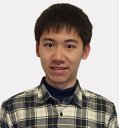
 Shurui Gui
· 2 previous affiliations
- Texas A&M UniversityCurrent
- Current
- PhD student · 2020–2024
- Undergrad student · 2016–2020
Research Overview
Shurui Gui focuses on the robustness, interpretability, and generalization of deep learning models, with a particular emphasis on graph neural networks (GNNs), out-of-distribution (OOD) learning, and the application of machine learning to physical and molecular systems. Currently a Ph.D. candidate at Texas A&M University, Gui’s work bridges theoretical frameworks such as causality and game theory with practical challenges in scientific discovery and the reliability of large language models (LLMs).
Research Trajectory
Gui’s early research addressed the "black box" nature of Graph Neural Networks. While traditional interpretability methods often focused on identifying individual important nodes or edges, Gui contributed to the development of Subgraph Explanations for Graph Neural Networks by shifting the focus toward the underlying functional mechanisms of these models. This involved applying Game-Theoretic Credit Assignment for Multi-Component Systems to quantify the importance of message flows within the GNN architecture, providing a more natural explanation of how information is propagated and aggregated across graph structures.
As the focus of the field shifted toward model reliability, Gui addressed the challenge of out-of-distribution generalization. This work began with the creation of systematic benchmarks designed to distinguish between covariate and concept shifts in graph data, providing a foundation for evaluating how models perform when test distributions diverge from training data. Gui subsequently explored methods for Sequential Active Learning for Streaming Data and active test-time adaptation, aiming to maintain model performance in dynamic environments where distribution shifts are frequent and unpredictable.
Current Directions
Gui’s recent work applies principles of invariance and causality to AI for Science and the robustness of large language models. In the domain of dynamical systems, Gui has developed methods to discover governing physical laws by identifying intrinsic dynamics that remain invariant across varying environments, even when the functional forms of those environments change significantly. This trajectory reflects a move toward learning fundamental mechanisms rather than just statistical correlations.
In the context of LLMs, Gui is investigating the causal foundations of model predictions. This includes developing post-training interventions to mitigate spurious correlations acquired during pre-training, thereby enhancing the generalization ability of language models on reasoning and causal inference tasks. Additionally, Gui has participated in research involving the tokenization of 3D molecular geometries and the design of hierarchical language models for explicit graph reasoning, further integrating graph-centric expertise with modern generative AI.
Representative Work
FlowX: Towards Explainable Graph Neural Networks via Message Flows investigates the internal functional mechanisms of GNNs by identifying important message flows rather than just static graph components. To quantify flow importance, the method employs Shapley values from cooperative game theory. To address the computational complexity inherent in Shapley value calculations, Gui proposed an approximation scheme that allows for the assessment of message flows, providing a more granular view of GNN decision-making processes.
GOOD: A Graph Out-of-Distribution Benchmark established a systematic framework for evaluating graph OOD methods. The benchmark explicitly distinguishes between covariate shifts (changes in the input distribution) and concept shifts (changes in the relationship between inputs and labels). By including 11 datasets covering both graph and node prediction tasks, this work provided the community with a standardized testbed for assessing the robustness of graph-based models under various distribution shifts.
Active Test-Time Adaptation: Theoretical Analyses and An Algorithm addresses the brittleness of deep learning models when deployed in environments that differ from their training data. Gui provided a theoretical analysis of how distribution shifts affect model performance and developed an algorithm for active test-time adaptation. This approach allows models to tweak their parameters on the fly using a small amount of informative data from the test environment, mitigating the risk of "forgetting" original knowledge while adapting to new conditions.
Graph Structure and Feature Extrapolation for Out-of-Distribution Generalization introduces a data-centric approach to graph OOD problems. Rather than relying on data interpolation, the method utilizes non-Euclidean-space linear extrapolation to generate synthetic training samples that lie outside the observed training distribution. By extrapolating both the structure and feature spaces of graphs, the approach enables models to generalize more effectively to unseen graph configurations.
Discovering Physics Laws of Dynamical Systems via Invariant Function Learning tackles the challenge of learning ordinary differential equations (ODEs) that govern dynamical systems across multiple environments. The work focuses on complex scenarios where changes between environments extend beyond simple coefficients to entirely different functional forms, such as moving from a damped pendulum to a powered one. By learning invariant functions, the method can circumvent environment-specific mechanisms to discover the underlying physical laws.
Mitigating Spurious Correlations in LLMs via Causality-Aware Post-Training aims to reduce the reliance of large language models on biased correlations acquired during pre-training. Gui proposed a causality-aware post-training (CAPT) framework that decomposes a model's prediction into two steps: event estimation and event intervention. This decomposition allows the model to adjust for biases without the need for extensive fine-tuning, improving its performance on formal causal inference and logical reasoning benchmarks.
Profile updated
Loading new papers…
Other researchers whose papers cluster into the same research directions — a proxy for overlapping technical interests and shared intellectual neighborhoods.
See something wrong? Report a mistake