

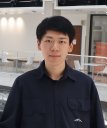
 Shupeng Ning
1 previous affiliation
- The University of Texas at Austin2021–2026
- PhD student · 2021–2026
Research Overview
Shupeng Ning focuses on integrated photonics, optical neural networks, and hardware-software co-design for artificial intelligence acceleration. His trajectory spans early research in biomedical microfluidics and biosensing to the development of highly scalable, energy-efficient photonic computing architectures. Currently, his work addresses the deployment of large-scale machine learning models on reconfigurable optical hardware.
Research Trajectory
Shupeng Ning’s early research engaged with biomedical sciences and physical device engineering before converging on computational hardware. In 2017, he participated in molecular biology research investigating gastric cancer, specifically examining how COX-2 regulates Snail expression in gastric cancer via the Notch1 signaling pathway. This work identified critical cross-talk between inflammatory enzymes and signaling pathways, contributing to the broader area of Molecular Mechanisms of the Metastatic Cascade by highlighting potential molecular targets for aggressive tumors.
His focus subsequently shifted toward micro-scale physical manipulation and sensing technologies. In 2021, he explored acoustofluidics with Programmable and Parallel Trapping of Submicron/Nanoscale Particles Using Acoustic Micro‐Pillar Array Chip. Addressing the traditional reliance on ultrahigh-frequency sound waves, this research introduced a low-frequency acoustic field actuated by a micro-pillar array, enabling the efficient, parallel trapping of nanoparticles through localized acoustic radiation forces. Building on this expertise in micro-device fabrication, he later applied subwavelength grating micro-ring resonators to diagnostic challenges. The resulting work, A point-of-care biosensor for rapid detection and differentiation of COVID-19 virus (SARS-CoV-2) and influenza virus using subwavelength grating micro-ring resonator (2023), detailed a lab-on-a-chip platform designed to distinguish between respiratory pathogens with overlapping clinical features.
Around this time, Ning’s trajectory increasingly incorporated deep learning and computational methods applied to physical systems. He collaborated on a comprehensive survey of Neural Network Methods for Radiation Detectors and Imaging (2023), which examined the shift from centralized cloud processing to edge AI for handling the massive data rates of next-generation X-ray sources. This review engaged deeply with the research direction of Learned Inverse Solvers for Real-Time Image Reconstruction, highlighting how specialized hardware accelerators enable real-time denoising and autonomous experimentation.
By 2024, Ning’s primary research focus had solidified around photonic computing and optical artificial intelligence. He explored the theoretical and practical limits of traditional electronics in the review Photonic-Electronic Integrated Circuits for High-Performance Computing and AI Accelerators, surveying advancements in integrated photonics designed to overcome speed and energy bottlenecks in both digital and analog AI tasks. To accelerate the design of such complex photonic devices, he contributed to PACE: Pacing Operator Learning to Accurate Optical Field Simulation for Complicated Photonic Devices. This novel neural operator framework introduced a cross-axis factorized operator and a human-inspired "pacing" strategy—learning a rough solution before refining it—to simulate electromagnetic fields with significantly reduced error and massive speedups over traditional numerical solvers.
A central pillar of his recent hardware research is the development of scalable optical neurons. With collaborators, he introduced Integrated multi-operand optical neurons for scalable and hardware-efficient deep learning (2024). This architecture, termed the "Multi-Operand Optical Neuron" (MOON), performs complex vector dot-products within a single photonic device, drastically reducing the hardware footprint and signal loss associated with long chains of optical components. This advancement pushed forward areas such as All-Optical Activation Functions for Photonic Neural Networks and the domain of Thermal Isolation for Scalable Photonic Integrated Circuits.
In 2025, Ning and his colleagues demonstrated the practical utility of these optical neural networks (ONNs) in clinical settings with Early Pancreatic Cancer Detection Using Deep Learning and Optical Neural Networks on Integrated Photonic Chips. The study showed that integrated photonic chips could match or surpass electronic models in medical image segmentation tasks, proving ONNs to be high-speed, efficient alternatives to traditional electrical systems. He continued to refine the underlying hardware in Microring-Based Multi-Operand Optical Neurons with On-Chip Trainable Nonlinearity, proposing a compact, highly scalable optical neuron with built-in tunable nonlinearity that demonstrated superior expressivity in machine learning tasks.
To further bridge the gap between optical hardware and the demands of modern deep learning, Ning explored structured model compression. The paper A Hardware-Efficient Photonic Tensor Core: Accelerating Deep Neural Networks with Structured Compression (2025) introduced a block-circulant photonic tensor core (CirPTC). By pairing a novel circuit topology with hardware-aware training, the system achieved substantial reductions in parameter counts and significant boosts in power efficiency while maintaining accuracy. Concurrently, he synthesized broader trends in the field in Incubating advances in integrated photonics with emerging sensing and computational capabilities, reviewing how AI and novel photonic structures are combining to create miniaturized, highly precise sensing systems for healthcare and environmental monitoring.
Most recently, Ning has addressed the challenge of running massive foundation models on optical hardware. In ENLighten: Lighten the Transformer, Enable Efficient Optical Acceleration (2026), he co-developed a hardware-software co-design framework specifically tailored for large Transformer models. By integrating a novel compression technique with a reconfigurable photonic accelerator, the work demonstrated significant energy and latency improvements, marking a critical step toward optics-based acceleration for state-of-the-art generative AI.
Current Directions
The most recent papers in the evidence indicate a strong focus on the intersection of hardware-software co-optimization and advanced optical computing. A primary ongoing challenge is scaling optical neural networks to support the massive parameter counts of modern architectures, such as Transformers, without losing the inherent energy and latency benefits of light-based computation.
Recent work investigates structured model compression—such as block-circulant matrices and specialized sparsity techniques—designed explicitly for the physical constraints of photonic integrated circuits. Furthermore, the development of on-chip trainable nonlinearities and multi-operand microring resonators suggests a continued effort to make optical chips more expressive and self-contained. By tightly coupling the design of the physical photonic tensor cores with the training algorithms of the neural networks they run, this research aims to close the reality gap between theoretical optical efficiency and practical, real-world AI deployment.
Profile updated
Loading new papers…
Other researchers whose papers cluster into the same research directions — a proxy for overlapping technical interests and shared intellectual neighborhoods.
See something wrong? Report a mistake