

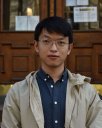
 Shuo Yang
· 6 previous affiliations
- Point72Since 2025
- Quantitative Researcher · Since 2026
- Quantitative Researcher · 2025
- University of PennsylvaniaCurrent
- Current
- PhD student · 2022–2025
- Tencent (China)2024
- Research Scientist Intern · 2024
- Research Scientist · 2023
- Research Scientist Intern · 2023
- Shanghai Jiao Tong University2017–2021
- Undergraduate Research Assistant · 2019–2021
- Bachelor's degree, Automation (Artificial Intelligence track) · 2017–2021
17 other authors named Shuo Yang: Shuo Yang (University of Hong Kong · 49 papers), Shuo Yang (Harbin Institute of Technology · 49 papers), Shuo Yang (25 papers), Shuo Yang (International Computer Science Institute · 20 papers), Shuo Yang (Peking University · 9 papers), and 12 more
Research Overview
Shuo Yang focuses on safe learning-based control, conformal prediction, and multi-agent reinforcement learning. Their work addresses the challenge of providing formal safety guarantees for systems that rely on neural networks and high-dimensional sensor data. Recently, this trajectory has expanded to include off-policy prediction and the integration of temporal logic into multi-agent environments.
Research Trajectory
In 2023, Yang led research on integrating formal safety guarantees into learning-based control systems. A primary focus was addressing the unreliability of neural network controllers and high-dimensional perception maps. In Safe Perception-Based Control Under Stochastic Sensor Uncertainty Using Conformal Prediction, Yang developed a framework that uses conformal prediction to quantify estimation uncertainty, computing valid state estimation regions to maintain safe system behavior despite stochastic sensor noise. Parallel work on controller architecture resulted in Differentiable Safe Controller Design Through Control Barrier Functions. Here, Yang introduced a safe-by-construction neural network controller that embeds differentiable control barrier functions (CBFs) directly into the learning process, avoiding the unpredictable long-term effects of traditional, myopic safety filters.
During this same period, Yang's focus expanded to include multi-agent environments and complex reward structures. As a key collaborator, Yang contributed to Multi-Agent Reinforcement Learning Guided by Signal Temporal Logic Specifications, which explored how formal methods can guide multi-agent reinforcement learning. This work utilized Signal Temporal Logic (STL) to define non-scalar objectives and safety requirements, addressing the challenges of heterogeneous goals and complex interactions in multi-agent systems.
Moving into 2024, Yang participated in extending safety and prediction frameworks to off-policy evaluation. In Conformal Off-Policy Prediction for Multi-Agent Systems, Yang co-authored research adapting conformal prediction to multi-agent off-policy prediction. This work tackled the distribution shifts that occur during policy switching, providing probabilistic guarantees for target policies using only data collected under nominal behavioral policies.
Current Directions
The most recent papers in the evidence indicate a continuing focus on safety and dependability in multi-agent systems. Current work investigates off-policy prediction, specifically the challenge of evaluating new, potentially unsafe policies using historical data. A central theme is managing the distribution shifts inherent in multi-agent policy switching, ensuring that data-driven analysis remains robust and provides probabilistic guarantees when deployed in safety-critical, multi-actor environments.
Profile updated
Loading new papers…
Other researchers whose papers cluster into the same research directions — a proxy for overlapping technical interests and shared intellectual neighborhoods.
See something wrong? Report a mistake