

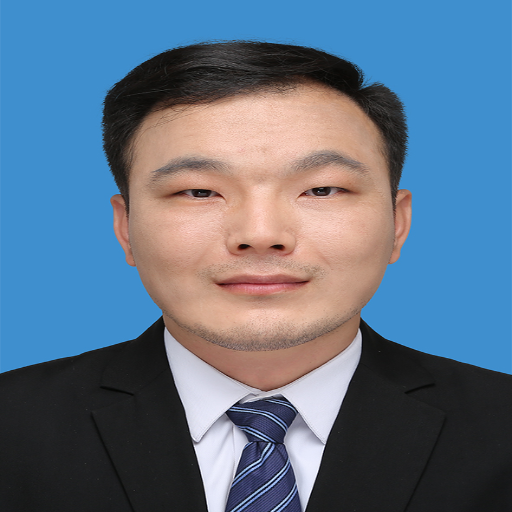
 Shuo Yang
· 4 previous affiliations
- Shenzhen MSU-BIT UniversitySince 2024
- Associate Professor · 2024–2027
- Current
- Beijing Institute of Technology2018–2024
- PhD student · 2018–2024
- Chinese Academy of Sciences2014–2017
- MS student · 2014–2017
- Beijing Union University2010–2014
- Undergrad student · 2010–2014
17 other authors named Shuo Yang: Shuo Yang (University of Hong Kong · 49 papers), Shuo Yang (Harbin Institute of Technology · 49 papers), Shuo Yang (25 papers), Shuo Yang (International Computer Science Institute · 20 papers), Shuo Yang (Peking University · 9 papers), and 12 more
Research Overview
Shuo Yang focuses on computer vision and multimodal reasoning, with specific emphasis on human pose estimation, action localization, and 3D visual grounding. Early work addressed the challenges of spatial alignment and occlusion in human-centric vision tasks. More recently, the research trajectory has shifted toward language-driven video understanding and resolving referential ambiguity in complex three-dimensional environments.
Research Trajectory
Yang’s early research concentrated on human-centric computer vision, specifically addressing the complexities of hand pose estimation and detection. The transition from 2D to 3D in computer vision has historically been bottlenecked by the loss of spatial depth information during projection. In 2017, Yang contributed to Hand3D: Hand Pose Estimation using 3D Neural Network, which introduced a novel 3D neural network architecture designed to estimate 3D hand poses directly from a single depth image. By converting the depth image into a native volumetric representation, the approach bypassed the traditional, error-prone step of predicting poses in 2D and subsequently projecting them into 3D space. This volumetric processing enabled the system to achieve high accuracy while maintaining a real-time processing speed of 30 frames per second. This methodology aligns with the broader research direction of Modeling the Full Spectrum of Human Physical Diversity and provides foundational techniques relevant to the area of Reconstructing 3D Interactions Under Severe Mutual Occlusion.
Continuing the focus on hand analysis, subsequent research addressed the difficulties of localizing hands in uncontrolled, real-world environments. The high degree of freedom in human hand articulation, combined with cluttered backgrounds, means that standard bounding box proposals often fail to capture the precise orientation of the hand. To solve this, Yang and colleagues proposed Joint Hand Detection and Rotation Estimation Using CNN in 2018. Utilizing a Faster R-CNN backbone to generate rectangular region proposals and extract local features, the researchers integrated a dedicated rotation network. This network explicitly formulated in-plane rotation, taking the extracted features as input to estimate an alignment that rotated any detected hand to an upward direction. This joint approach significantly improved detection robustness in complex visual scenes.
The challenge of visual occlusion was further investigated in the domain of person re-identification across disjoint camera views. Re-identification systems typically assume full visibility of the subject, causing severe performance degradation when individuals are partially obscured by objects or other people. In 2020, Yang participated in developing High-Order Information Matters: Learning Relation and Topology for Occluded Person Re-Identification. The research team proposed a novel framework that leverages high-order relation and topology information to extract discriminative features and achieve robust alignment. The system employs a CNN backbone alongside a key-point estimation model to extract semantic local features. Recognizing that occluded images still suffer from significant noise and outliers, the researchers modeled the extracted local features as nodes within a graph. They introduced an adaptive direction graph convolutional (ADGC) layer to pass relational information between nodes, automatically suppressing the impact of occlusions and improving overall re-identification accuracy.
Moving from spatial to temporal reasoning, Yang’s focus expanded to include multimodal video understanding. In 2022, he introduced a progressive approach to language-driven action localization with Entity-aware and Motion-aware Transformers for Language-driven Action Localization. Temporal localization in continuous video streams is inherently difficult because actions are fluid and boundaries are often subjective; language-driven localization adds the complexity of semantic alignment. The proposed architecture utilizes specialized Transformers to localize actions in a coarse-to-fine manner. Initially, entity queries are used to coarsely locate relevant video clips, incorporating textual entities into visual representation learning through cross-modal and cross-frame mechanisms. Subsequently, motion queries finely predict exact boundaries within the narrowed temporal region. This contribution significantly advances the research direction of Precise Temporal Localization for Continuous Video Streams and intersects with the broader area of Temporal Order and Permutation Invariance in Time Series.
The most recent work in the evidence extends multimodal reasoning into complex, three-dimensional spatial environments. As vision-language models are deployed in embodied or spatial contexts, they must navigate environments where multiple objects may fit a single vague description. In 2026, Yang participated in a collaborative effort to address this with AmbiRefer3D: 3D Visual Grounding with Referential Ambiguity. The paper introduces a new task focused on the real-world problem of ambiguous language descriptions in 3D scenes. To solve this, the research proposes an interactive framework that employs multi-round question-answering to systematically resolve ambiguities. Alongside the framework, the team released a large-scale dataset and established new evaluation metrics for this challenging task, pushing the boundaries of how vision-language models interact with and disambiguate 3D spaces.
Current Directions
The most recent papers in the evidence indicate a strong focus on multimodal reasoning and interactive visual grounding. Current work investigates how models can better understand and navigate complex environments through natural language. This includes refining temporal boundaries in continuous video streams using specialized entity-aware and motion-aware transformer architectures, which allow for precise, coarse-to-fine action localization.
Additionally, recent research addresses the challenge of referential ambiguity in three-dimensional spaces. By employing interactive, multi-round question-answering frameworks, the current trajectory aims to create more robust vision-language systems capable of resolving vague or incomplete human instructions in real-world 3D scenes. This shift highlights a broader interest in moving beyond static, fully observable datasets toward dynamic, interactive systems that can clarify intent and ground language in complex spatial and temporal contexts.
Profile updated
Loading new papers…
Other researchers whose papers cluster into the same research directions — a proxy for overlapping technical interests and shared intellectual neighborhoods.
See something wrong? Report a mistake