

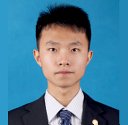
 Shunli Wang
· 2 previous affiliations
- Fudan UniversityCurrent
- Current
- PhD student · 2019–2024
- Tencent (China)2024–2025
- Researcher · 2024–2025
Research Overview
Shunli Wang focuses on fine-grained action understanding, medical vision-language models, and robust multimodal representation learning. His trajectory bridges early work in video-based action quality assessment with recent advancements in clinical reasoning and incomplete data modeling. Currently a researcher at Tencent Youtu Lab, his recent efforts emphasize mitigating hallucinations in medical artificial intelligence and developing resilient architectures for complex perception tasks.
Research Trajectory
Wang’s early research, conducted during his doctoral studies at Fudan University, centered on the objective evaluation of human actions from video. In 2022, he published A Survey of Video-based Action Quality Assessment, which mapped the evolution of algorithmic frameworks for evaluating action execution in sports and medical care. This work contributed to the broader research direction of Fine-Grained Action Understanding through Atomic Temporal Modeling. Recognizing the limitations of simply migrating standard action recognition models to quality assessment tasks, he subsequently introduced TSA-Net: Tube Self-Attention Network for Action Quality Assessment. This architecture integrated a single-object tracker to isolate foreground actions from background noise, generating richer spatiotemporal context for precise evaluation.
Moving into 2024, Wang’s research expanded significantly into robust visual representations and complex multimodal learning. He developed HandGCAT: Occlusion-Robust 3D Hand Mesh Reconstruction from Monocular Images, a novel architecture that combines graph convolutional networks with a bidirectional cross-attention transformer to accurately reconstruct hand meshes even under severe object occlusion. In collaborative work on facial and emotional analysis, he participated in developing the Counterfactual Emotion Inference framework detailed in Robust Emotion Recognition in Context Debiasing. This approach uses causal inference to remove spurious background correlations, ensuring models focus on the true emotional state of the subject rather than contextual shortcuts.
A major theme of his 2024 work addresses the challenge of missing or corrupted data in multimodal systems, advancing the area of Adaptive Learning for Structural Multimodal Missingness. He contributed to Toward Robust Incomplete Multimodal Sentiment Analysis via Hierarchical Representation Learning, which disentangles sentiment-relevant signals from modality-specific noise using a teacher-student distillation approach. Similarly, he explored the area of Decoupled Knowledge Distillation for Better Dark Knowledge Transfer through Correlation-Decoupled Knowledge Distillation for Multimodal Sentiment Analysis with Incomplete Modalities. This framework teaches a student model to maintain high accuracy despite missing audio, video, or text inputs by decoupling sample, category, and response-level correlations from a teacher model trained on complete data.
Parallel to his foundational work in multimodal learning, Wang has maintained a strong focus on medical applications, aligning with his background in medical skill assessment technologies. He explored composite error recognition in medical training with CPR-CLIP: Multimodal Pre-Training for Composite Error Recognition in CPR Training and investigated visual diagnostics in Expression guided medical condition detection via the Multi-Medical Condition Image Dataset.
As large language models transformed clinical artificial intelligence, Wang contributed to the development of specialized medical assistants. He participated in building PediatricsGPT: Large Language Models as Chinese Medical Assistants for Pediatric Applications, a model trained on a massive pediatric corpus to balance general medical knowledge with specialized expertise. This work addresses broader challenges related to The Geography of Healthcare Access and Infrastructure Inequity by providing scalable diagnostic support. He also tackled the critical issue of hallucination in medical visual language models, advancing the direction of Clinical Chain of Thought for Diagnostic Reasoning. In MedThink: Inducing Medical Large-scale Visual Language Models to Hallucinate Less by Thinking More, he and his collaborators demonstrated how to improve diagnostic inference and reduce fabrications when dealing with rare diseases by enforcing rigorous reasoning chains.
Finally, his recent collaborative efforts extend into broader spatiotemporal reasoning and perception tasks. He contributed to the area of Efficient Spatiotemporal Reasoning with Selective State Space Models through SMCD: High Realism Motion Style Transfer via Mamba-based Diffusion, which integrates the Mamba architecture into a diffusion denoiser for highly realistic motion synthesis. In the domain of autonomous driving, he participated in MaskBEV: Towards A Unified Framework for BEV Detection and Map Segmentation, proposing a masked attention-based paradigm to unify 3D object detection and bird's-eye-view map segmentation within a single task-agnostic transformer decoder.
Current Directions
The most recent papers in the evidence, all published in 2024, indicate a dual focus on robust multimodal perception and specialized medical artificial intelligence. Wang's work investigates how to make vision-language models more reliable in high-stakes clinical environments, particularly by reducing hallucinations and improving diagnostic reasoning chains for complex or rare conditions. Simultaneously, he continues to explore architectural improvements for handling incomplete or noisy data streams. This involves leveraging techniques like knowledge distillation, causal inference, and state space models to ensure that multimodal systems remain accurate and coherent even when sensor modalities are missing or contexts are heavily biased.
Profile updated
Loading new papers…
Other researchers whose papers cluster into the same research directions — a proxy for overlapping technical interests and shared intellectual neighborhoods.
See something wrong? Report a mistake