

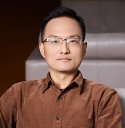
 Shuming Shi
· 3 previous affiliations
- Tencent (China)Since 2016
- Principal Researcher · Since 2016
- Microsoft (United States)2004–2016
- Researcher · 2004–2016
- Tsinghua University1999–2004
- PhD student · 1999–2004
1 other author named Shuming Shi: Shuming Shi (28 papers)
Research Overview
Shuming Shi focuses on natural language processing, large language model optimization, and information retrieval. His early trajectory spans distributed systems and semantic parsing for mathematical reasoning, evolving into extensive work on neural machine translation and sequence-to-sequence architectures. Most recently, his research addresses the instruction-tuning, multimodal capabilities, and knowledge fusion of large language models.
Research Trajectory
Shi’s early research explored distributed systems and foundational information retrieval models. In the early 2000s, he investigated scalable algorithms for peer-to-peer networks, detailing these methods in Distributed Page Ranking in Structured P2P Networks. Shortly after, he proposed a physics-inspired approach to document retrieval in Gravitation-based model for information retrieval, mapping core retrieval concepts like relevance and distance to Newtonian mechanics to derive effective term-weighting functions.
Transitioning into natural language processing in the mid-2010s, Shi focused on the intersection of semantic parsing and automated reasoning. He developed systems capable of interpreting and solving mathematical word problems. This included Automatically Solving Number Word Problems by Semantic Parsing and Reasoning, which introduced a meaning representation language to bridge natural language text and mathematical expressions. He subsequently advanced this domain using deep learning techniques in Deep Neural Solver for Math Word Problems.
By 2018, his research broadened to encompass neural generation, conversational modeling, and syntactic parsing. To improve user engagement in online platforms, he formalized a new generation task and dataset in Automatic Article Commenting: the Task and Dataset. Concurrently, he addressed the pervasive issue of generic outputs in dialogue systems with Towards Less Generic Responses in Neural Conversation Models: A Statistical Re-weighting Method. In the realm of structural prediction, his work on Improving Sequence-to-Sequence Constituency Parsing refined attention mechanisms for top-down tree linearization, contributing to the broader research area of Boundary Based Span Representations.
During this period, Shi also made contributions to neural machine translation (NMT). He explored methods to integrate global translation memory into decoding networks efficiently in Graph Based Translation Memory for Neural Machine Translation., utilizing compact graphs and specialized attention mechanisms. Further investigations into the internal mechanics of translation models were detailed in Understanding and Improving Hidden Representations for Neural Machine Translation.
Returning to foundational sequence modeling and extraction tasks in the early 2020s, Shi developed a dynamic programming framework for general sequence segmentation in Segmenting Natural Language Sentences via Lexical Unit Analysis. He also tackled the challenges of incomplete annotations in named entity recognition. In Empirical Analysis of Unlabeled Entity Problem in Named Entity Recognition, he demonstrated how treating unlabeled entities as negative instances degrades model performance and proposed methods to mitigate this misguidance.
In recent years, Shi’s focus has shifted toward the optimization, evaluation, and robust application of large language models (LLMs). He addressed domain-specific instruction tuning in Explore-Instruct: Enhancing Domain-Specific Instruction Coverage through Active Exploration, utilizing LLMs to actively search and generate diverse training variations. His work on evaluation and robustness includes proposing a novel metric for paraphrase generation that explicitly models lexical divergence in On the evaluation metrics of paraphrase generation, and benchmarking grammatical error correction systems against subtle context perturbations in RobustGEC: Robust Grammatical Error Correction Against Subtle Context Perturbation.
Expanding the capabilities of LLMs in 2024, Shi has investigated multimodal instruction following, retrieval-augmented generation, and model ensembling. He contributed to an annotation-free framework for multi-turn interleaved multimodal interactions in TextBind: Multi-turn Interleaved Multimodal Instruction-following in the Wild. To improve generation accuracy, he explored retrieving context-aware phrases directly from massive document collections in Retrieval is Accurate Generation. Finally, he investigated methods for merging the capabilities of heterogeneous LLMs by aligning their probabilistic distributions during continual training, as presented in Knowledge Fusion of Large Language Models.
Current Directions
The most recent work in Shi’s trajectory centers on expanding the capabilities and efficiency of large language models. A primary focus is on multimodal instruction tuning, specifically developing frameworks that allow models to handle multi-turn, interleaved text and image inputs without relying on extensive human annotation. Additionally, his research investigates advanced retrieval-augmented generation techniques that shift language modeling from token prediction to the direct retrieval of context-aware phrases.
Another significant theme is model ensembling and knowledge fusion, where the probabilistic distributions of multiple, architecturally diverse language models are merged to create more powerful and data-efficient systems. Alongside these core LLM advancements, his recent research also touches upon the broader area of Cross-Lingual Transfer for Low-Resource Language Adaptation, reflecting an ongoing interest in making advanced NLP systems more robust and globally applicable.
Profile updated
Loading new papers…
Other researchers whose papers cluster into the same research directions — a proxy for overlapping technical interests and shared intellectual neighborhoods.
See something wrong? Report a mistake