

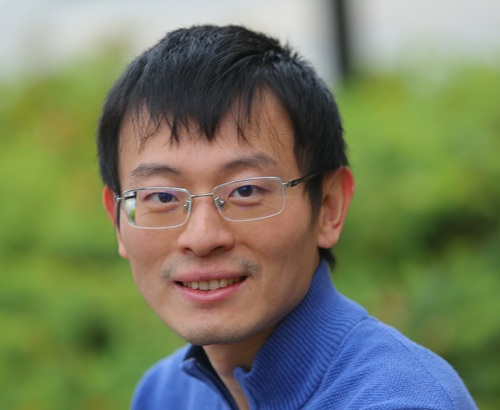
 Shuhan Yuan
· 2 previous affiliations
- Utah State UniversitySince 2020
- Assistant Professor · Since 2020
- Postdoc · 2018–2019
1 other author named Shuhan Yuan: Shuhan Yuan (1 paper)
Research Overview
Shuhan Yuan focuses on data mining, machine learning, and anomaly detection in cyberspace. His early work developed deep learning models for identifying fraudulent and anomalous behavior in sequential data. More recently, his research emphasizes responsible anomaly detection, causal root cause analysis, and the security of large language models against backdoor attacks.
Research Trajectory
Shuhan Yuan’s research arc began with a focus on deep learning for sequential data and graphs, eventually evolving into a comprehensive agenda centered on system security, causality, and model robustness. During his early career, culminating in his Ph.D. at Tongji University, he developed sequence models for text classification, such as Incorporating Pre-Training in Long Short-Term Memory Networks for Tweets Classification, which utilized Long Short-Term Memory (LSTM) networks to capture long-term dependencies in social media data. He also participated in early collaborative work on Differential Privacy Preserving Causal Graph Discovery.
By 2019, his interest in sequential data had expanded into the area of Temporal Contextual Anomaly Detection in Sequential Data. Addressing the challenge of data scarcity in cybersecurity, he and his collaborators introduced One-Class Adversarial Nets for Fraud Detection. This framework utilized an LSTM-Autoencoder to learn representations of benign users, enabling the identification of malicious actors even when labeled fraud data is unavailable.
Moving into system logs and infrastructure monitoring, his research advanced the direction of Interpretable Anomaly Detection. He co-developed LogBERT: Log Anomaly Detection via BERT, which applied self-supervised training tasks to learn normal log patterns and flag deviations signaling potential system malfunctions. He further refined this domain with InterpretableSAD: Interpretable Anomaly Detection in Sequential Log Data.
As an Assistant Professor at Utah State University, a major theme in his recent trajectory has been integrating causal inference with anomaly detection, contributing to the broader area of Scaling Causal Graph Discovery to High Dimensions. Rather than merely flagging anomalies, he began investigating how to explain and fix them. This led to work in the research direction of Structural Counterfactual Reasoning through Abduction and Prediction, exemplified by Algorithmic Recourse for Anomaly Detection in Multivariate Time Series and its expanded version Algorithmic Recourse in Abnormal Multivariate Time Series. These papers introduced RecAD, a framework that uses causal backtracking and counterfactual reasoning to recommend minimal, actionable interventions that restore abnormal systems to a normal state. He also explored the direction of Anomaly Detection via Causal Mechanism Violations in Root Cause Analysis of Anomalies in Multivariate Time Series through Granger Causal Discovery, which identifies anomalies by detecting when exogenous drivers deviate from normal behavior. To handle data scarcity in these complex environments, his lab proposed Few-shot anomaly detection and classification through reinforced data selection with a combinatorial reward.
Concurrently, his research has heavily focused on the security and fairness of machine learning models, particularly concerning the research area of Stealthy Backdoors and Sleeper Agents in AI Systems. He guided the development of defense mechanisms like PURE in Defense against Backdoor Attack on Pre-trained Language Models via Head Pruning and Attention Normalization, which purifies models of hidden triggers without requiring knowledge of the trigger itself. He also investigated vulnerabilities within his own primary domain, demonstrating potential threats in Backdoor Attack against Log Anomaly Detection Models. In the context of generative models, he oversaw the creation of BiasMap: Can Cross-Attention Uncover Hidden Social Biases?, a model-agnostic framework designed to uncover latent representational biases in text-to-image models by analyzing cross-attention attribution maps.
Most recently, his group has analyzed the mechanics of backdoor persistence and removal in large language models. They introduced Robust Gradient Ascent in Don't Shift the Trigger: Robust Gradient Ascent for Backdoor Unlearning to neutralize backdoors without creating new malicious associations, and explored how attackers might counter such defenses in Broadening the Backdoor Basin: Understanding LLM Backdoors Collapse and Making Backdoors Persistent, which uses Fisher Information to broaden a backdoor's footprint in the model's parameter space.
Current Directions
Recent work investigates the intersection of system security, causal reasoning, and model robustness. A primary focus is the security of large language models and generative architectures against stealthy backdoor attacks, exploring both how malicious triggers persist in the loss landscape and how they can be effectively unlearned without degrading model performance. Additionally, ongoing research addresses actionable anomaly detection in multivariate time series. By utilizing causal discovery and counterfactual reasoning, this work aims to move beyond simply identifying system failures to recommending the minimal, actionable interventions required to restore normal operations.
Profile updated
Loading new papers…
Other researchers whose papers cluster into the same research directions — a proxy for overlapping technical interests and shared intellectual neighborhoods.
See something wrong? Report a mistake