

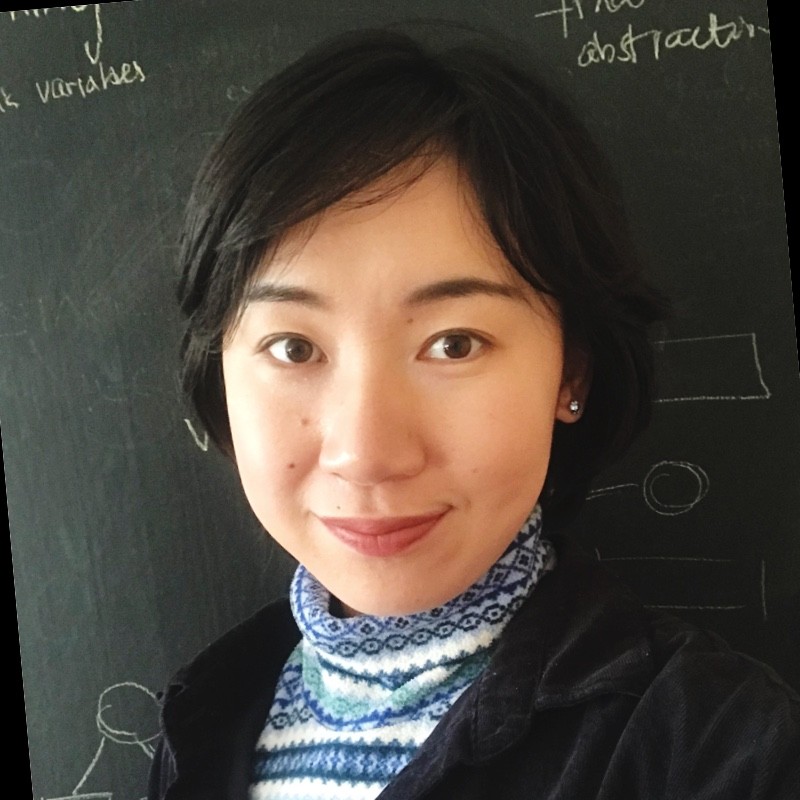
 Shuchen Wu
· 6 previous affiliations
- Allen InstituteSince 2025
- Scientist I · Since 2025
- Helmholtz Munich2024–2025
- Visiting Research Scientist · 2024–2025
- PhD student · 2020–2024
- Lab rotation · 2019
- ETH Zurich2017–2019
- Master's degree, Neural Systems and Computation · 2017–2019
- University of Rochester2014–2015
- Undergraduate Researcher · 2015
- Teaching Intern · 2014–2015
Research Overview
Shuchen Wu focuses on cognitive modeling, representation learning, and the interpretability of neural systems. Their work investigates how principles from cognitive science—particularly chunking and hierarchical abstraction—can inform the development of more efficient and interpretable machine learning models. The trajectory of their research moves from foundational models of hierarchical chunking to recent applications in neural network interpretability and abstract representation transfer.
Research Trajectory
The early trajectory of Wu's work centers on the cognitive principle of chunking as a mechanism for representation learning. In Learning Structure from the Ground up---Hierarchical Representation Learning by Chunking, Wu introduced a hierarchical chunking model (HCM) that discovers minimal atomic sequential units and builds complex representations guided by sequential dependence. This work, which contributes to the area of Autonomous Hierarchy Discovery and Temporal Data Weighting for Non-Stationary Learning, demonstrated that cognitively inspired chunking could yield meaningful and interpretable representations across visual, temporal, and language domains, facilitating flexible transfer between environments.
Building on the algorithmic foundations of HCM, subsequent research explored its implementation in energy-efficient hardware. In Biologically-plausible hierarchical chunking on mixed-signal neuromorphic hardware, Wu and collaborators developed a spiking neuron implementation of the chunking model. By validating the model on mixed-signal neuromorphic hardware, this work demonstrated how cognitively plausible sequence learning could be achieved with significant improvements in speed, power consumption, and memory usage, overcoming the challenges of analog circuit variability.
More recently, Wu has applied these cognitive principles to the challenge of understanding complex neural networks. In Concept-Guided Interpretability via Neural Chunking, they proposed leveraging chunking to segment high-dimensional neural population dynamics into interpretable units. This research, which intersects with directions such as The Convergence of Neural Representations and Activation Steering for Inference Time Model Control, introduced methods to extract emerging entities across varying model sizes, from simple recurrent networks to large language models. The work demonstrated that artificially inducing these extracted entities could effectively alter the network's generation of associated concepts.
Continuing the exploration of abstraction and generalization, Wu developed a non-parametric hierarchical variable learning model in Building, Reusing, and Generalizing Abstract Representations from Concrete Sequences. Contributing to areas like The Compositional Generalization Gap in Neural Networks and Nonparametric Inference of Dictionary Size, this model learns chunks from sequences and abstracts contextually similar chunks as variables. The study showed that this approach not only organizes memory efficiently but also correlates with human recall times in sequence tasks, highlighting a precise trade-off between compression and generalization that differentiates it from standard large language models.
Current Directions
Recent work investigates the intersection of cognitive science and machine learning, with a particular focus on how models can learn, reuse, and generalize abstract representations from concrete sequences. The most recent papers in the evidence address the challenge of neural network interpretability by applying cognitive principles like chunking to segment neural population dynamics. Additionally, there is an ongoing focus on developing non-parametric models that capture human-like abstraction and transfer capabilities, aiming to bridge the gap between human cognitive efficiency and the performance of large language models in compositional generalization and memory organization.
Profile updated
Loading new papers…
Other researchers whose papers cluster into the same research directions — a proxy for overlapping technical interests and shared intellectual neighborhoods.
See something wrong? Report a mistake