

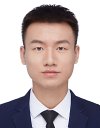
 Shuai Lu
· 2 previous affiliations
- Beijing Institute of TechnologySince 2022
- Postdoc · Since 2024
- PhD student · 2022–2024
- MS student · 2017–2020
- Undergrad student · 2013–2017
3 other authors named Shuai Lu: Shuai Lü (Jilin University · 79 papers), Shuai Lu (Tsinghua University · 51 papers), Shuai Lu (Jingdong (China) · 21 papers)
Research Overview
Shuai Lu focuses on computer vision and medical image analysis, with a particular emphasis on unsupervised anomaly detection, deep learning for glaucoma diagnosis, and multimodal semantic alignment. His work addresses the challenges of training robust diagnostic models in data-constrained environments, developing methodologies that mitigate class imbalance, reduce reliance on pixel-level annotations, and improve the interpretability of automated clinical assessments.
Research Trajectory
The evolution of Lu’s research reflects a transition from task-specific supervised learning in ophthalmology to more generalized unsupervised frameworks for anomaly detection and multimodal representation learning. Between 2019 and 2021, his work was primarily centered on the automated screening of glaucoma through the segmentation of the optic disc (OD) and optic cup (OC). During this period, he addressed the inherent class imbalance in fundus photography datasets by developing specialized loss functions and multi-scale convolutional architectures. A significant contribution in this phase was the Mixed Maximum Loss Design for Optic Disc and Optic Cup Segmentation with Deep Learning from Imbalanced Samples, which introduced a strategy to minimize the maximum loss to improve the representation of minority features in medical images.
In 2021 and 2022, Lu’s focus expanded toward enhancing the clinical utility of deep learning models by incorporating expert knowledge and improving transparency. He participated in the development of a hierarchical deep learning approach with transparency and interpretability based on small samples for glaucoma diagnosis, which sought to mimic the reasoning process of human ophthalmologists. This shift addressed the "black box" nature of traditional neural networks, providing evidence-based outputs that are more acceptable in clinical settings. Simultaneously, he explored global context modeling through attention mechanisms, as seen in the development of GC-Net for automated glaucoma classification.
Starting in 2023, Lu’s research pivoted significantly toward unsupervised anomaly detection (UAD). This direction was motivated by the high cost and subjectivity associated with labeling medical data. His work in this area focuses on Preventing Identity Shortcuts in Reconstruction Anomaly Detection, a common failure mode where auto-encoders learn to reconstruct anomalous pixels rather than flagging them. By developing frameworks like ReContrast and Hetero-AE, he introduced methods to force models to learn domain-specific features rather than simple identity mappings.
Most recently, in 2025 and 2026, Lu has moved into the domain of multimodal semantic alignment. This work addresses the limitations of Contrastive Language-Image Pretraining (CLIP) when applied to noisy web-crawled data or highly redundant medical datasets. This trajectory suggests a broadening of scope from specific medical diagnostic tasks to the fundamental problem of aligning vision and language representations in specialized domains.
Current Directions
Lu’s current research is concentrated on three primary areas: refining unsupervised anomaly detection, advancing semi-supervised segmentation, and improving multimodal alignment robustness.
In the realm of anomaly detection, he is developing "absolute-unified" models that can perform multi-class detection without requiring category information during inference. This involves aligning class-agnostic distributions to ensure that the model remains sensitive to anomalies across diverse object types. In medical imaging, he continues to refine encoder-decoder architectures to prevent "pattern collapse," ensuring that models pre-trained on natural images can effectively adapt to the nuances of clinical data.
His work in semi-supervised learning aims to further reduce the burden on clinicians by enabling accurate segmentation with minimal labeled data. This is particularly relevant for tasks like optic cup segmentation, where pixel-level labeling is time-consuming and prone to inter-observer variability. Additionally, his recent focus on multimodal alignment seeks to create "plug-in" modules for large-scale models that enhance their ability to handle the loose semantic alignment found in real-world datasets.
Representative Work
Lu’s contributions to medical image analysis are characterized by a focus on architectural innovation and loss function design to handle the specific constraints of clinical data. In Anomaly Detection for Medical Images Using Heterogeneous Auto-Encoder, he addressed the problem of identity mapping in reconstruction-based detection. By utilizing a heterogeneous architecture that combines convolutional and transformer-based components, the model is forced to learn more complex structural representations, thereby improving its ability to distinguish between healthy tissue and pathological anomalies.
The challenge of adapting models to specialized domains is further explored in ReContrast: Domain-Specific Anomaly Detection via Contrastive Reconstruction. As a key contributor to this framework, Lu helped develop a dual-encoder "cross-reconstruction" strategy. This approach utilizes contrastive learning and stop-gradient operations to prevent the model from converging on trivial solutions, allowing it to achieve high performance on both medical and industrial inspection benchmarks.
In the context of unsupervised learning, Lu also co-authored Encoder-Decoder Contrast for Unsupervised Anomaly Detection in Medical Images. This work identifies a critical gap: the features extracted by encoders pre-trained on natural images (like ImageNet) often fail to capture the subtle textures necessary for medical diagnosis. The paper proposes a contrastive mechanism between the encoder and decoder to align feature representations specifically for the target medical domain, mitigating the issue of pattern collapse.
Lu’s earlier work on glaucoma screening provided the foundation for his current focus on robust learning. In Mixed Maximum Loss Design for Optic Disc and Optic Cup Segmentation with Deep Learning from Imbalanced Samples, he demonstrated how specialized training strategies could overcome the limitations of small, imbalanced datasets. This research utilized a U-shaped network with multi-scale inputs to capture the varying sizes of the optic disc and cup, which is critical for calculating the cup-to-disc ratio used in diagnosis.
His involvement in the development of the Hierarchical Deep Learning System (HDLS) represents a significant effort toward model interpretability. By structuring the network to follow the diagnostic steps used by ophthalmologists, the system provides transparent evidence for its classifications. This work demonstrated that expert-level accuracy could be achieved with significantly less data than traditional deep learning models require, provided the architecture is designed to incorporate domain-specific logic.
Finally, his recent work on CLIPin: A Non-contrastive Plug-in to CLIP for Multimodal Semantic Alignment addresses the fragility of contrastive learning in the presence of noisy or redundant data. By introducing a non-contrastive supervision signal, the CLIPin module improves the robustness of vision-language alignment. This research is particularly relevant for medical multimodal datasets, where the high correlation between images and their corresponding reports can lead to suboptimal representation learning in standard contrastive frameworks.
Profile updated
Loading new papers…
Other researchers whose papers cluster into the same research directions — a proxy for overlapping technical interests and shared intellectual neighborhoods.
See something wrong? Report a mistake