

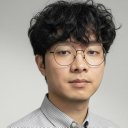
 Shuai Jiang
· 1 previous affiliation
- Hunan UniversityCurrent
- PhD student · Current
3 other authors named Shuai Jiang: Shuai Jiang (Sandia National Laboratories · 3 papers), Shuai Jiang (1 paper), Shuai Jiang (1 paper)
Research Overview
Shuai Jiang focuses on computer vision, specifically medical image segmentation, automated neural architecture search, and industrial defect detection. His trajectory spans from joint segmentation frameworks for ophthalmic imaging to resilient multimodal learning systems capable of handling unreliable sensor streams. Recently, his work has expanded into adversarial robustness and few-shot learning methodologies for complex visual environments.
Research Trajectory
Jiang’s early research focused on specialized medical image analysis, particularly the segmentation of optical coherence tomography angiography (OCTA) images. In ophthalmic clinical practice, the foveal avascular zone (FAZ) and retinal vessels (RVs) are critical biomarkers for diagnosing eye diseases. Historically, the segmentation of these two features was treated as separate tasks, which ignored the implicit spatial constraints between them. To address this, he co-authored Joint-Seg: Treat Foveal Avascular Zone and Retinal Vessel Segmentation in OCTA Images as a Joint Task in 2022. This work introduced a single-encoder, dual-decoder architecture that enabled the simultaneous extraction of FAZ and RVs from en-face OCTA images, leveraging their positional relationship to improve segmentation accuracy. He later expanded on this paradigm with Joint Segmentation of FAZ and RVs in OCTA Images With Auxiliary 3-D Image Projection Learning (2025). This advanced framework, PL-Joint-Seg, incorporated a 3-D image projection path alongside the traditional 2-D segmentation path. By extracting volume features through an image projection network, the system captured richer spatial contexts, further refining the joint segmentation process.
Concurrently, Jiang’s research broadened into the domain of industrial surface defect detection, where he explored how automated and efficient neural architectures could be deployed in real-world edge environments. He contributed to Automated Neural Architecture Design for Industrial Defect Detection (2025), which presented AutoNAD, an automated neural architecture search (NAS) framework. By jointly searching across convolutions, transformers, and multilayer perceptrons (MLPs), AutoNAD generated hybrid models capable of managing the high intraclass differences and interclass similarities typical of industrial defects. This work contributed to the area of Automated Discovery of Compact Neural Architectures and the research direction Integrating Local Inductive Biases with Global Visual Context. Continuing his work in architecture optimization, he collaborated on Searching Efficient Semantic Segmentation Architectures via Dynamic Path Selection (2025). This research introduced Dynamic Path Selection (DPS), a training strategy for one-shot NAS that mitigates the gradient conflicts common in uniform optimization methods. By selectively optimizing promising network paths through a three-stage process—focusing sequentially on convergence, expressiveness, and generalization—the method efficiently discovered high-performing architectures, advancing the broader area of Robust Performance Proxies for Early Stage Model Selection.
A significant theme in Jiang’s recent trajectory is the development of vision systems that remain robust under constrained or imperfect conditions. In industrial settings, sensor failures are a common challenge. To address this, he introduced Resilient Multimodal Industrial Surface Defect Detection With Uncertain Sensors Availability (2025). This framework utilized cross-modal prompt learning and text-guided fusion to maintain high detection accuracy even when up to 70% of sensor data—such as RGB camera feeds or 3D scanner inputs—was missing. This approach aligns closely with the research direction Resilient Multimodal Learning for Unreliable Sensor Streams.
Alongside sensor resilience, Jiang has investigated methods to reduce the heavy annotation burdens associated with training defect detection models. He proposed Category-Agnostic Cluster-Guided Selective Suppression for Weakly Supervised Surface Defect Localization (2025), which advanced weakly supervised localization techniques by selectively suppressing dominant features to uncover less obvious defect regions. Similarly, he participated in the development of Multi-Context Aggregation Network With Foreground Correction for Automated Few-Shot Defect Segmentation (2025), a framework designed to perform accurate defect segmentation when only a minimal number of annotated examples are available.
Beyond medical and industrial applications, Jiang has also explored the adversarial vulnerabilities of computer vision models. In Prompt-driven Transferable Adversarial Attack on Person Re-Identification with Attribute-aware Textual Inversion (2025), he presented AP-Attack, a novel adversarial method targeting person re-identification (Re-ID) systems. By employing textual inversion to map images to fine-grained linguistic descriptions, the attack targeted specific physical attributes, such as clothing color or hairstyle. This semantic approach generated adversarial examples that were significantly more effective at deceiving black-box models than previous methods, intersecting with the area of Robust Vision via Semantic and Multi-Modal Alignment and the research direction Adversarial Optimization on the Latent Image Manifold.
Current Directions
The most recent papers in the evidence indicate a sustained focus on building robust, efficient, and adaptable computer vision systems. A primary current direction involves resilient multimodal learning, specifically designing architectures that can dynamically compensate for missing or unreliable sensor streams in complex environments. This is complemented by ongoing work in automated neural architecture search (NAS), where the goal is to discover compact, hybrid models that balance the need for high-resolution local detail with global contextual understanding, particularly for edge deployment.
Additionally, recent work investigates the intersection of semantic alignment and adversarial robustness. By utilizing techniques like textual inversion and cross-modal prompt learning, Jiang is exploring how linguistic and semantic priors can be used both to improve model resilience in data-scarce scenarios (such as few-shot or weakly supervised learning) and to expose vulnerabilities in existing visual recognition systems.
Profile updated
Loading new papers…
Other researchers whose papers cluster into the same research directions — a proxy for overlapping technical interests and shared intellectual neighborhoods.
See something wrong? Report a mistake