

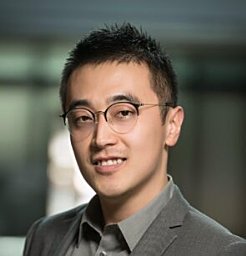
 Shu Yang
· 3 previous affiliations
- University of PennsylvaniaSince 2021
- Researcher · Since 2026
- PennAITech Fellow | Postdoctoral Research Scholar · Since 2021
- Postdoc · 2021–2026
- Doctor of Philosophy - PhD, Computer Science · 2021
- MPhil, Bioinformatics
8 other authors named Shu Yang: Shu Yang (King Abdullah University of Science and Technology · 43 papers), Shu Yang (30 papers), Shu Yang (North Carolina State University · 19 papers), Shu Yang (Tsinghua University · 3 papers), Shu Yang (Hong Kong University of Science and Technology · 3 papers), and 3 more
Research Overview
Shu Yang focuses on computational biomedicine, neuroimaging genetics, and the application of large language models to complex disease research. Early collaborative work investigated the neuroanatomical and genetic underpinnings of Alzheimer's disease through multimodal statistical analysis. Recently, this research has shifted toward integrating knowledge graphs and natural language processing to extract biomedical insights and map disease progression.
Research Trajectory
Shu Yang’s research trajectory demonstrates an evolution from collaborative statistical genetics and neuroimaging toward the development of specialized machine learning and natural language processing frameworks for biomedical data.
In the earlier phase of this work (2022–2023), Yang participated as a middle author in large-scale studies examining the genetic and neuroanatomical basis of Alzheimer's disease (AD). In Preference Matrix Guided Sparse Canonical Correlation Analysis for Genetic Study of Quantitative Traits in Alzheimer's Disease, Yang was part of a team that utilized sparse canonical correlation analysis to identify associations between genetic markers and quantitative phenotypic traits. This collaborative effort aimed to clarify the complex genetic architecture of AD to guide potential targeted treatments. Continuing this multimodal approach, Yang contributed to Brain-wide genome-wide colocalization study for integrating genetics, transcriptomics and brain morphometry in Alzheimer's disease. This research integrated multidimensional biobank data—including individual-level genotyping, single-cell gene expression, and magnetic resonance imaging—to uncover underlying neurobiological pathways. These early projects reflect a strong foundation in handling complex, high-dimensional biological datasets, touching upon methodological challenges common to the research direction of Robust Integration of Experimental and Observational Data.
In 2024, Yang's focus shifted significantly toward advanced machine learning and natural language processing, taking on a prominent second-author role across several key publications. A major theme of this recent work is the application of Large Language Models (LLMs) to specialized biomedical domains, where general-purpose models often struggle with domain-specific accuracy. In Knowledge-Driven Feature Selection and Engineering for Genotype Data with Large Language Models, Yang helped develop FREEFORM, a framework that leverages the reasoning capabilities of pre-trained LLMs to process high-dimensional tabular genotype data. This approach addresses the persistent challenge of predicting complex phenotypes from small, interpretable sets of variant features.
This interest in LLMs extended to literature mining and knowledge graph (KG) construction. Yang was a primary contributor to DALK: Dynamic Co-Augmentation of LLMs and KG to answer Alzheimer's Disease Questions with Scientific Literature. The DALK framework creates a synergistic loop where LLMs extract long-tail knowledge from scientific literature to build an evolving AD-specific knowledge graph, which in turn enhances the model's domain accuracy and reduces hallucinations. While the core application is biomedical, this work relies heavily on foundational capabilities developed in the broader area of The Memory Bandwidth Bottleneck in Transformer Decoding to process and generate extensive scientific texts.
Alongside these NLP applications, Yang has continued to advance quantitative models of disease progression using novel machine learning architectures. In Mapping Alzheimer's Disease Pseudo-Progression With Multimodal Biomarker Trajectory Embeddings, Yang co-developed an analytical pipeline that adapts machine learning methods originally designed for single-cell transcriptomics to model the heterogeneous pathways of AD using longitudinal biomarker data. Similarly, in Clustering Alzheimer's Disease Subtypes via Similarity Learning and Graph Diffusion, Yang contributed to unsupervised clustering frameworks utilizing multi-kernel similarity learning. This research aims to identify homogeneous clinical subtypes within the broader, highly heterogeneous AD patient population, facilitating more precise diagnostic and therapeutic strategies.
Current Directions
The most recent papers in the evidence indicate a dual focus on knowledge-augmented artificial intelligence and precision subtyping in neurodegenerative diseases. One primary direction involves refining how large language models interact with structured knowledge graphs to overcome the limitations of applying general-purpose AI to specialized biomedical fields. This includes automating the extraction of complex, long-tail relationships—such as the impact of social determinants of health on Alzheimer's risk—from vast bodies of scientific literature to create dynamic, domain-specific knowledge bases.
Concurrently, recent work investigates the application of advanced clustering and dimensionality reduction techniques to longitudinal biomarker data. By adapting methods like graph diffusion and multi-kernel similarity learning, this research aims to better map disease pseudo-progression and identify distinct, homogeneous clinical subtypes within highly heterogeneous patient populations, ultimately supporting more targeted approaches to Alzheimer's disease research and intervention.
Profile updated
Loading new papers…
Other researchers whose papers cluster into the same research directions — a proxy for overlapping technical interests and shared intellectual neighborhoods.
See something wrong? Report a mistake