

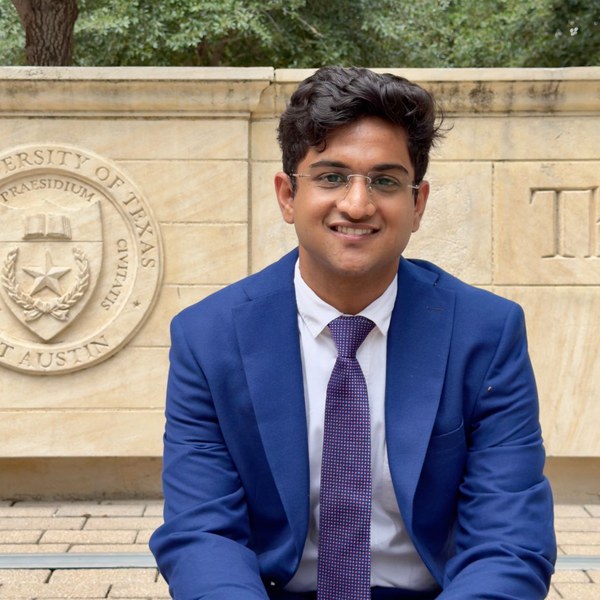
 Shrey Pandit
· 7 previous affiliations
- Salesforce (United States)Since 2024
- Research Scientist · Since 2025
- Current
- Artificial Intelligence Intern · 2024
- SalesForce.comSince 2025
- Researcher · Since 2025
- The University of Texas at Austin2023–2025
- Graduate Student Researcher · 2023–2025
- Undergrad student · 2019–2023
- Bachelor of Engineering - BE, Computer Science · 2019–2023
- Microsoft (United States)2022–2023
- Research Intern · 2022–2023
- Contributor · 2022
Research Overview
Shrey Pandit focuses on mitigating hallucinations in large language models, improving contextual faithfulness, and developing robust evaluation frameworks for complex reasoning. His early work explored knowledge editing and retrieval-augmented generation to ground model outputs in reliable external data. More recently, his research centers on agentic applications, step-level verification for mathematical reasoning, and reinforcement learning techniques to enhance autonomous web agents.
Research Trajectory
The evolution of Pandit’s research begins with a focus on keeping large language models updated and grounded in reliable, external information. As software libraries and APIs constantly evolve, static models quickly become outdated. To address this, he investigated how models adapt to new information in CodeUpdateArena: Benchmarking Knowledge Editing on API Updates (2024). The study demonstrated that models struggle to learn from documentation alone, but fine-tuning them on specific usage examples allows them to successfully internalize and apply new coding patterns.
Building on the need for reliable model outputs, Pandit collaborated with researchers at Salesforce AI Research to develop SFR-RAG: Towards Contextually Faithful LLMs (2024). This work tackles the "faithfulness" problem in Retrieval-Augmented Generation (RAG) by introducing a specialized architecture that separates a model's internal reasoning processes from its external observations. By structuring how the model interacts with retrieved data, the approach significantly improves performance on context-grounded tasks, contributing to the broader area of Mitigating the Inference Latency of Chain of Thought.
He further explored the tension between a model's pre-trained knowledge and user-provided context in FaithEval: Can Your Language Model Stay Faithful to Context, Even If "The Moon is Made of Marshmallows" (2025). This large-scale benchmark measures how well models adhere to provided information, even when that context is unanswerable, contradictory, or explicitly counterfactual. The findings revealed a significant "faithfulness gap," showing that even highly capable models frequently ignore instructions in favor of their internal training data. This work highlights critical challenges in the research direction of Overriding Internal Knowledge with Counterfactual Context and the related area of Adjudicating Conflicting Evidence in Large Language Models.
As language models have increasingly been deployed for complex, multi-step problem solving, evaluating their reasoning paths has become as important as verifying their final answers. Pandit introduced Hard2Verify: A Step-Level Verification Benchmark for Open-Ended Frontier Math (2025) to address this bottleneck. Rather than relying on final-answer accuracy—which can mask hallucinated or flawed logic—this work provides robust verifiers designed to audit mathematical proofs step-by-step. This methodology advances the research direction of Addressing Benchmark Saturation in Large Language Models by establishing more rigorous standards for evaluating true reasoning capabilities.
Simultaneously, Pandit expanded his focus to the development and training of autonomous web agents. In Synthesizing Agentic Data for Web Agents with Progressive Difficulty Enhancement Mechanisms (2025), he developed ProgSearch, a data synthesis pipeline that generates high-quality training data by progressively increasing task difficulty until a baseline agent fails. By isolating challenging samples and rare entities, the pipeline achieves significant performance gains with smaller datasets, contributing to the area of Dynamic Curricula for Evolving Model Competence. Alongside this data-centric approach, he contributed to SFR-DeepResearch: Towards Effective Reinforcement Learning for Autonomously Reasoning Single Agents (2025). This framework utilizes a novel reinforcement learning recipe—featuring length-normalized advantages and single-turn inference optimizations—to transform reasoning-optimized models into autonomous agents capable of conducting complex web research. Both of these projects advance the broader research direction of Shifting from Static Benchmarks to Dynamic Evaluation.
Beyond reasoning and agentic behavior, Pandit's research also addresses the underlying systems and infrastructure required to run frontier models efficiently. In Least-Loaded Expert Parallelism: Load Balancing An Imbalanced Mixture-of-Experts (2026), he and his co-authors tackled the hardware bottlenecks caused by "hot" experts in Mixture-of-Experts (MoE) architectures. They introduced a dynamic algorithm that reroutes excess tokens and their corresponding expert weights to underutilized GPUs, improving computational speed and memory efficiency without altering the model's mathematical output.
Current Directions
The most recent papers in the evidence indicate a strong ongoing focus on the autonomous capabilities, rigorous evaluation, and structural efficiency of large language models. Recent work investigates the synthesis of high-quality training data for web agents through progressive difficulty enhancement, as well as the application of reinforcement learning to enable complex, multi-step web research by single agents. Additionally, ongoing efforts address the critical need for step-level verification in open-ended reasoning tasks, ensuring that models produce mathematically sound proofs rather than hallucinated approximations. At the systems level, recent contributions also explore dynamic load balancing for Mixture-of-Experts architectures, aiming to resolve hardware bottlenecks and improve the scalability of frontier models.
Profile updated
Loading new papers…
Other researchers whose papers cluster into the same research directions — a proxy for overlapping technical interests and shared intellectual neighborhoods.
See something wrong? Report a mistake