

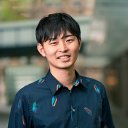
 Shohei Taniguchi
· 1 previous affiliation
- The University of TokyoSince 2024
- Postdoc · Since 2024
Research Overview
Shohei Taniguchi focuses on generative modeling, scalable Bayesian inference, and optimization for deep learning. His trajectory spans from amortized Markov chain Monte Carlo methods and deep latent variable models to recent advancements in the theoretical foundations of diffusion models. Currently, his work addresses numerical stability in stochastic differential equations and the mechanistic interpretability of large-scale architectures.
Research Trajectory
Taniguchi’s early research involved applying Bayesian state estimation to robotics. In 2020, he collaborated on Contact-based in-hand pose estimation using Bayesian state estimation and particle filtering, developing a method to localize objects in a robot's hand to sub-millimeter precision using only minimal calibration and a force sensor, a technique designed to improve flexibility in industrial assembly tasks.
Concurrently, he began addressing the computational bottlenecks of Markov chain Monte Carlo (MCMC) methods in deep learning. He introduced Learning Deep Latent Variable Models via Amortized Langevin Dynamics, proposing a framework to replace costly datapoint-wise MCMC iterations with an inference model that maps observations directly into latent variables. He expanded on this foundation in 2022 with Langevin Autoencoders for Learning Deep Latent Variable Models, formally proving that amortized Langevin dynamics functions as a valid MCMC algorithm whose Markov chain maintains the target posterior as a stationary distribution. This work contributed significantly to the area of Scalable Bayesian Inference via Stochastic Gradient MCMC.
In 2023, his focus on generative modeling and undirected graphical models led to End-to-end Training of Deep Boltzmann Machines by Unbiased Contrastive Divergence with Local Mode Initialization. Here, he developed an algorithm combining unbiased MCMC estimators with a local mode initialization strategy to enable stable, end-to-end training of Deep Boltzmann Machines. This approach bypassed the need for cumbersome layer-wise pretraining while achieving generative performance comparable to modern GANs, advancing work in the broader area of Spatial Inductive Biases for High Dimensional Structured Data.
Moving into 2024, Taniguchi addressed fundamental challenges in deep learning optimization. He developed ADOPT: Modified Adam Can Converge with Any $\beta_2$ with the Optimal Rate, which proposed a modification to the widely used Adam optimizer to ensure optimal convergence rates regardless of the $\beta_2$ hyperparameter. This optimization research intersects with critical research directions such as Taming Loss Spikes in Large Scale Transformer Training and Decorrelating Gradients from Adaptive Learning Rates. Around the same time, he collaborated on extending generative models to temporal data in SSM Meets Video Diffusion Models: Efficient Video Generation with Structured State Spaces, utilizing structured state-space models (SSMs) to overcome the quadratic memory limitations of attention layers in long-sequence video generation.
By 2025, his research heavily emphasized the theoretical and numerical foundations of diffusion models. He introduced FullDiffusion: Diffusion Models Without Time Truncation, addressing the numerical instability of stochastic differential equation (SDE) solvers near time boundaries. By resolving these instabilities, the work eliminated the need for heuristic time truncation, which traditionally hindered the rigorous formulation of diffusion models and complicated maximum likelihood training. He also contributed to multimodal representation learning with How Semantically Informative is an Image?: Measuring the Covariance-Weighted Norm of Contrastive Learning Embeddings, proposing a metric to measure absolute semantic informativeness between images and text by redefining the concept of Information Gain for contrastive learning models.
Additionally, he participated in research exploring the internal mechanisms of large language models. In Beyond Induction Heads: In-Context Meta Learning Induces Multi-Phase Circuit Emergence, he and his collaborators investigated how in-context learning evolves, identifying a three-phase circuit emergence process that enables models to transition from simple memorization to sophisticated meta-learning. This work aligns with the field of Mechanistic Circuits and the Challenge of Model Scale.
Most recently, in 2026, Taniguchi presented Quantization-Aware Diffusion Models For Maximum Likelihood Training. This paper introduced a framework that explicitly integrates the discrete nature of digital data (such as 8-bit pixels) into the continuous formulation of diffusion models. By redesigning the model's parameterization to guarantee convergence to quantized points, the approach significantly improved density estimation, bringing negative log-likelihood metrics remarkably close to theoretical lower bounds.
Current Directions
Based on his most recent publications, Taniguchi’s current research is anchored in the rigorous mathematical formulation of generative models, particularly diffusion models. He is actively investigating methods to bridge the gap between continuous stochastic processes and discrete empirical data, as seen in his recent work on quantization-aware diffusion frameworks and the elimination of time-boundary singularities in SDE solvers.
Parallel to his work in generative modeling, his recent collaborations indicate an ongoing interest in the science of deep learning and representation. This includes developing formal metrics for semantic informativeness in multimodal contrastive spaces and applying mechanistic interpretability techniques to understand the phase transitions and circuit formations that drive in-context learning in large-scale architectures.
Profile updated
| Paper | Venue | Year |
|---|---|---|
| ADOPT: Modified Adam Can Converge with Any $\beta_2$ with the Optimal RateGitHubiShohei220/ | NeurIPS | 2024 |
Loading new papers…
Other researchers whose papers cluster into the same research directions — a proxy for overlapping technical interests and shared intellectual neighborhoods.
See something wrong? Report a mistake