

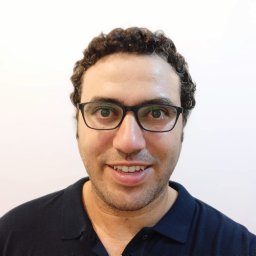
 Shlomo Chazan
· 3 previous affiliations
- Bar-Ilan UniversitySince 2013
- Reseach Scientist · Since 2013
- PhD student · 2016–2020
- MS student · 2013–2015
- OriginAISince 2020
- Head of Research Audio & NLP · Since 2020
- Principal Researcher · 2021–2026
- Research Intern · 2020
Research Overview
Shlomo Chazan focuses on speech enhancement, speaker separation, and multi-microphone array processing. His research trajectory spans from single-microphone hybrid generative-discriminative models to deep neural network architectures for spatial filtering and direction-of-arrival estimation. The most recent work in his profile investigates deep clustering techniques and fully convolutional networks for dynamic multi-speaker localization.
Research Trajectory
Chazan’s early research primarily addressed single-microphone speech enhancement, with a specific focus on managing the high variability of speech signals caused by phoneme structures. In A Hybrid Approach for Speech Enhancement Using MoG Model and Neural Network Phoneme Classifier (2016), he and his co-authors introduced an algorithm that merged generative and discriminative modeling. The approach utilized a Mixture of Gaussians (MoG) to model the noise-free speech log-power spectral density, capturing phoneme-based diversity, while a deep neural network (DNN) was trained to classify phonemes using mel-frequency cepstral coefficients. This hybrid architecture allowed for a more nuanced estimation of speech presence probability in noisy environments.
Building on the concept of specialized modeling for different speech types, Chazan advanced this framework by developing mixture-of-experts architectures. In Speech Enhancement using a Deep Mixture of Experts (2017), he proposed a Deep Mixture of Experts (DMoE) neural network. Rather than relying on a single fully connected network to process all speech variability, this architecture employed a set of distinct DNN "experts," each trained to enhance specific phoneme-related speech types. A gating network dynamically assigned the appropriate expert to a given speech segment, yielding a weighted speech presence probability used for soft spectral attenuation.
By 2017 and 2018, Chazan’s focus expanded from single-microphone enhancement to multi-microphone spatial processing and speaker extraction. A central challenge in this domain is the accurate estimation of parameters for spatial filters, such as the Linearly Constrained Minimum Variance (LCMV) beamformer, in real-world noisy environments. In LCMV Beamformer with DNN-Based Multichannel Concurrent Speakers Detector (2018), Chazan developed a control mechanism utilizing a DNN-based multichannel concurrent speakers detector. By analyzing all available microphone signals to detect speaker activity patterns, the system could isolate frames with no active speakers to estimate the noise spatial cross-power spectral density matrix, and frames with a single active speaker to estimate relative transfer functions.
Alongside applied audio processing, Chazan also investigated the foundational training strategies underlying these complex neural architectures. In Training Strategies for Deep Latent Models and Applications to Speech Presence Probability Estimation (2018), he analyzed the Mixture of Deep Experts (MoDE) paradigm as a latent variable model. The research demonstrated that in the context of neural networks with latent variables, standard back-propagation functions as a recursive variant of the expectation-maximization (EM) algorithm, providing a theoretical grounding for the training techniques used in his speech enhancement models.
Moving further into complex acoustic environments, Chazan explored deep learning methods for direction of arrival (DOA) estimation to facilitate speaker separation. In Multi-Microphone Speaker Separation based on Deep DOA Estimation (2019), he leveraged the W-disjoint orthogonality property of speech—the principle that each time-frequency bin is typically dominated by a single speaker. The proposed algorithm utilized a U-net DNN architecture to infer the DOA for each time-frequency bin directly from concatenated microphone spectra, allowing for the generation of spatial masks that effectively separated concurrent speakers.
Chazan’s subsequent collaborative work continued to refine both spatial audio processing and generalized machine learning techniques. As a second author on K-Autoencoders Deep Clustering (2020), he contributed to a novel deep clustering algorithm that extended traditional k-means clustering. Instead of using single centroid vectors, the method represented each cluster with an autoencoder, associating data points with the autoencoder that yielded the minimal reconstruction error. This approach demonstrated that architectures inspired by mixture-of-experts paradigms could achieve competitive performance on standard image corpora without requiring overly complex network designs.
Current Directions
The most recent papers in the evidence, published in 2020, indicate a dual focus on advanced spatial audio processing and generalized deep learning architectures. In the audio domain, recent collaborative work investigates fully convolutional networks for the dynamic, online localization of multiple speakers. By training networks on instantaneous spatial features, this research aims to simultaneously track both static and moving speakers at high resolutions.
Concurrently, recent work addresses the limitations of standard cost functions in speech enhancement, particularly when dealing with narrowband noise. This is explored through the development of composite neural network architectures that output both a masking function and an estimated log-spectrum, combining them for superior enhancement performance. Beyond audio, the methodological research into deep clustering algorithms—utilizing autoencoders to minimize global reconstruction errors—suggests an ongoing interest in unsupervised learning and latent variable modeling across broader machine learning applications.
Profile updated
Loading new papers…
Other researchers whose papers cluster into the same research directions — a proxy for overlapping technical interests and shared intellectual neighborhoods.
See something wrong? Report a mistake