

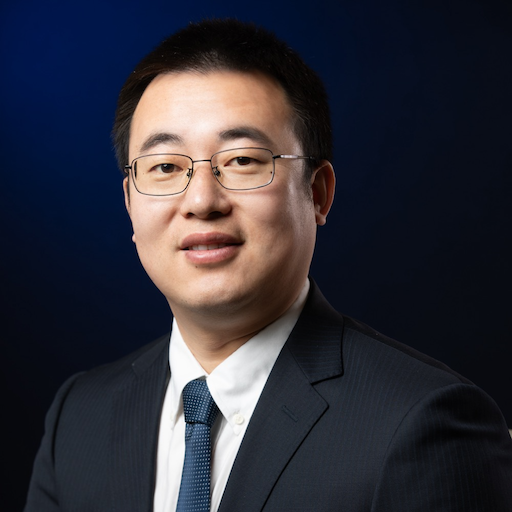
 Shizhu He
· 1 previous affiliation
- Chinese Academy of SciencesSince 2012
- Full Professor · Since 2026
- Associate Professor · 2018–2026
- Assistant Professor · 2016–2018
- PhD student · 2012–2016
Research Overview
Shizhu He focuses on natural language processing, knowledge graphs, and large language models, with an emphasis on question answering and knowledge reasoning. His early work explored knowledge graph embeddings and semantic parsing using first-order logic. More recently, his research investigates the collaborative learning of large and small models, focusing on efficient reasoning, knowledge distillation, and dynamic parameter generation.
Research Trajectory
He’s early research addressed question answering over structured data and the representation of knowledge graphs. He introduced methods for translating natural language into structured queries, formulating ambiguity resolution in question answering over linked data as first-order logic clauses within a Markov Logic Network in Question Answering over Linked Data Using First-order Logic. He also contributed to advancing knowledge graph representations. With collaborators, he developed the TransD model to dynamically construct mapping matrices for entity and relation embeddings in Knowledge Graph Embedding via Dynamic Mapping Matrix. Recognizing that entities and relations possess varying degrees of certainty, he subsequently proposed KG2E, a density-based approach using Gaussian embeddings to explicitly model these uncertainties in Learning to Represent Knowledge Graphs with Gaussian Embedding. Transitioning toward sequence-to-sequence learning for question answering, he developed the COREQA system, which integrates copying and retrieving mechanisms to generate coherent natural language responses in Generating Natural Answers by Incorporating Copying and Retrieving Mechanisms in Sequence-to-Sequence Learning.
As large language models became prominent, his focus shifted toward optimizing their efficiency and reasoning capabilities, particularly through the interplay between large and small models. He explored the research direction of Parameter Synthesis for Dynamic Model Adaptation, participating in work that generates task-specific adapters directly from natural language instructions rather than relying solely on massive instance-based training in From Instance Training to Instruction Learning: Task Adapters Generation from Instructions. He also began extensive work in the area of Distilling Reasoning Trajectories into Small Language Models. To address the computational overhead and potential noise of introducing external symbolic knowledge during distillation, he introduced the SKIntern approach. This method, detailed across pre-print and conference publications including : Internalizing Symbolic Knowledge for Distilling Better CoT Capabilities into Small Language Models and its subsequent version SKIntern: Internalizing Symbolic Knowledge for Distilling Better CoT Capabilities into Small Language Models, empowers small language models to internalize symbolic knowledge, thereby improving their reasoning and out-of-domain generalization.
In 2025, his research expanded into several interconnected areas of model reasoning and knowledge integration. Returning to knowledge graphs, he proposed a framework to refine simple chain-like rules into more precise tree-like rules with branching constraints to boost reasoning accuracy in From Chain to Tree: Refining Chain-like Rules into Tree-like Rules on Knowledge Graphs. He also investigated the efficiency of reasoning models, addressing the tendency of large models to over-allocate compute to simple problems. In The Zero-Step Thinking: An Empirical Study of Mode Selection as Harder Early Exit in Reasoning Models, he formalized "Mode Selection" to determine whether a model should engage in a long chain-of-thought or output an answer immediately.
To support continual learning without catastrophic forgetting, he developed the DATA framework, which decouples knowledge into high-rank task-specific and low-rank task-shared adapters in DATA: Decomposed Attention-based Task Adaptation for Rehearsal-Free Continual Learning. His work on retrieval-augmented generation (RAG) sought to minimize reliance on explicit external documents, contributing to the broader area of Reducing Contextual Noise for Robust Reasoning. He proposed the Awakening-Augmented-Generation (AAG) framework to activate a model's internal knowledge without external retrieval in Awakening Augmented Generation: Learning to Awaken Internal Knowledge of Large Language Models for Question Answering. Alternatively, when external knowledge is necessary, he introduced Dynamic Parametric RAG (DyPRAG), which converts retrieved documents into temporary LoRA weights on-the-fly to mitigate knowledge conflicts and reduce inference costs in Better wit than wealth: Dynamic Parametric Retrieval Augmented Generation for Test-time Knowledge Enhancement.
He also addressed the structural barriers in knowledge distillation. In Neural Incompatibility: The Unbridgeable Gap of Cross-Scale Parametric Knowledge Transfer in Large Language Models, he identified the neural incompatibility between models of different sizes and introduced the LaTen method to align disparate parameter spaces using hypernetworks. To consolidate these advancements, he led the development of KMatrix-2: A Comprehensive Heterogeneous Knowledge Collaborative Enhancement Toolkit for Large Language Model, an open-source modular framework for integrating declarative and procedural knowledge into language models.
Extending his focus on model architecture and training dynamics, he participated in research analyzing the "Subspace Trap" in model width expansion. This work, Escaping the Subspace Trap: The Role of Optimizer Geometry in Model Width Expansion, demonstrates how specialized optimizers can help newly added parameters escape low-dimensional subspaces inherited from seed models, improving training efficiency.
In 2026, He contributed to the evaluation of deep research systems by co-developing CompareDR: Benchmarking Deep Research Reports from Individual Quality to Comparative Merit, a benchmark combining pointwise audits and guideline-based pairwise comparisons with passage linking and selective evidence verification to evaluate generated research reports.
Current Directions
The most recent papers in the evidence address the efficiency and structural alignment of large reasoning models. Recent work investigates dynamic knowledge integration, exploring methods to convert external knowledge into temporary model parameters or awaken internal knowledge to reduce contextual noise and hallucination. Another active focus is cross-scale parametric knowledge transfer, specifically overcoming the neural incompatibility between models of different sizes to enable more effective distillation. Additionally, recent efforts explore the training dynamics of model expansion, the optimization of inference-time compute, and benchmark frameworks for evaluating and comparing deep research reports.
Profile updated
Loading new papers…
Other researchers whose papers cluster into the same research directions — a proxy for overlapping technical interests and shared intellectual neighborhoods.
See something wrong? Report a mistake