

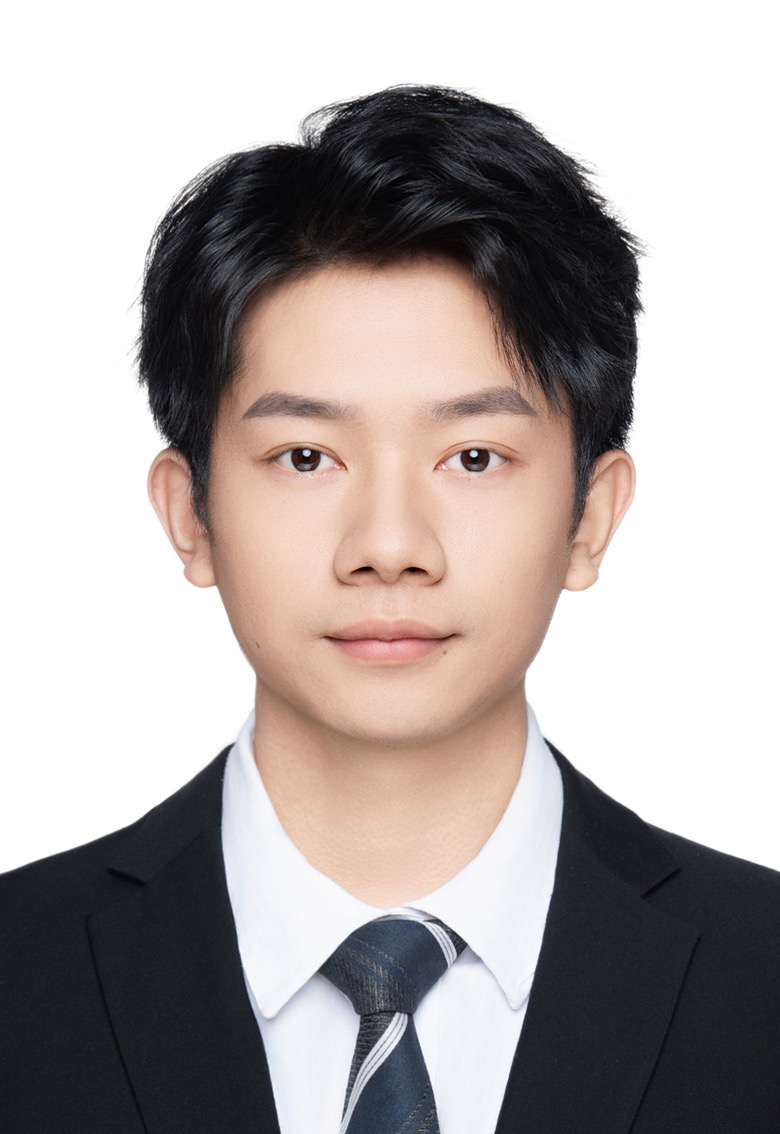
 Shiyuan Li
· 2 previous affiliations
- Griffith UniversitySince 2025
- PhD student · Since 2025
- Guangxi University2022–2025
- Master's degree, Computer Science · 2022–2025
Research Overview
Shiyuan Li focuses on artificial intelligence and data mining, with particular emphasis on graph representation learning, anomaly detection, and large language model-based multi-agent systems. His trajectory spans early work in biological interaction networks to recent developments in generalist foundation models for identifying outliers across diverse data modalities. Currently, he investigates automated topology design and graph-augmented reasoning for multi-agent collaboration.
Research Trajectory
Li's early research applied data mining techniques to bioinformatics, specifically focusing on the identification of essential proteins and disease associations. In 2020 and 2021, he developed iterative computational methods to infer essential proteins from protein-protein interaction (PPI) networks. This work, including An Iteration Method for Identifying Yeast Essential Proteins From Weighted PPI Network Based on Topological and Functional Features of Proteins and the subsequent An iteration model for identifying essential proteins by combining comprehensive PPI network with biological information, integrated topological structures with biological features to improve prediction accuracy. These contributions align with broader research in the areas of Denoising Molecular Interactions with Spatiotemporal Constraints and Multi-modal Integration for Biological Function Prediction. He later extended his bioinformatics research to RNA-disease associations, introducing Bi-SGTAR: A simple yet efficient model for circRNA-disease association prediction based on known association pair only, which streamlined the prediction process by relying exclusively on known association pairs.
Transitioning toward foundational graph learning and anomaly detection, Li began addressing the robustness and reliability of graph neural networks (GNNs). He investigated the research direction of Mitigating Noise Propagation in Graph Neural Networks, proposing techniques to estimate feature quality across multiple hops in Noise-Resilient Unsupervised Graph Representation Learning via Multi-Hop Feature Quality Estimation. To further enhance the trustworthiness of GNNs, he collaborated on Uncertainty-Aware Graph Neural Networks: A Multihop Evidence Fusion Approach, which integrated evidence theory into multihop propagation to quantify prediction uncertainty and explicitly model the risk of incorrect classifications.
Building on these graph representation techniques, Li's focus shifted to generalist models for anomaly detection. He contributed to the development of ARC: A Generalist Graph Anomaly Detector with In-Context Learning, a framework designed to identify outliers in entirely new datasets without retraining. By utilizing in-context learning paradigms adapted from large language models, this work allowed for on-the-fly anomaly detection across diverse domains, advancing the area of Unifying Heterogeneous Feature Spaces for Graph Learning. He also participated in designing efficient, non-parametric alternatives, such as the framework detailed in FreeGAD: A Training-Free yet Effective Approach for Graph Anomaly Detection.
Most recently, Li has explored the intersection of graph structures and large language models (LLMs) to improve multi-agent systems. He co-authored a comprehensive survey, Graph-Augmented Large Language Model Agents: Current Progress and Future Prospects, which examined how structured graph architectures can enhance agent reliability, memory, and coordination, touching upon the direction of Directed Acyclic Graph Planning for Autonomous Agents. To operationalize these concepts, he developed automated methods for constructing collaboration teams from scratch. In Assemble Your Crew: Automatic Multi-agent Communication Topology Design via Autoregressive Graph Generation, he introduced a system that dynamically selects agent roles and communication links based on task queries, contributing to the field of Sparse Communication Topologies for Multi-Agent Systems. He expanded on this topology design with OFA-MAS: One-for-All Multi-Agent System Topology Design based on Mixture-of-Experts Graph Generative Models, utilizing mixture-of-experts architectures to generalize multi-agent coordination.
In parallel with his multi-agent research, Li has continued to broaden his anomaly detection frameworks to new data modalities. He introduced Towards One-for-All Anomaly Detection for Tabular Data, a domain-agnostic framework that leverages neighbor-distance patterns and mixture-of-experts architectures to detect tabular anomalies without task-specific fine-tuning. Additionally, he collaborated on Beyond a Single Perspective: Text Anomaly Detection with Multi-View Language Representations, which combines reconstruction-based and contrastive learning approaches with adaptive weighting to improve the robustness of text anomaly detection.
Current Directions
The most recent papers in the evidence indicate a dual focus on generalist anomaly detection and the structural optimization of multi-agent systems. In the realm of anomaly detection, Li is investigating "one-for-all" foundation models capable of identifying outliers across diverse modalities—including graphs, tabular data, and text—without the need for dataset-specific retraining. This involves leveraging mixture-of-experts architectures and multi-view representations to handle varying data scales and domain-agnostic patterns. Simultaneously, his work on multi-agent systems addresses the challenge of automated communication topology design. By utilizing autoregressive graph generation and graph-augmented reasoning, he aims to dynamically configure agent roles and interaction structures, improving the efficiency and adaptability of large language model-based collaborative teams.
Profile updated
Loading new papers…
Other researchers whose papers cluster into the same research directions — a proxy for overlapping technical interests and shared intellectual neighborhoods.
See something wrong? Report a mistake