

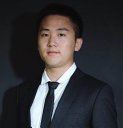
 Shiyu Wang
· 6 previous affiliations
- Google (United States)Since 2026
- Software Engineer, AI/ML · Since 2026
- Salesforce (United States)2023–2026
- Applied Scientist · 2024–2026
- AI Research Intern · 2023
- Emory University2019–2024
- PhD student · 2019–2024
- Applied Scientist Intern · 2023
- Yale University2017–2019
- MS student · 2017–2019
- Fudan University2013–2017
- Undergrad student · 2013–2017
4 other authors named Shiyu Wang: Shiyu Wang (ByteDance (China) · 32 papers), Shiyu Wang (Vanderbilt University · 6 papers), Shiyu Wang (Nokia Bell Labs · Columbia University · 2 papers), Shiyu Wang (1 paper)
Research Overview
Shiyu Wang focuses on the development of deep generative models, large language model (LLM) post-training, and the application of machine learning to complex structured data. His work encompasses the design of controllable data generation frameworks, the construction of healthcare knowledge graphs, and the evaluation of agentic and long-context language models. Currently, he is an AI/ML software engineer at Google, where he works on Gemini RLXF post-training, following a doctoral program in Biostatistics at Emory University that emphasized machine learning for structured biological and chemical data.
Research Trajectory
Wang’s research trajectory began with a focus on the structural and generative properties of complex data, particularly in the domain of graph neural networks and deep generative models. During his early doctoral work, he addressed the scarcity of standardized benchmarks for graph generation. This resulted in the development of GraphGT: Machine Learning Datasets for Graph Generation and Transformation, a large-scale collection of datasets spanning multiple domains such as molecular biology and citation networks. This work established a foundation for evaluating how generative models handle diverse graph topologies and transformation tasks.
By 2022, Wang’s focus shifted toward the problem of controllability in data generation. He investigated how to generate data that adheres to specific, often conflicting, target properties. This period was marked by the development of frameworks for multi-objective control and the study of periodic structures. In Deep Generative Model for Periodic Graphs, he addressed the technical challenges of maintaining graph periodicity and disentangling local and global patterns in repetitive structures like crystal nets. His theoretical and practical contributions to this field were synthesized in Controllable Data Generation by Deep Learning: A Review, which provided a taxonomy of methods for aligning structural patterns with functional properties across domains such as image editing and molecule design.
In 2023 and 2024, Wang expanded his research into the intersection of structured knowledge and natural language processing. He participated in the development of healthcare knowledge graphs (HKGs), exploring how these structures can provide factual guardrails for LLMs to prevent hallucinations in medical contexts. This work emphasized the "symbiosis" between structured data and generative models, where HKGs offer interpretability and LLMs automate the construction of the graphs from unstructured text. During this time, he also addressed the challenge of Multimodal Integration for Time Series Forecasting and Analysis in low-resource settings. His work on textual control for data generation sought to bridge the gap between high-level natural language instructions and complex data structures like motion dynamics and time series, particularly when labeled data is sparse.
Current Directions
Wang’s current work at Google and in recent collaborations focuses on the post-training and evaluation of advanced LLMs. This includes the application of Reinforcement Learning from Expert/Human Feedback (RLXF) to refine model behavior. A significant portion of his recent efforts involves Mitigating Expert Collapse in Sparse Mixture of Experts, ensuring that large-scale models maintain diverse capabilities without computational inefficiency.
His recent research also explores the capabilities of agentic LLMs and their performance in complex, long-context environments. He has contributed to the development of Robust Automation for Evolving User Interfaces through the release of MCPEval, an automatic evaluation pipeline for agentic models. Furthermore, he has participated in large-scale benchmarking efforts such as LoCoBench, which assesses the ability of million-token window models to perform whole-codebase understanding and cross-file reasoning. These directions reflect a shift toward ensuring that generative models are not only controllable but also capable of sophisticated reasoning and interaction within large-scale software and data ecosystems.
Representative Work
Multi-objective Deep Data Generation with Correlated Property Control This work addresses the difficulty of generating objects that possess multiple desired properties simultaneously, a common requirement in molecular design and image synthesis. Wang identifies three primary challenges: the complex correlations among real-world properties, the implicit partial control exerted when adjusting a single property, and the difficulty of simultaneous multi-property optimization. The paper proposes a framework to model these correlations and enable precise, multi-objective control over the generative process.
Deep Generative Model for Periodic Graphs Focusing on repetitive structures such as crystal nets and polygon meshes, this research introduces a deep generative approach tailored for periodic graphs. The model is designed to maintain graph periodicity while disentangling local structural motifs from global patterns. This work is particularly relevant to material design and graphics synthesis, where traditional models often rely on rigid, domain-specific rules rather than automated learning.
Controllable Data Generation by Deep Learning: A Review This comprehensive survey provides a structured overview of the field of controllable data generation. It examines how deep learning methods learn the mutual relationships between structural patterns and functional properties. The review categorizes various generative architectures and control mechanisms, offering a roadmap for researchers working on targeted data synthesis in fields ranging from speech synthesis to drug discovery.
Text2Data: Low-Resource Data Generation with Textual Control Wang investigates the problem of generating complex data structures—such as molecules and time series—using natural language instructions in low-resource environments. The paper highlights the deficiency of textual labels in these domains, which typically hinders supervised learning. By developing methods for text-to-data generation that do not require extensive paired annotations, this work extends the utility of LLM-based interfaces to specialized scientific and technical domains.
GraphGT: Machine Learning Datasets for Graph Generation and Transformation As a primary contributor to this dataset collection, Wang helped fill a significant gap in the graph representation learning community. While many benchmarks existed for graph classification or node labeling, few were available for the generative task. GraphGT provides 36 datasets across nine domains, enabling more rigorous evaluation of models designed to discover novel graphs or transform existing ones.
Gene-associated Disease Discovery Powered by Large Language Models This research explores the use of LLMs to identify relationships between genetic variations and human diseases. Recognizing that traditional databases often lag behind the rapid pace of literature publication, Wang and his collaborators proposed a framework that leverages the reasoning capabilities of LLMs to extract and synthesize gene-disease associations in real-time. This work demonstrates the potential of generative models to assist in clinical decision-making and early risk assessment by processing vast amounts of unstructured genomic data.
Profile updated
Loading new papers…
Other researchers whose papers cluster into the same research directions — a proxy for overlapping technical interests and shared intellectual neighborhoods.
See something wrong? Report a mistake