

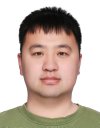
 SHIXIANG TANG
· 4 previous affiliations
- Sensetime (China)Since 2018
- Research Intern · Since 2018
- Chinese University of Hong KongSince 2023
- Postdoc · Since 2023
- MS student · 2016–2018
- The University of Sydney2020–2023
- PhD student · 2020–2023
- Fudan University2012–2016
- Undergrad student · 2012–2016
Research Overview
Shixiang Tang focuses on unsupervised representation learning, multimodal foundation models, and autonomous scientific discovery. His early research addressed continual learning and visual contrastive learning before shifting toward agentic AI systems and scientific reasoning frameworks. Currently, he investigates multi-agent collaboration, embodied scientific agents, and advanced generative models for continuous and multimodal data.
Research Trajectory
His early work concentrated on optimizing deep neural networks and improving visual representations without relying on extensive labeled data. In Layerwise Optimization by Gradient Decomposition for Continual Learning, he developed a technique to mitigate catastrophic forgetting by decomposing gradients into shared and task-specific components, allowing networks to leverage inter-task information while maintaining consistency across sequential tasks. During this early period, his broader research portfolio also encompassed the area of Understanding the Joint Training Performance Gap and work in the direction of Test Time Adaptation for Distribution Shift.
Following his work on optimization, his focus expanded to unsupervised object recognition. In Unifying Visual Contrastive Learning for Object Recognition from a Graph Perspective, he proposed UniVCL, a framework that uses a Graph Convolutional Network layer as a predictor to unify various Siamese-based contrastive learning architectures. Continuing in this domain, he formulated the Relative Contrastive Loss for Unsupervised Representation Learning. This approach moved beyond single-instance or prototype-based positive samples to capture the relative nature of positive and negative semantic concepts, enabling models to learn more realistic visual variations. Around 2024 and 2025, his theoretical investigations expanded into the area of Linearizing Deep Learning via the Neural Tangent Kernel and the broader direction of The Infinite Width Approximation Gap in Deep Learning.
By 2025, his trajectory shifted significantly toward foundation models and autonomous agents designed specifically for scientific domains. He led the development of Intern-S1: A Scientific Multimodal Foundation Model, a 241-billion-parameter Mixture-of-Experts system. This work addressed the specialization generalization trade-off in foundation models by introducing dynamic tokenizers for scientific notations and unifying heterogeneous feedback for reward learning. His work on foundation models during this time also intersects with the research direction of Composite Reward Optimization for Generative Models.
This interest in scientific applications evolved into a broader vision for autonomous research systems. In From AI for Science to Agentic Science: A Survey on Autonomous Scientific Discovery, he formalized the transition from AI as a specialized tool to fully autonomous agents capable of closed loop autonomous scientific discovery and role specialization in multi-agent architectures. Putting these concepts into practice, he introduced an LLM framework in Dynamic Knowledge Exchange and Dual-diversity Review: Concisely Unleashing the Potential of a Multi-Agent Research Team. This system simulates a collaborative research team through dynamic feedback loops and peer-review mechanisms, grounding language models with external knowledge retrieval to generate novel scientific ideas.
To evaluate and train these systems in physical contexts, he oversaw the creation of LabUtopia: High-Fidelity Simulation and Hierarchical Benchmark for Scientific Embodied Agents. This platform provides realistic environments for agents to learn complex, long-horizon laboratory experiments, contributing to the broader challenge of overcoming the reality gap in robotic control. He also synthesized the methodological foundations of these systems in The Landscape of Agentic Reinforcement Learning for LLMs: A Survey, detailing how reinforcement learning serves as the engine for transforming static models into adaptive decision-makers.
Parallel to his work on scientific agents, he advanced the capabilities of generative models across continuous and multimodal domains. He directed research on FuncGenFoil: Airfoil Generation and Editing Model in Function Space, which represents airfoils as continuous functions rather than discrete points. By utilizing flow matching for continuous generative modeling, this approach significantly reduced geometric errors and enabled precise design editing. His contributions to vision architectures during this time also extended to the area of Overcoming Volumetric Context Loss in Medical Vision Models.
With collaborators, he participated in developing frameworks that integrate reasoning into generation. In Interleaving Reasoning for Better Text-to-Image Generation, the team introduced a method that alternates between textual reasoning and image synthesis, establishing closed loop visual feedback for multimodal generation to improve fine-grained visual details. He also contributed to MotionGPT3: Human Motion as a Second Modality, which treats human movement as a continuous modality rather than quantizing it into discrete tokens. This dual-stream architecture mitigates information loss in discrete motion tokenization and advances continuous latent representations for high-fidelity motion. Finally, returning to scientific text generation, he guided the development of LECTOR: Joint Learning of Scientific Reasoning Graphs and Introduction Generation. This framework extracts reasoning logic graphs from data to structure the narrative, addressing the fluency control tradeoff in language model steering and maintaining global coherence in long form text generation.
In 2026, Tang broadened their focus on generative architectures and scientific modeling across chemistry, biology, and materials science. In Align the Pair, Not the Sample: Representation Alignment for Faster and Better One-Step Generato, they investigated training dynamics in one-step generative models, demonstrating that aligning instance-paired reconstruction paths rather than unconditioned generative paths prevents mode collapse and accelerates training. Addressing molecular representations, Tang collaborated on ADT: All-Atom Diffusion Tokenizer for 3D Molecular Structures, decoupling token granularity from spatial resolution by pairing compact discrete tokens with diffusion decoders to reconstruct all-atom geometries. Tang also contributed to MatVerse: A Foundation Model for Materials Science, a multimodal foundation model post-trained on scientific reasoning and heterogeneous materials corpora. Shifting from de novo design to local manipulation, Tang oversaw the introduction of PROTEAN: Beyond De Novo Generation - Can LLM Agents Perform Text-Guided Protein Structure Editing?, establishing a standardized benchmark evaluating LLM agents translating natural-language instructions into geometric constraints for targeted protein backbone editing.
Current Directions
Recent work investigates the integration of structured reasoning into generative processes and the modeling of continuous data modalities. In the domain of text and image generation, his most recent papers in the evidence address frameworks that interleave textual reasoning with image synthesis to refine visual details, as well as systems that extract logic graphs from data to guide the generation of coherent scientific narratives. Additionally, they are exploring continuous and discrete generative modeling techniques—ranging from one-step generator alignment and all-atom molecular diffusion tokenizers to text-guided protein structure editing and materials foundation models. These efforts collectively aim to improve the fidelity, logical coherence, and physical grounding of multimodal foundation models.
Profile updated
Loading new papers…
Other researchers whose papers cluster into the same research directions — a proxy for overlapping technical interests and shared intellectual neighborhoods.
See something wrong? Report a mistake