

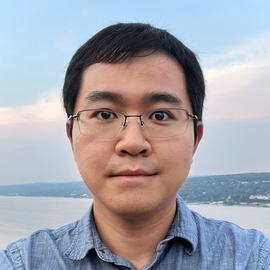
 Shiqiang Wang
· 3 previous affiliations
- University of ExeterSince 2025
- Full Professor · Since 2025
- Research Staff Member · 2016–2025
- Imperial College London2011–2015
- PhD student · 2011–2015
Research Overview
Shiqiang Wang focuses on the intersection of artificial intelligence, distributed computing, and optimization. His early work addressed physical layer network coding and mobile edge computing before shifting toward foundational algorithms for federated learning in resource-constrained environments. His current research investigates parameter-efficient fine-tuning, large language model inference, and secure aggregation in distributed systems.
Research Trajectory
During his early career, his research investigated wireless communication protocols and network coding. In Rate and Power Adaptation for Analog Network Coding, he analyzed coding procedures for analog network coding, demonstrating that transmitting at maximum power is not always optimal and proposing a rate adaptation scheme. He expanded on this by introducing PNC-MAC in Distributed MAC Protocol Supporting Physical-Layer Network Coding, a distributed medium access control protocol that enables simultaneous transmissions to boost throughput. This work contributed to the broader research direction of Physical Layer Network Coding and addressed challenges related to dynamic protocol switching and overcoming static topology assumptions in wireless networks.
As mobile edge computing emerged, his focus shifted toward resource allocation and distributed machine learning at the network edge. Recognizing the bandwidth and privacy constraints of edge networks, he introduced adaptive control mechanisms for gradient-descent training across distributed nodes in When Edge Meets Learning: Adaptive Control for Resource-Constrained Distributed Machine Learning. He also developed approaches for sequential resource allocation, such as the Markov Decision Process-based framework in Dynamic Service Migration in Mobile Edge Computing Based on Markov Decision Process, which optimizes service migration decisions as users move. This laid the groundwork for his extensive contributions to federated learning. In Adaptive Federated Learning in Resource Constrained Edge Computing Systems, he proposed dynamically adjusting the frequency of model updates and global aggregation to optimize performance within resource budgets, advancing the area of Mitigating Data Heterogeneity in Federated Learning.
His subsequent work deepened the theoretical and practical foundations of federated optimization, particularly addressing intermittent client availability and communication efficiency. In A Unified Analysis of Federated Learning with Arbitrary Client Participation, he provided a unified convergence analysis that amplifies parameter updates to account for arbitrary participation patterns, contributing to the understanding of linear speedup and asymptotic network independence in decentralized optimization. He further explored the joint tuning of control knobs—such as client subsampling and update compression—in Federated Learning with Flexible Control, which aligns with the broader effort of Mitigating the Federated Learning Communication Bottleneck. Continuing this trajectory, he developed A Lightweight Method for Tackling Unknown Participation Statistics in Federated Averaging to handle uncertain client dynamics.
To address the challenges of non-IID data in multi-tier architectures, he introduced a semi-decentralized algorithm in A Hierarchical Gradient Tracking Algorithm for Mitigating Subnet-Drift in Fog Learning Networks. By utilizing dual gradient tracking, this method eliminates subnet-drift and reduces long-distance communication costs, advancing the research direction of Managing Client Drift for Communication Efficient Federated Learning. He also explored reliability in distributed inference, designing methods to code over non-linear neural networks to reduce tail latency in Erasure Coded Neural Network Inference via Fisher Averaging.
Most recently, his research has expanded to address the efficient deployment, adaptation, and security of foundation models. In Efficient Orthogonal Fine-Tuning with Principal Subspace Adaptation, he guided the development of PSOFT, a parameter-efficient fine-tuning method that confines updates to a model's principal subspace, drastically reducing memory usage while preserving the semantic benefits of orthogonal transformations. He also contributed to frameworks for edge-cloud collaboration in Joint Continual Learning of Local Language Models and Cloud Offloading Decisions with Budget Constraints, which enables small local models to intelligently leverage cloud-based large language models while managing usage constraints and knowledge retention. Concurrently, he continues to advance secure distributed systems, co-authoring Optimal Communication and Key Rate Region for Hierarchical Secure Aggregation With User Collusion, which establishes fundamental limits for privacy-preserving hierarchical model aggregation in multi-tier networks.
Current Directions
The most recent work in the evidence focuses on the intersection of large language models, agentic systems, and distributed computing. A primary theme is the efficient adaptation and deployment of foundation models in resource-constrained environments, particularly through parameter-efficient fine-tuning techniques that minimize memory overhead while maintaining model performance. This is complemented by research into continual learning and edge-cloud collaboration, where local models dynamically offload complex inference tasks to cloud-based language models under strict budget constraints.
Additionally, ongoing research addresses the theoretical and practical challenges of secure and adaptive federated systems. This includes optimizing communication and key generation rates for hierarchical secure aggregation, ensuring privacy even in the presence of colluding users. These efforts reflect a broader commitment to advancing the research areas of Adaptive Federated Optimization and Nonconvex Optimization with Unbounded Gradients, ensuring that distributed artificial intelligence systems remain robust, secure, and communication-efficient as they scale.
Profile updated
Loading new papers…
Other researchers whose papers cluster into the same research directions — a proxy for overlapping technical interests and shared intellectual neighborhoods.
See something wrong? Report a mistake