

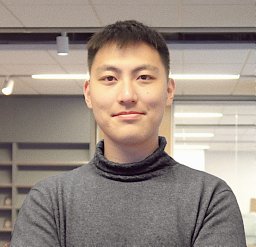
 Shiqi Wang
· 5 previous affiliations
- Meta (United States)Since 2024
- AI Research Scientist · Since 2025
- Researcher · 2024–2025
- Amazon (United States)2022–2024
- Applied Scientist II · 2022–2024
- Columbia University2017–2022
- PHD Student · 2017–2022
- PhD student · 2017–2019
- Research Intern · 2021
- IBM2020
- Research Intern · 2020
3 other authors named Shiqi Wang: Shiqi Wang (City University of Hong Kong · 584 papers), Shiqi Wang (2 papers), Shiqi Wang (2 papers)
Research Overview
Shiqi Wang focuses on the intersection of large language model (LLM) reasoning, automated code generation, and the formal verification of neural networks. Currently a research scientist at Meta Superintelligence Labs, Wang’s work centers on enhancing the reliability and reasoning capabilities of foundation models through lookahead planning, self-debugging frameworks, and verifiable agentic systems. His research trajectory has evolved from a foundational focus on adversarial robustness and formal methods for deep learning to the practical application of these principles in industrial-scale code intelligence and reasoning systems.
Research Trajectory
Wang’s early research, primarily conducted during his doctoral studies at Columbia University, addressed the fundamental brittleness of deep neural networks. Between 2017 and 2021, his work focused on the challenge of adversarial examples—imperceptible perturbations that cause models to fail. Unlike heuristic defenses that often succumb to stronger attacks, Wang pursued formal verification and provable robustness. This period was characterized by the development of scalable training objectives that could guarantee a model's behavior within a specific perturbation range. A significant contribution during this phase was the advancement of bound propagation techniques, which allowed for the formal verification of much larger networks than previously possible.
As neural networks became more integrated into safety-critical and resource-constrained environments, Wang’s focus expanded to include the joint optimization of model efficiency and security. He investigated how network pruning and compression could be achieved without sacrificing the robustness guarantees established in his earlier work. This led to the development of frameworks that aligned the objectives of model sparsification with verifiable training, ensuring that compact models remained resilient to adversarial manipulation.
Starting around 2022, coinciding with his tenure at AWS AI Lab as a founding member of the Amazon CodeWhisperer (now Amazon Q) team, Wang’s research shifted toward the reliability of generative models, specifically in the domain of software engineering. He began addressing the "reliability gap" in automated program repair and code generation, where models often produce plausible-looking but functionally incorrect code. This transition involved applying his background in verification and uncertainty to the challenges of Overfitting in Automated Program Repair. His recent work at Meta continues this evolution, focusing on the scaling of reasoning capabilities and the development of agentic frameworks that can autonomously identify, explain, and repair complex software vulnerabilities.
Current Directions
Wang’s current research is concentrated on three primary pillars: advanced code generation, LLM uncertainty quantification, and agentic reasoning. In the domain of code generation, he is investigating methods to move beyond simple next-token prediction toward lookahead planning and "Fill-in-the-Middle" (FIM) capabilities that better account for global context. This work aims to mitigate the tendency of models to generate code that is locally coherent but globally inconsistent with the existing codebase.
In the area of reasoning and reliability, Wang is developing frameworks that enable LLMs to self-debug by generating natural language explanations of their own errors before attempting a fix. This approach leverages the internal knowledge of the model to improve its success rate in complex tasks. Furthermore, he is exploring the Localized Parameter Editing for Large Language Models to understand how specific reasoning paths are stored and can be corrected. His work also touches upon Efficient LLM Integration for Real Time Recommendation, particularly in how high-latency reasoning models can be optimized for practical, low-latency deployment in industrial environments.
Representative Work
Wang has contributed to several high-impact projects that bridge the gap between theoretical verification and practical AI reliability. The following papers represent key milestones in his research evolution:
In MixTrain: Scalable Training of Formally Robust Neural Networks, Wang addressed the scalability limitations of provable defenses. While adversarial training provides empirical resistance, it lacks formal guarantees. MixTrain introduced a method to scale formal robustness training to larger architectures, providing a mathematical foundation for model reliability against a wide class of input perturbations.
Continuing the focus on robust deployment, Towards Compact and Robust Deep Neural Networks demonstrated that model compression does not inherently conflict with security. Wang showed that by aligning the training objectives of pruning and fine-tuning with robust goals, it is possible to achieve significant model compression (up to 10×) while maintaining high levels of both standard accuracy and adversarial robustness. This work was critical for moving robust AI from high-compute environments to edge devices.
Wang also applied these robustness principles to specialized domains in On Training Robust PDF Malware Classifiers. In this study, he participated in the development of classifiers with verifiable properties, ensuring that malicious files could not evade detection through simple structural modifications, such as the insertion of benign pages. This research highlighted the necessity of moving beyond simple test accuracy toward verifiable security in cybersecurity applications.
A major technical milestone was reached with Beta-CROWN: Efficient Bound Propagation with Per-neuron Split Constraints for Neural Network Robustness Verification. As a primary contributor to this framework, Wang helped develop a high-performance verifier that combined fast bound propagation with the tightness of linear programming. By encoding neuron split constraints into an optimizable framework, Beta-CROWN accelerated formal verification by several orders of magnitude, winning the VNN-COMP 2021 competition and setting a new standard for the field.
Shifting toward generative AI, Training LLMs to Better Self-Debug and Explain Code introduced the LEDEX framework. This work addressed the tendency of LLMs to repeat mistakes during code generation. By training models to explain the root cause of a failure before attempting a repair, and utilizing reinforcement learning to reward the quality of these explanations, the research achieved significant improvements in coding accuracy and the model's ability to generalize to unseen bugs.
Finally, in Horizon-Length Prediction: Advancing Fill-in-the-Middle Capabilities for Code Generation with Lookahead Planning, Wang participated in the development of a planning-based approach to code completion. This research identified a core weakness in standard FIM training—the lack of alignment with surrounding context—and proposed a lookahead mechanism that allows the model to plan its generation based on the expected length and structure of the missing code block, leading to more seamless integration in open-domain coding tasks.
Profile updated
Loading new papers…
Other researchers whose papers cluster into the same research directions — a proxy for overlapping technical interests and shared intellectual neighborhoods.
See something wrong? Report a mistake