

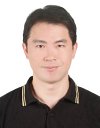
 Shin-Jye Lee
· 7 previous affiliations
- National Yang Ming Chiao Tung UniversitySince 2018
- Professor · Since 2022
- Associate Professor · 2019–2022
- Assistant Professor · 2018–2019
- Yunnan University2015–2018
- Full Professor · 2017–2018
- Associate Professor · 2015–2017
- Chung Yuan Christian University2014–2015
- Assistant Professor · 2014–2015
- University of Cambridge2011–2012
- MS student · 2011–2012
- Wroclaw University of Technology2011
- Visiting Assistant Professor · 2011
- University of Manchester2005–2010
- Doctor of Philosophy (PhD), Computer Science · 2005–2010
- Teaching Assistant · 2006–2007
- University of Sheffield2000–2001
- MS student · 2000–2001
Research Overview
Shin-Jye Lee focuses on computer vision, applied machine learning, and clinical decision support systems. His early work integrates fuzzy set theory with image processing techniques for multi-focus and remote sensing image fusion, alongside developing ensemble classification algorithms for medical diagnostics. Recently, his research has expanded into advanced deep learning architectures, including few-shot object detection and preference transfer mechanisms for artificial intelligence models.
Research Trajectory
Shin-Jye Lee’s research trajectory initially developed along two parallel tracks: the application of fuzzy logic to image processing, and the design of machine learning algorithms for clinical decision support. In the imaging domain, early collaborative work addressed the inherent uncertainty in defining "high-quality" pixels during multi-sensor image fusion. This led to the development of a fusion scheme combining stationary wavelet transforms with Gaussian membership functions to extract and merge detailed features from source images A Novel Multi-Focus Image Fusion Method Based on Stationary Wavelet Transform and Local Features of Fuzzy Sets. Concurrently, he contributed to foundational mathematical tools for pattern recognition, participating in the design of new similarity and distance measures for intuitionistic fuzzy sets based on transformed isosceles triangles A new similarity/distance measure between intuitionistic fuzzy sets based on the transformed isosceles triangles and its applications to pattern recognition.
In the medical domain, Lee focused on handling complex, high-dimensional clinical data. He introduced a diagnostic classification approach that integrated a bagging C4.5 algorithm with wrapper feature selection, optimizing the balance between random sampling and oversampling to improve clinical decision-making A novel bagging C4.5 algorithm based on wrapper feature selection for supporting wise clinical decision making. He subsequently designed a dimension-reduction multilayer perceptron framework to further support medical diagnostics A dimension-reduction based multilayer perception method for supporting the medical decision making. To address the computational costs associated with inferring from datasets with rapidly increasing feature counts, he later developed Random RotBoost, an ensemble classification method that automatically generates random rotation subsets by combining Rotation Forest and AdaBoost mechanisms Random RotBoost: An Ensemble Classification Method Based on Rotation Forest and AdaBoost in Random Subsets and Its Application to Clinical Decision Support.
As these tracks matured, Lee’s work in image fusion increasingly bridged traditional fuzzy set theory with more complex decomposition techniques. He participated in creating a multifocus image fusion framework that utilized two-scale decomposition alongside image morphology and fuzzy logic Two-scale decomposition-based multifocus image fusion framework combined with image morphology and fuzzy set theory. Building on his earlier mathematical research, he also helped apply intuitionistic fuzzy set similarity measures directly to the feature extraction of multifocus images, utilizing Canny edge detection to reinforce boundary preservation A Multifocus Image Fusion Scheme Based on Similarity Measure of Transformed Isosceles Triangles Between Intuitionistic Fuzzy Sets.
With the broader adoption of deep learning in computer vision, Lee’s focus shifted toward neural networks and generative models for complex imaging tasks. To overcome the difficulty of acquiring ground truth data in remote sensing, he contributed to a semi-supervised image fusion method utilizing multiscale conditional generative adversarial networks (GANs) equipped with a pseudo-Siamese structure Semisupervised Remote Sensing Image Fusion Using Multiscale Conditional Generative Adversarial Network With Siamese Structure. Directing a research team, he also developed a color multi-focus image fusion method based on transfer learning, adapting pre-trained VGG-19 networks to extract and reconstruct feature maps via multilayer skip-connection structures Color multi-focus image fusion based on transfer learning. This deep learning approach was subsequently applied to the challenge of thermal infrared image colorization, where he collaborated on MUGAN, an architecture combining a Mixed-Skipping UNet with a GAN to translate monochromatic thermal images into visible color images without severe edge distortion MUGAN: Thermal Infrared Image Colorization Using Mixed-Skipping UNet and Generative Adversarial Network. He also contributed to the restoration of spatial and spectral resolution in panchromatic images using multi-branch convolutional neural networks designed to enhance the interaction of adjacent feature channels A Restoration Scheme for Spatial and Spectral Resolution of the Panchromatic Image Using the Convolutional Neural Network.
Most recently, Lee’s research has addressed broader challenges in artificial intelligence training paradigms and object detection. He led work on few-shot object detection, proposing a Cascade Meta-RCNN architecture that aggregates query and support features to improve region-of-interest accuracy when training data is scarce Cascade Meta-RCNN for Few-shot Object Detection. Expanding on themes of efficient model training, he recently introduced Delta Preference Transfer (DPT), a framework designed to move beyond the traditional "big teacher, small student" knowledge distillation paradigm. By intentionally injecting localized failures into high-quality responses, DPT generates synthetic preference pairs that allow AI models to learn specific behavioral refinements from one another, even when the teaching model is weaker than the student Learning from One Another: Toward Complementary Knowledge Transfer via Localized Preference Deltas.
Current Directions
The most recent papers in the evidence indicate a focus on advanced training paradigms for artificial intelligence and computer vision models. A primary direction involves overcoming data scarcity and improving model generalization, as seen in his work on few-shot object detection using meta-learning architectures. Additionally, his research investigates novel knowledge transfer mechanisms for AI models. By exploring techniques like localized preference deltas, this work aims to refine model behavior and facilitate complementary learning between models of varying sizes, moving beyond traditional knowledge distillation approaches. Alongside these fundamental AI training frameworks, he continues to contribute to applied computer vision, specifically high-resolution remote sensing image restoration using specialized convolutional neural networks.
Profile updated
Loading new papers…
Other researchers whose papers cluster into the same research directions — a proxy for overlapping technical interests and shared intellectual neighborhoods.
See something wrong? Report a mistake