

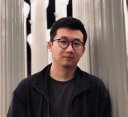
 Shikun Liu
· 3 previous affiliations
- Meta (United States)Since 2024
- Researcher · Since 2024
- Current
- Imperial College London2019–2024
- Ph.D. Student · 2019–2024
1 other author named Shikun Liu: Shikun Liu (Georgia Institute of Technology · 12 papers)
Research Overview
Shikun Liu focuses on multi-task learning, 3D neural rendering, and generative video modeling. His research trajectory spans from early work in dynamic task weighting and real-time spatial mapping to the development of scalable autoregressive and diffusion-based architectures. Currently, his work investigates efficient, high-resolution video generation and the integration of 3D geometric priors into large-scale generative systems.
Research Trajectory
Liu's early research concentrated on optimizing multi-task learning architectures and training dynamics. In End-To-End Multi-Task Learning With Attention., he introduced the Multi-Task Attention Network (MTAN), an architecture utilizing soft attention to efficiently learn both shared and task-specific features while remaining robust to loss function weighting schemes. He expanded on training optimization with Self-Supervised Generalisation with Meta Auxiliary Learning, developing a meta-learning framework that automatically generates labels for auxiliary tasks to improve primary task generalization. This focus on task relationships culminated in Auto-Lambda: Disentangling Dynamic Task Relationships, which presented an automated weighting framework to explore continuous, dynamic task relationships rather than relying on fixed groupings. This work advanced the broader research areas of Automated Task Grouping to Mitigate Negative Transfer and Mitigating Gradient Interference in Multi-Task Learning, as well as the direction of Bi-level Optimization for Dynamic Auxiliary Task Weighting.
Concurrently, Liu made significant contributions to dense visual SLAM and 3D reconstruction. With iMAP: Implicit Mapping and Positioning in Real-Time, he developed a real-time SLAM system that compressed 3D maps into a single multilayer perceptron, contributing to the area of Scaling 3D Representations Beyond the Memory Wall. He later extended this approach in vMAP: Vectorised Object Mapping for Neural Field SLAM, which represented individual objects as independent neural fields optimized in parallel, advancing the research direction of Decomposing 3D Scenes into Discrete Objects. During this period, he also explored pixel-level contrastive learning for dense visual tasks in Bootstrapping Semantic Segmentation with Regional Contrast, demonstrating strong semi-supervised performance with minimal labels. Additionally, he investigated parameter-efficient multimodal architectures, developing Prismer: A Vision-Language Model with Multi-Task Experts to leverage pre-trained expert models for robust vision-language reasoning without requiring massive new datasets.
In recent years, working as an AI Research Scientist at Meta GenAI, Liu's focus has shifted toward large-scale generative modeling for video and novel view synthesis. He introduced MarDini: Masked Autoregressive Diffusion for Video Generation at Scale, a hybrid framework combining the temporal planning of masked auto-regression with the spatial refinement of diffusion models. This contributed to the broader area of Autoregressive Visual Generation with Continuous Tokens. He also developed EscherNet: A Generative Model for Scalable View Synthesis, a multi-view conditioned diffusion model capable of generating over a hundred consistent target views simultaneously. To address the computational bottlenecks of high-resolution generation, he proposed HiStream: Efficient High-Resolution Video Generation via Redundancy-Eliminated Streaming, an autoregressive framework that eliminates spatial and temporal redundancy to make 1080p video generation practical. He further expanded zero-shot capabilities with Scaling Zero-Shot Reference-to-Video Generation, a framework trained exclusively on standard video-text pairs that maintains subject consistency without requiring curated triplet datasets.
Most recently, Liu's work has explored the intersection of 3D geometry and video generation. In Scaling Sequence-to-Sequence Generative Neural Rendering, he reframed 3D neural rendering as a sequence-to-sequence image synthesis task, utilizing a transformer-based rectified flow architecture to achieve zero-shot view synthesis. He also collaborated on Rays as Pixels: Learning A Joint Distribution of Video and Camera Trajectories, which introduced a unified generative framework representing camera parameters as dense images for simultaneous pose estimation and camera-controlled generation. Additionally, he contributed to EditCtrl: Disentangled Local and Global Control for Real-Time Generative Video Editing, a framework that accelerates generative video editing by disentangling local and global contexts to focus computation strictly on edited regions.
Current Directions
The most recent papers in the evidence indicate a strong focus on scaling generative models for high-resolution video and 3D synthesis. Recent work investigates unified architectures that bridge video generation and neural rendering, treating 3D view synthesis as a specialized sequence-to-sequence task. Another major theme is computational efficiency in generative pipelines, addressed through redundancy-eliminated streaming for 1080p video and disentangled control mechanisms for real-time video editing. Additionally, ongoing research explores zero-shot generalization in reference-to-video generation and the joint modeling of video frames with camera trajectories, enabling more precise spatial and temporal control in large-scale visual models.
Profile updated
Loading new papers…
Other researchers whose papers cluster into the same research directions — a proxy for overlapping technical interests and shared intellectual neighborhoods.
See something wrong? Report a mistake