

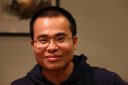
 Shikui Tu
· 2 previous affiliations
- Shanghai Jiao Tong UniversitySince 2017
- Associate Professor · Since 2017
- Chinese University of Hong Kong2006–2012
- PhD student · 2006–2012
Research Overview
Shikui Tu focuses on deep graph learning, neural combinatorial optimization, and computational biology. His trajectory spans from foundational signal processing and graph matching architectures to advanced generative models for molecular design. Most recently, his work addresses robust representation learning, multimodal alignment, and the application of large models to clinical diagnostics and drug discovery.
Research Trajectory
Tu’s early research established a foundation in statistical machine learning and signal processing. In 2008, he explored data smoothing regularization techniques for local factor analysis in A Comparative Study on Data Smoothing Regularization for Local Factor Analysis. This interest in extracting robust features from complex data later evolved into applied deep learning for clinical diagnostics. By 2020, he introduced DBWT-AFNet, a framework detailed in Discrete Biorthogonal Wavelet Transform Based Convolutional Neural Network for Atrial Fibrillation Diagnosis from Electrocardiogram. This work fused expert knowledge with deep representations, utilizing wavelet-based signal decomposition alongside an attention-gated convolutional neural network to detect atrial fibrillation from single-lead ECG signals, with a particular focus on cross-subject generalization.
A significant portion of Tu’s methodological contributions centers on neural combinatorial optimization, specifically advancing the research direction of Continuous Relaxations for Graph Matching. Traditional graph matching models often operate in a feed-forward manner, extracting features before handing them off to an optimization solver. In 2021, he addressed this limitation with IA-GM: A Deep Bidirectional Learning Method for Graph Matching, introducing a bidirectional learning framework that allows the optimization solver to provide feedback to the neural network's feature embedding process. He continued to refine this architecture in IA-NGM: A bidirectional learning method for neural graph matching with feature fusion (2024), further integrating iterative representational refinement and instance-specific adaptive fusion to bridge the optimality gap in neural combinatorial optimization.
Parallel to his work on graph matching, Tu has applied spatial and geometric feature learning to diverse visual and remote sensing domains. He guided the development of spatial feature-enhanced random forests for on-board hyperspectral image classification in MSLM-RF: A Spatial Feature Enhanced Random Forest for On-Board Hyperspectral Image Classification (2022). The following year, he explored hybrid graph and sequence modeling for visual data in Linking Sketch Patches by Learning Synonymous Proximity for Graphic Sketch Representation. This approach, SP-gra2seq, linked hand-drawn sketch patches based on semantic and geometric similarity rather than physical distance or drawing order, improving sketch synthesis and the reconstruction of corrupted drawings.
Building on his expertise in graph neural networks, Tu expanded into computational biology, focusing on explainable deep learning for molecular discovery. In MGAE-DC: Predicting the synergistic effects of drug combinations through multi-channel graph autoencoders (2023), he developed a framework to map synergistic drug combinations. By modeling synergistic, additive, and antagonistic effects simultaneously, the multi-channel graph autoencoder learns discriminative drug fingerprints to predict cellular responses to perturbations. He extended this focus on molecular interactions with Multilevel Attention Network with Semi-supervised Domain Adaptation for Drug-Target Prediction (2024). This work combined protein language models with a multilevel attention mechanism to mitigate confirmation bias and shortcut learning, ensuring the model captured complex protein data rather than relying on simple drug patterns.
In 2025, Tu advanced into the generative modeling of multi-modal molecular conformations with Full-Atom Peptide Design via Riemannian-Euclidean Bayesian Flow Networks. PepBFN addresses the complexities of full-atom representations for protein structure generation by leveraging Bayesian Flow Networks and specialized distributions for molecular geometry, providing a stable method for designing peptides that bind to specific protein targets. Tu expanded this generative biomolecular focus to protein-conditioned RNA co-design in RiboC2F: Pose-Concentrated Coarse-to-Fine Flow Matching for Protein-Conditioned RNA Co-Design (2026), presenting a coarse-to-fine flow-matching framework that uses the global binding pose as a conditioning signal across stages to avoid cross-stage error accumulation.
Tu’s most recent publications demonstrate a broadening scope into large-scale models, robust alignment, and multimodal retrieval. Returning to clinical applications, he contributed to An EEG-based dual-stream spatial-spectral-temporal large model for self-limited epilepsy with centrotemporal spikes (2026), applying advanced spatial-spectral-temporal architectures to neurological diagnostics. In the domain of reinforcement learning from human feedback (RLHF), he participated in the development of Factored Causal Representation Learning for Robust Reward Modeling in RLHF. This research introduces CausalRM, a framework designed to mitigate reward hacking by disentangling latent representations into causal drivers of human preference and non-causal spurious features. Additionally, he explored cross-modal retrieval in Beyond Instance-Level Alignment: Dual-Level Optimal Transport for Audio-Text Retrieval, moving beyond holistic instance-level embeddings to isolate structural signals in high-dimensional noise using dual-level optimal transport. His recent collaborations have also tackled vision-language-action (VLA) models for robotic manipulation, contributing to the multimodal robustness benchmark LIBERO-MOR: A Multimodal Robustness Benchmark Across the Vision-Language-Action Pipeline (2026) to systematically diagnose policy vulnerabilities across deployment domains, and participating in Spatially Grounded Latent Lookahead for Vision-Language-Action Models (2026), which distills geometric priors and incorporates predictive near-future latents into action generation.
Current Directions
The most recent papers in the evidence indicate a dual focus on robust representation learning for large models and advanced generative techniques for molecular design. In the biomedical domain, Tu is investigating generative modeling for protein, peptide, and RNA co-design, utilizing flow-matching frameworks and Euclidean representations to synchronize geometry and identity in molecular generation. Concurrently, his work addresses the robustness and alignment of large machine learning models. This includes developing causal disentanglement strategies to prevent reward hacking in RLHF systems and designing dual-level optimal transport mechanisms to improve fine-grained alignment in high-dimensional, multimodal retrieval tasks such as audio-text matching. He also continues to apply large-scale spatial-temporal modeling to clinical time-series data, particularly in EEG-based neurological diagnostics, alongside exploring robustness and predictive spatial grounding in vision-language-action policies for robotics.
Profile updated
Loading new papers…
Other researchers whose papers cluster into the same research directions — a proxy for overlapping technical interests and shared intellectual neighborhoods.
See something wrong? Report a mistake