

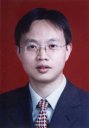
 Shihua Li
1 previous affiliation
- Southeast University2001–2024
- Full Professor · 2007–2024
- Associate Professor · 2003–2007
- Assistant Professor · 2001–2003
Research Overview
Shihua Li focuses on nonlinear control theory, finite-time stabilization, and the modeling of complex dynamical systems. His early work established fundamental methods for active disturbance rejection and finite-time control in electromechanical and aerospace applications. Recently, his research has shifted toward integrating control principles with deep learning, specifically developing physics-informed neural networks and neural ordinary differential equations to model non-autonomous dynamics with external inputs.
Research Trajectory
Shihua Li’s research trajectory begins in the early 2000s with foundational contributions to nonlinear control theory. His early investigations addressed the stabilization of complex mechanical systems, demonstrated by his work on Smooth Time-Varying Exponential Stabilization of Nonholonomic Systems in the Vector Power Form. This research introduced an assistant state variable to transform nonholonomic systems into linear time-varying control systems, enabling asymptotic stability with exponential convergence.
Throughout the mid-to-late 2000s, his focus expanded into finite-time control and active disturbance rejection, particularly for electromechanical and aerospace applications. He developed robust stabilization techniques, such as A Finite-time State Feedback StabilizationMethod for a Class of Second OrderNonlinear Systems, and applied sliding mode control to aerospace challenges in Finite Time Tracking Control of Spacecraft Attitude, which ensured tracking errors converged to zero along a sliding manifold in finite time. Concurrently, he addressed practical industrial problems in motor control. By integrating extended state observers with model compensation, he improved the precision of permanent magnetic synchronous motor (PMSM) speed-regulation systems in Active Disturbance Rejection Controller Based on Permanent Magnetic Synchronous Motor Model Identification and Compensation. He further refined this approach by proposing a compound control method that combined disturbance observers with finite-time feedback control in PMSM speed-adjusting system based on disturbance observer and finite-time control. Recognizing the growing importance of these methodologies, he synthesized the field's development and stability criteria in A survey for finite-time control problems.
In the 2010s, his research broadened to encompass distributed control and large-scale infrastructure. He investigated multi-agent systems, utilizing backstepping and finite-time techniques to achieve asymptotic state consensus in Nonsmooth Second-Order Consensus Protocol for Multi-Agent Systems. He also explored macro-level applications of data mining and intelligent decision-making for critical infrastructure, as detailed in Research on Power-Grid Crisis Management and Online Intelligent Decision-Making System of Power-Grid Security.
Moving into the 2020s, the trajectory shifted toward the intersection of classical control theory and modern machine learning. He initially explored decentralized strategies for complex networks in Decentralized inverse optimal control for interconnected systems. Subsequently, his work began to heavily incorporate neural networks to model physical systems. He oversaw the development of ControlSynth Neural ODEs (CSODEs) in ControlSynth Neural ODEs: Modeling Dynamical Systems with Guaranteed Convergence. This architecture integrates a dedicated control term with nonlinear subnetworks to predict fluid dynamics and neuronal firing with mathematical convergence guarantees. This pivotal paper contributed significantly to several emerging research areas, including the direction of Temporal Generalization in Physics Informed Neural Networks and the broader area of Multi-Scale Architectures for Physics Informed Neural Operators. It also advanced methodologies for Disentangling Intrinsic and Input Driven Dynamics and the field of Modeling Non-Autonomous Dynamics with External Inputs.
Most recently, he has continued to bridge control engineering and deep learning. He addressed the challenge of incorporating external variables into neural models in ICODE: Modeling Dynamical Systems With Extrinsic Input Information. Returning to his earlier domain of motor control with modern techniques, he also investigated Learning and Current Prediction of PMSM Drive via Differential Neural Networks.
Current Directions
Recent work investigates the synthesis of dynamical systems modeling and deep learning, specifically focusing on Neural Ordinary Differential Equations (ODEs) and differential neural networks. The most recent papers in the evidence address the challenge of accurately modeling complex, non-autonomous physical systems that are subject to external inputs. This involves developing structured multi-network architectures that maintain the mathematical guarantees of classical control theory—such as convergence and stability—while leveraging the predictive power of neural networks. Domains of application for these hybrid models range from fluid dynamics and neuronal firing to the current prediction and control of permanent magnetic synchronous motor (PMSM) drives.
Profile updated
Loading new papers…
Other researchers whose papers cluster into the same research directions — a proxy for overlapping technical interests and shared intellectual neighborhoods.
See something wrong? Report a mistake