

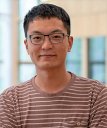
 Shidong Wang
· 2 previous affiliations
- Newcastle UniversitySince 2019
- Lecturer · Since 2023
- Postdoc · 2019–2023
- University of East Anglia2016–2021
- PhD student · 2016–2021
Research Overview
Shidong Wang focuses on computer vision, open-world machine learning, and remote sensing image analysis. His trajectory spans early work in compressive sensing and aerial scene categorization to more recent contributions in zero-shot learning and few-shot medical image segmentation. Currently, his research addresses generalized category discovery and the robust identification of novel classes in unlabeled data.
Research Trajectory
Wang's early research began with applied computer vision, including A Flame Detection Synthesis Algorithm in 2013. By the late 2010s, his focus expanded into remote sensing and compressive sensing. In the latter domain, he developed a revised regularization technique that mathematically bridged traditional reconstruction algorithms and heuristic preprocessing methods in Revising regularisation with linear approximation term for compressive sensing improvement. He subsequently introduced a multi-layer residual coding scheme to improve the rate-distortion performance of compressive sensing measurements in Compressive Sensing Multi-Layer Residual Coefficients for Image Coding.
Concurrently, Wang made significant contributions to remote sensing scene categorization. He participated in early applications of recurrent networks for this task in Recurrent Transformer Network for Remote Sensing Scene Categorisation. He then advanced the research area of Global Covariance Pooling for Deep Visual Recognition and the broader field of Bridging the Gap Between Pixels and Semantic Meaning by introducing Multi-Granularity Canonical Appearance Pooling (MG-CAP). Detailed in Multi-Granularity Canonical Appearance Pooling for Remote Sensing Scene Classification, this framework captured latent ontological structures by transforming features from progressively cropped regions into Gaussian covariance matrices. He extended these pooling techniques to achieve invariance to image transformations using group theory and Siamese architectures in Invariant Deep Compressible Covariance Pooling for Aerial Scene Categorization.
Moving into the 2020s, Wang's work increasingly addressed the challenges of open-world recognition, particularly zero-shot learning (ZSL). He contributed to methods for synthesizing diverse features to overcome incomplete attribute information in Boosting Generative Zero-Shot Learning by Synthesizing Diverse Features with Attribute Augmentation. His research then expanded into compositional zero-shot learning (CZSL), treating the recognition of novel object-attribute combinations as an imbalanced multi-label problem in Mutual Balancing in State-Object Components for Compositional Zero-Shot Learning. This work aligns with the research direction of Mitigating Seen Class Bias in Open World Learning. He further explored unseen attribute-object discrimination using complex space embeddings in Imaginary-Connected Embedding in Complex Space for Unseen Attribute-Object Discrimination. Alongside these learning paradigms, he participated in architectural research, investigating parallel designs for combining convolutions with multi-head self-attention in Dynamic Unary Convolution in Transformers.
In recent years, Wang has applied advanced learning techniques to specialized domains such as medical imaging and genomics. To address the scarcity of annotated medical data and high intra-class diversity, he collaborated on few-shot segmentation frameworks. This included a subdivision strategy for regional prototypes in Few-Shot Medical Image Segmentation via a Region-Enhanced Prototypical Transformer and methods to generate multiple representative descriptors to better capture class distributions in Few-Shot Medical Image Segmentation via Generating Multiple Representative Descriptors. In bioinformatics, he contributed to the area of De Novo Assembly for Reference Free Sequence Reconstruction and the related domain of Bridging Genomic Resource Gaps in Non-Model Species. This effort involved sequencing and analyzing the complete chloroplast genomes of rare and non-model plants, documented in The complete chloroplast genome of Ziziphus mairei Dode 1908 (Rhamnaceae), an endangered perennial plant in Yunnan, China and The complete chloroplast genomes and phylogenetic analysis of Exbucklandia longipetala and Exbucklandia populnea (Hamamelidaceae).
Current Directions
The most recent papers in the evidence indicate a strong focus on Generalized Category Discovery (GCD) and open-world learning. Wang's recent work investigates how machine learning models can autonomously identify and categorize novel objects in unlabeled data without forgetting known classes. This includes the development of unified semantic regularization techniques in CURE: Consistency-under-Unified Semantic Regularization for Generalized Category Discovery. Additionally, his research explores probabilistic approaches to handle the "unknown unknowns" of real-world environments, utilizing adaptive Gaussian modeling for robust, on-the-fly category discovery as detailed in Adaptive Gaussian Expansion for On-the-fly Category Discovery.
Profile updated
Loading new papers…
Other researchers whose papers cluster into the same research directions — a proxy for overlapping technical interests and shared intellectual neighborhoods.
See something wrong? Report a mistake